AGOA: South Africa and Rwanda Face a 2027 Cutoff
The US announcement on South Africa and Rwanda’s AGOA eligibility explained: a planned 1 January 2027 cutoff, preferential access and the limits of the decision.
Explore the five-scene explainerKey takeaways
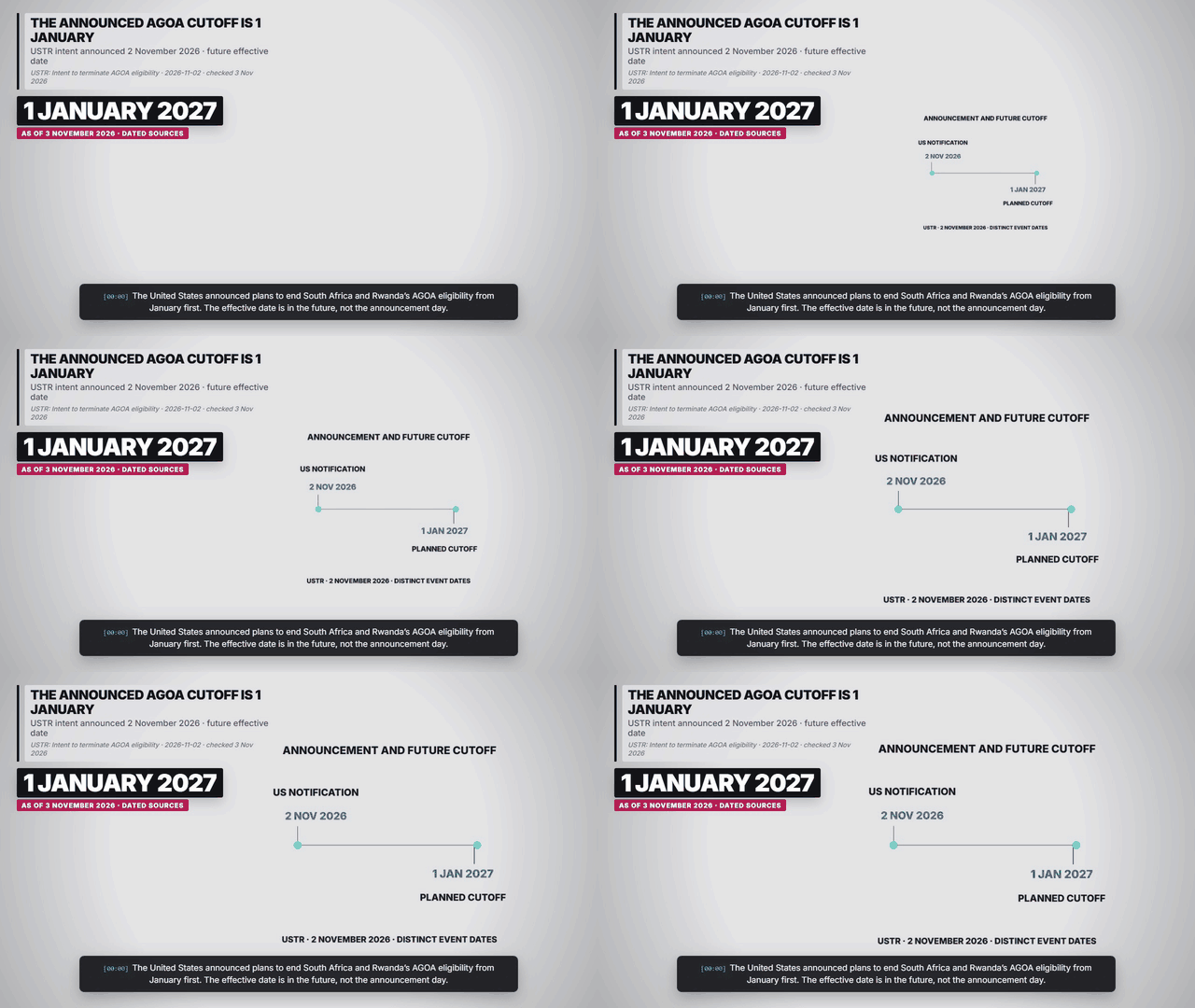
- USTR announced intent on 2 November to end the two countries’ eligibility from 1 January 2027.
- The action concerns trade preferences rather than a ban on exports.
- US officials’ stated grounds are attributed; product-specific costs and losses are not estimated here.
Sourced figures and status
| Period | Figure or status | Source |
|---|---|---|
| 2 Nov 2026 announcement | Countries named: Rwanda and South Africa. | USTR: Intent to terminate AGOA eligibility · 2026-11-02 |
| 1 Jan 2027, announced effective date | Intent to terminate AGOA trade-preference eligibility. | USTR: Intent to terminate AGOA eligibility · 2026-11-02 |
Why does a preference matter?
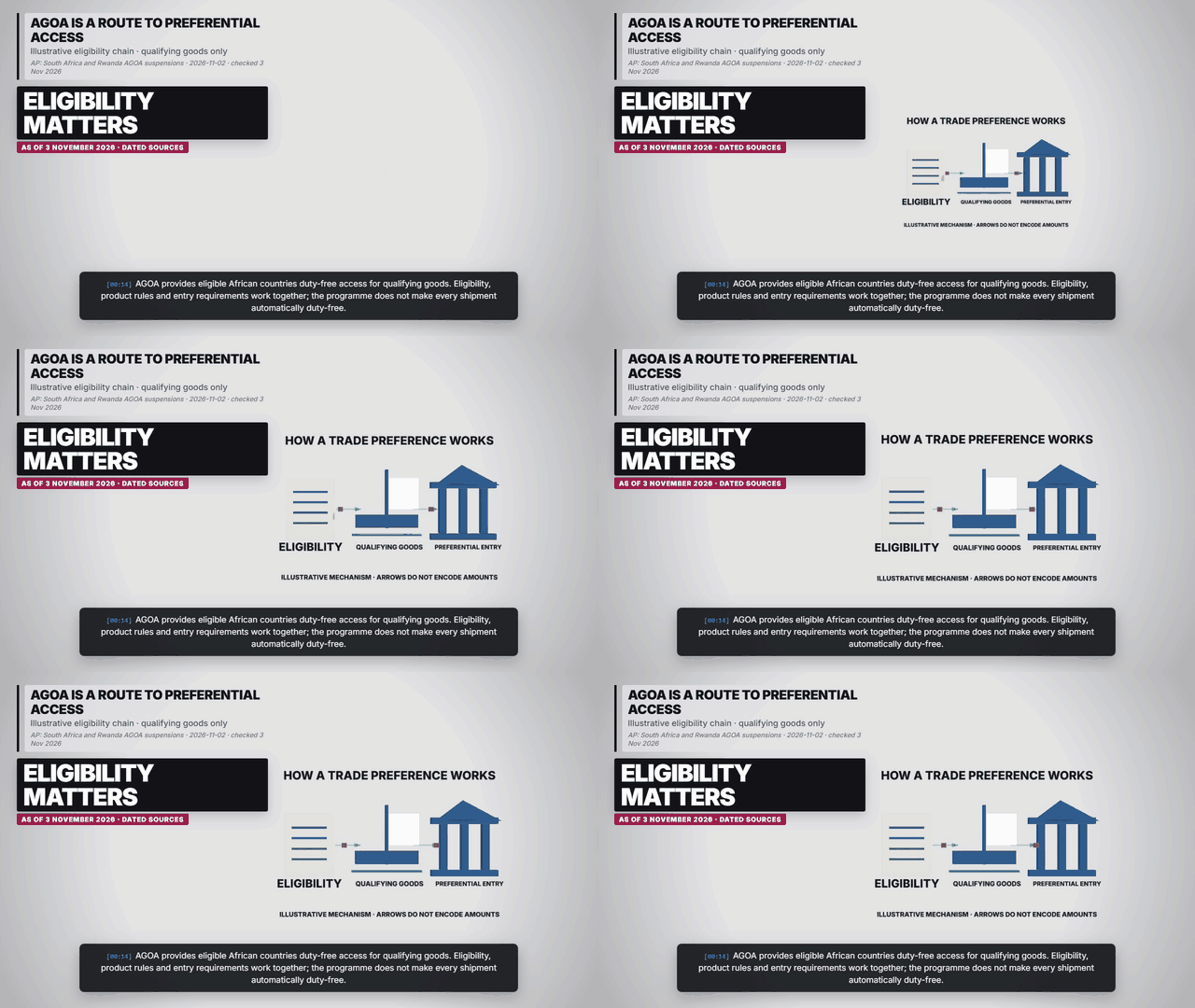
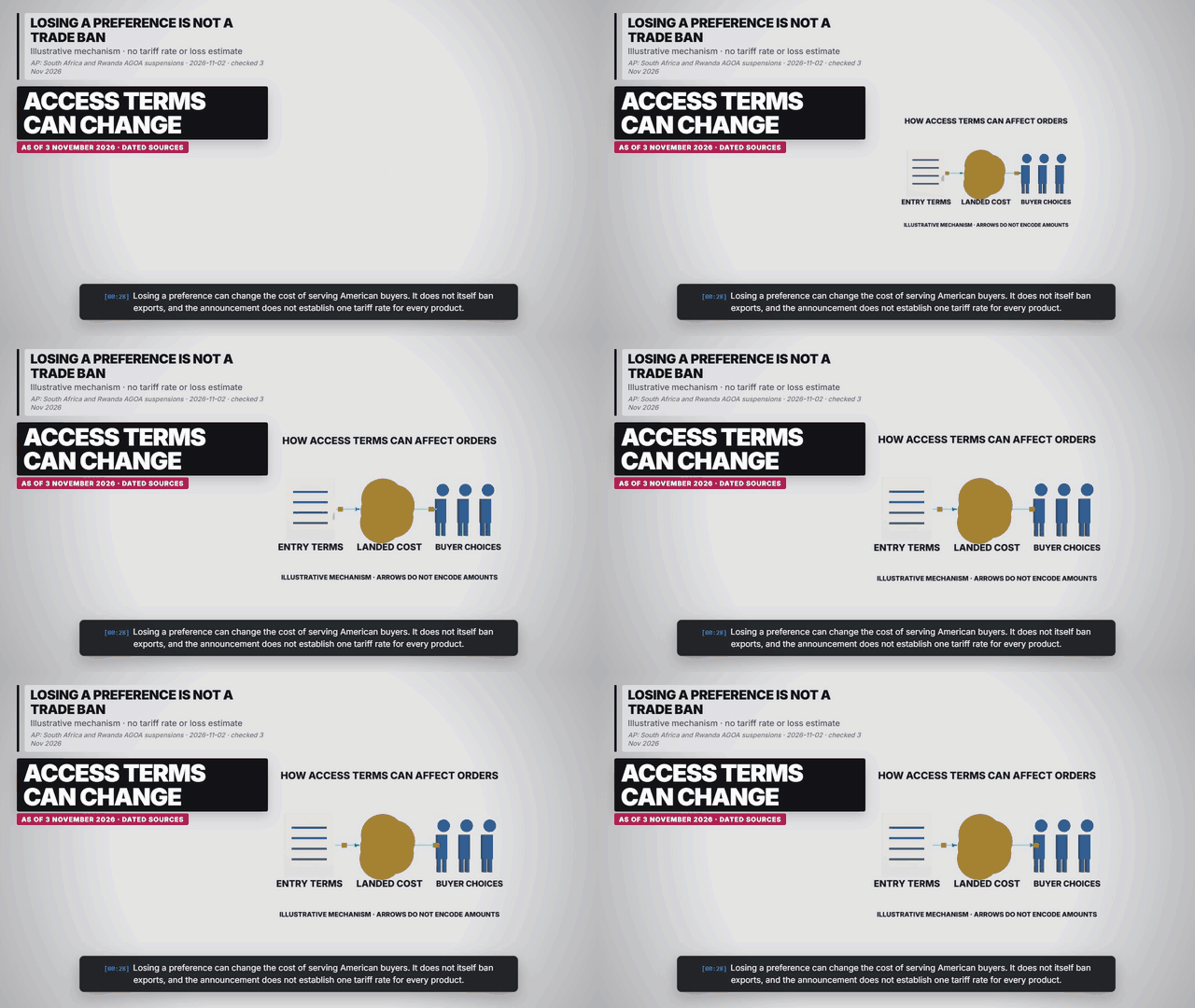
Our economic interpretation is that access terms enter a buyer’s landed-cost calculation alongside freight, insurance and the supplier’s price. Removing a preference can affect competitiveness. That mechanism does not establish the tariff for a particular shipment or the size of any future export loss. Source and qualifications.
What did Washington say?
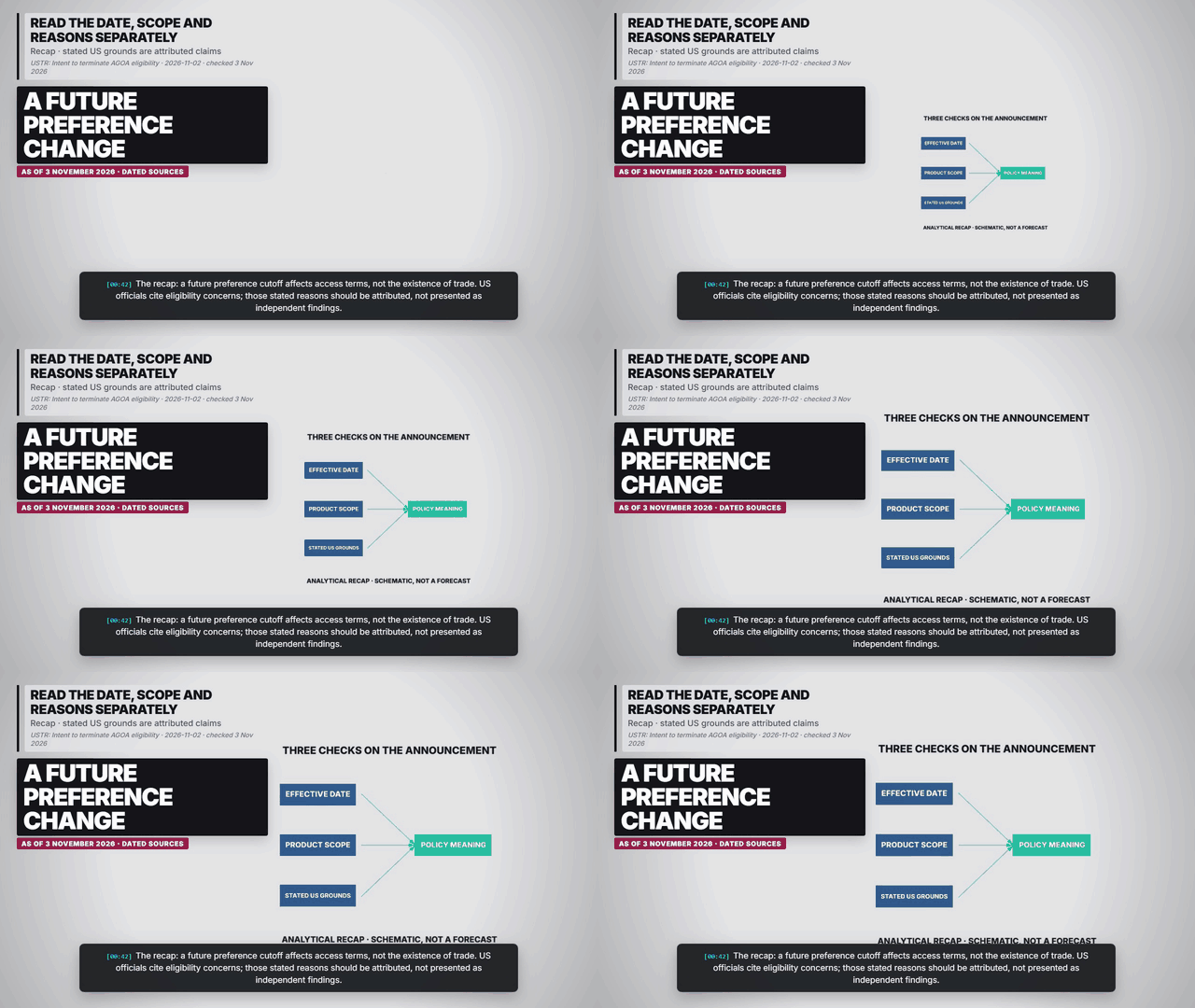
USTR attributed the decision to its annual eligibility review and concerns including trade barriers and US foreign-policy interests. These are the administration’s stated grounds. Our reading is that the announcement, its legal implementation and its commercial effects should be tracked as separate developments. Source and qualifications.
Charts, maps and diagrams from the explainer
Frequently asked questions
Were the countries removed on 2 November?
No. The announced effective date is 1 January 2027.
Does this ban exports to the United States?
No. Loss of AGOA preferences is distinct from a prohibition on trade.
Sources and reporting scope
USTR: Intent to terminate AGOA eligibility. 2026-11-02. Primary statement of intent following notification of Congress and both governments; effective date announced as 1 January 2027. US allegations are attributed.
AP: South Africa and Rwanda AGOA suspensions. 2026-11-02. Independent context on the duty-free programme, annual eligibility review and possible reinstatement.
As of 3 November 2026. USTR announced intent on 2 November to terminate Rwanda and South Africa’s AGOA eligibility as of 1 January 2027. This is a future effective date, not a current removal. It concerns preference eligibility, not a ban on trade or a universal tariff rate. Reasons stated by US officials are attributed claims; no new tariff schedule or quantified export loss is inferred. Diagrams are illustrative. Re-check before re-rendering.