Japan’s Rate Pause: Why the Tightening Story Continues
The Bank of Japan’s 30 October 2026 rate hold, the dissent for a hike and its planned acceleration of ETF sales, with decisions separated from forecasts.
Explore the five-scene explainerKey takeaways
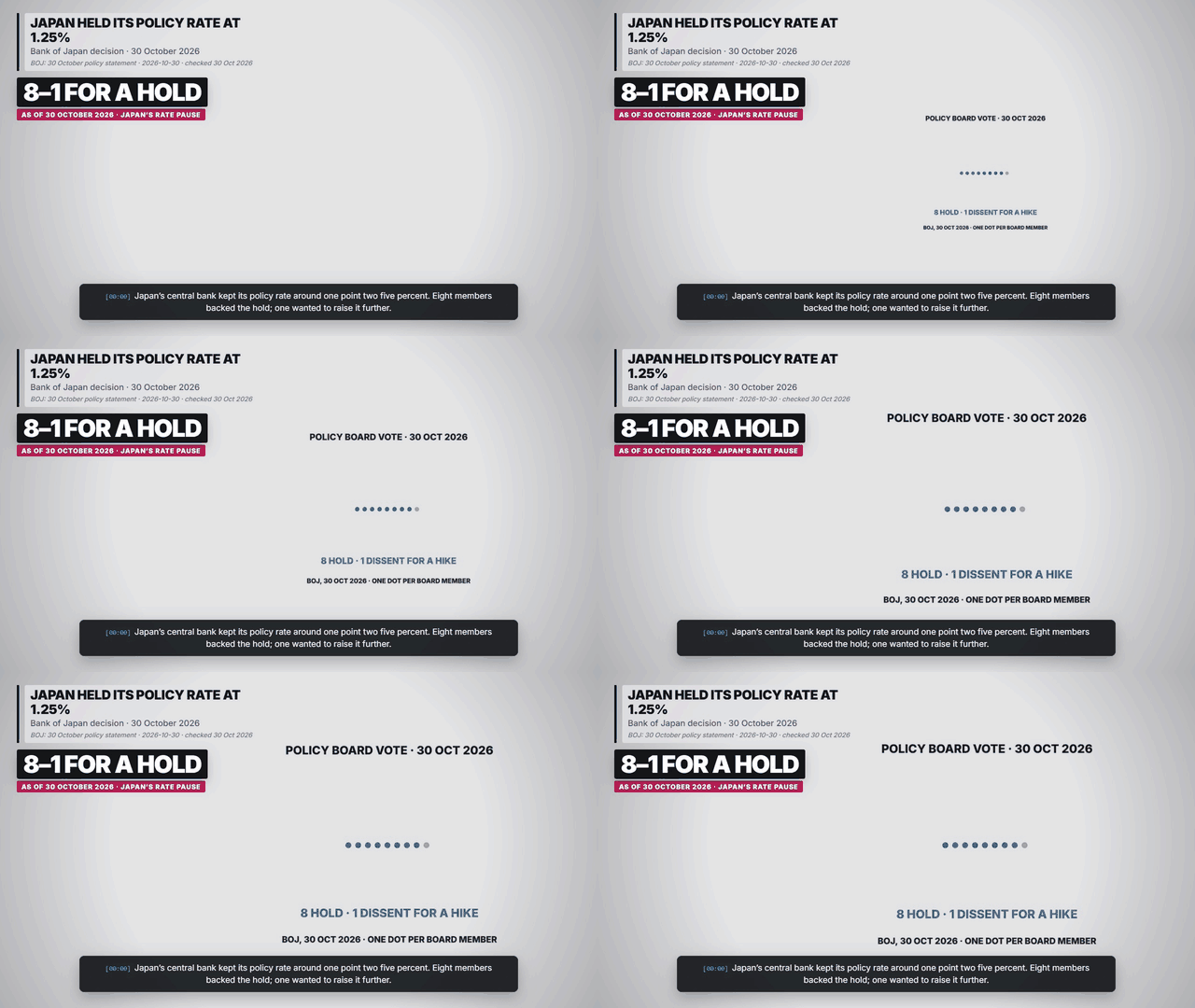
- The BOJ held its overnight call-rate guideline around 1.25% by an 8–1 vote.
- Hajime Takata proposed 1.5%, but that proposal was rejected.
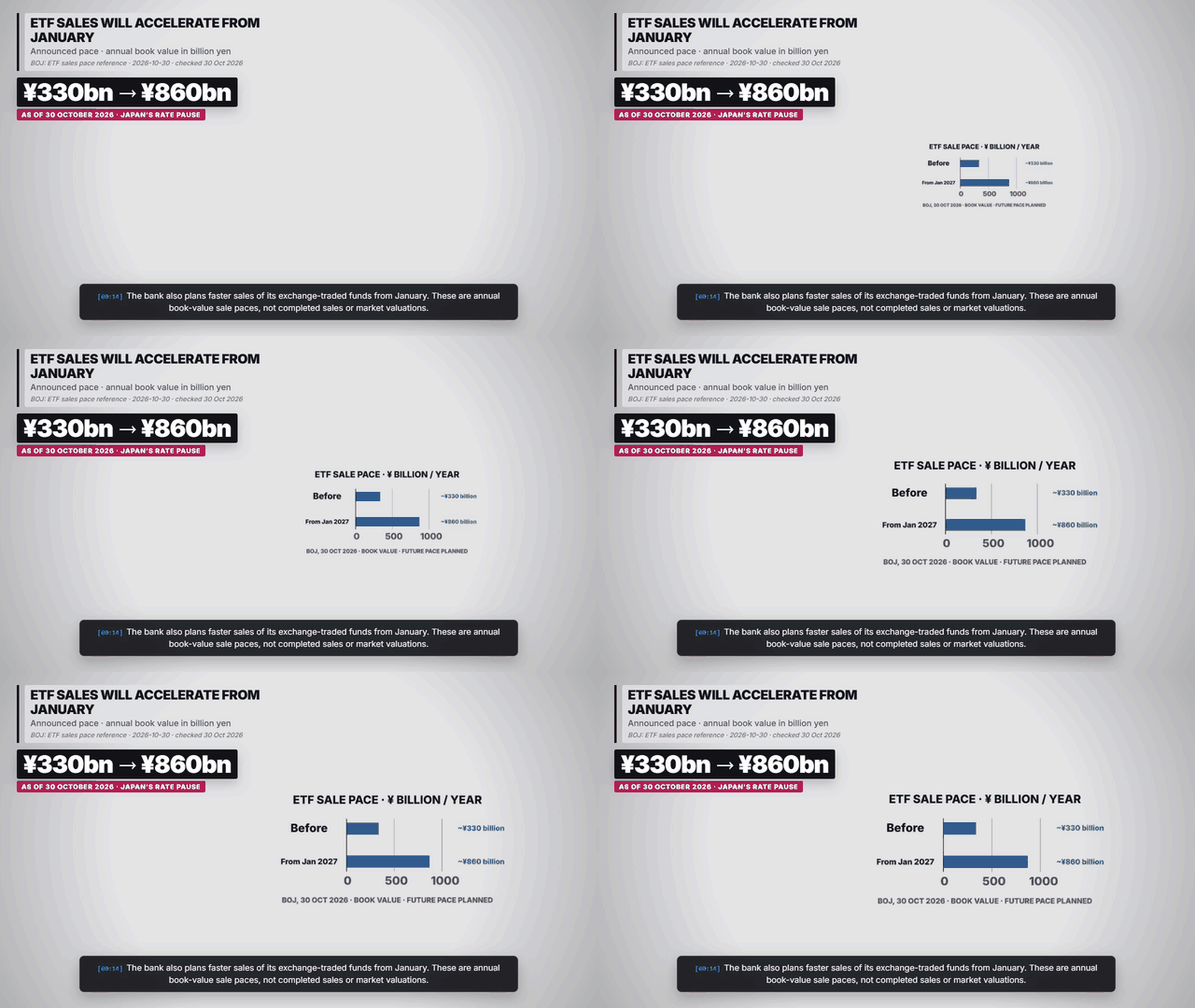
- The annual ETF sale pace is set to rise from about ¥330 billion to ¥860 billion in book value from January 2027.
Sourced figures and status
| Period | Figure or status | Source |
|---|---|---|
| 30 October 2026 decision | Uncollateralised overnight call-rate guideline remains around 1.25%; vote 8–1. | BOJ: 30 October policy statement |
| 30 October 2026 dissent | Takata proposed around 1.5%. The proposal was defeated. | BOJ: 30 October policy statement |
| From January 2027 | ETF annual sale pace: about ¥330 billion → ¥860 billion, measured in book value. Adjustment or suspension remains possible. | BOJ: ETF sales pace reference |
What actually changed at the meeting
The rate guideline stayed in place. A dissent for an increase shows disagreement about the appropriate stance, but it is not the adopted policy. The central bank’s statement records the majority decision and the defeated alternative separately. Source and definitions.
Why the ETF figures need a careful label
An annual pace describes the intended speed of disposal, rather than a single transaction. Book value is the accounting basis used for the announced amounts. It differs from market value, so comparisons must retain that basis. The bank also keeps the ability to adjust or suspend sales as market conditions change. Source and definitions.
How to read the outlook
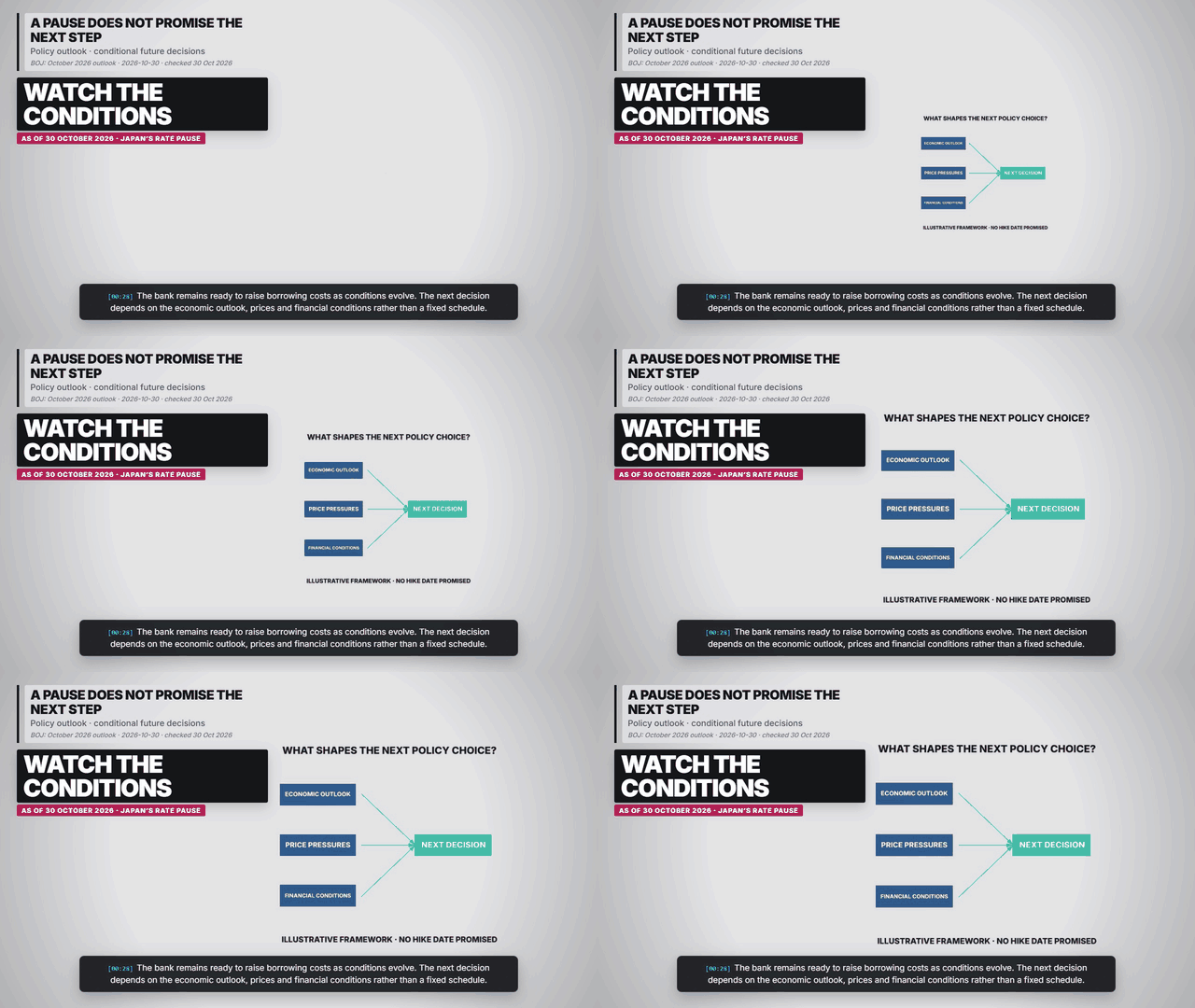
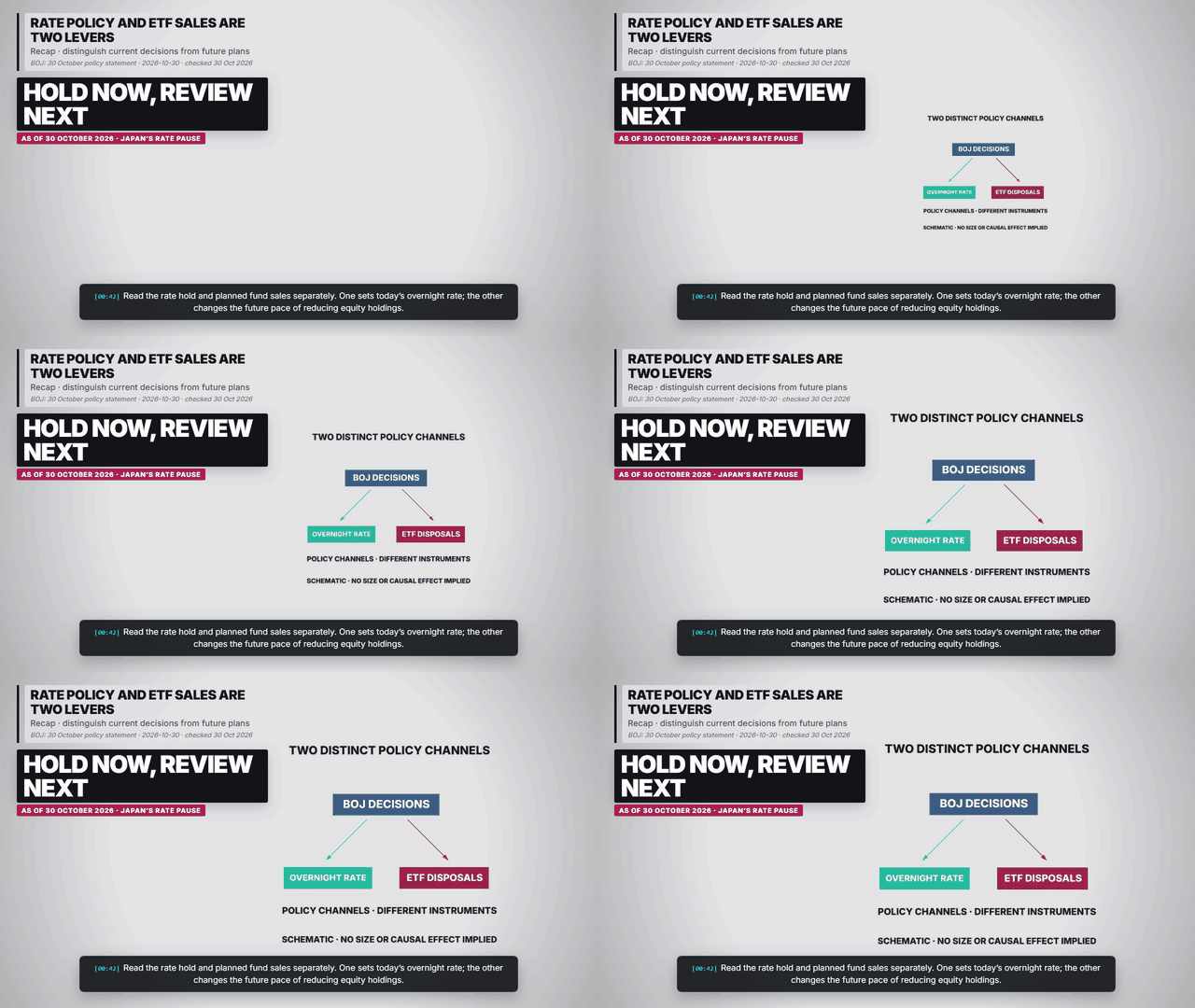
The reporting points to continued readiness for further rate increases. That is a conditional stance, not a dated promise. A future decision must still be read from its own announcement. Our diagrams distinguish the overnight-rate channel from balance-sheet disposal without assigning an effect size to either. Source and definitions.
Charts, maps and diagrams from the explainer
Frequently asked questions
Did Japan raise rates at this meeting?
No. The BOJ held the guideline around 1.25% on 30 October 2026.
Is 1.5% the new policy rate?
No. It was the dissenting proposal, which the majority rejected.
Has the BOJ already sold ¥860 billion of ETFs?
The figure is a planned annual book-value sale pace from January 2027, not a completed sale total.
Sources and reporting scope
BOJ: 30 October policy statement. 2026-10-30. Policy rate held around 1.25% by 8–1. Takata proposed 1.5%; proposal defeated. ETF sale pace changes from January 2027.
BOJ: ETF sales pace reference. 2026-10-30. Annual book-value ETF sale pace: about ¥330 billion before, about ¥860 billion from January 2027. Temporary adjustment or suspension remains possible.
BOJ: October 2026 outlook. 2026-10-30. The Bank’s View outlines continued rate increases in response to activity, prices and financial conditions. Timing and pace depend on the outlook and risks.
As of 30 October 2026. The policy rate is an announced hold around 1.25%, not a hike. The dissent for 1.5% was rejected. ETF figures are annual planned sale paces on a book-value basis, not market values or completed sales. The higher pace begins January 2027 and can be adjusted. Diagrams are illustrative; future rate moves are conditional. Re-check before re-rendering.