Why America and Canada Need a Trade Truce
Reported US–Canada talks over steel and auto tariffs, who pays import duties, and why tariff relief depends on product rules and implementation. Checked 27 October 2026.
Explore the interactive explainerKey takeaways
- Reuters reports tariff-relief talks, not a completed agreement.
- Importers pay duties at the border; the wider burden can spread through supply chains.
- Product coverage, content rules and effective dates determine practical relief.
Sourced facts and figures
| Period | Fact or figure | Definition | Source |
|---|---|---|---|
| 26 Oct 2026 | Talks reported | No deal announced in the cited report | Reuters: US and Canada discuss tariff relief |
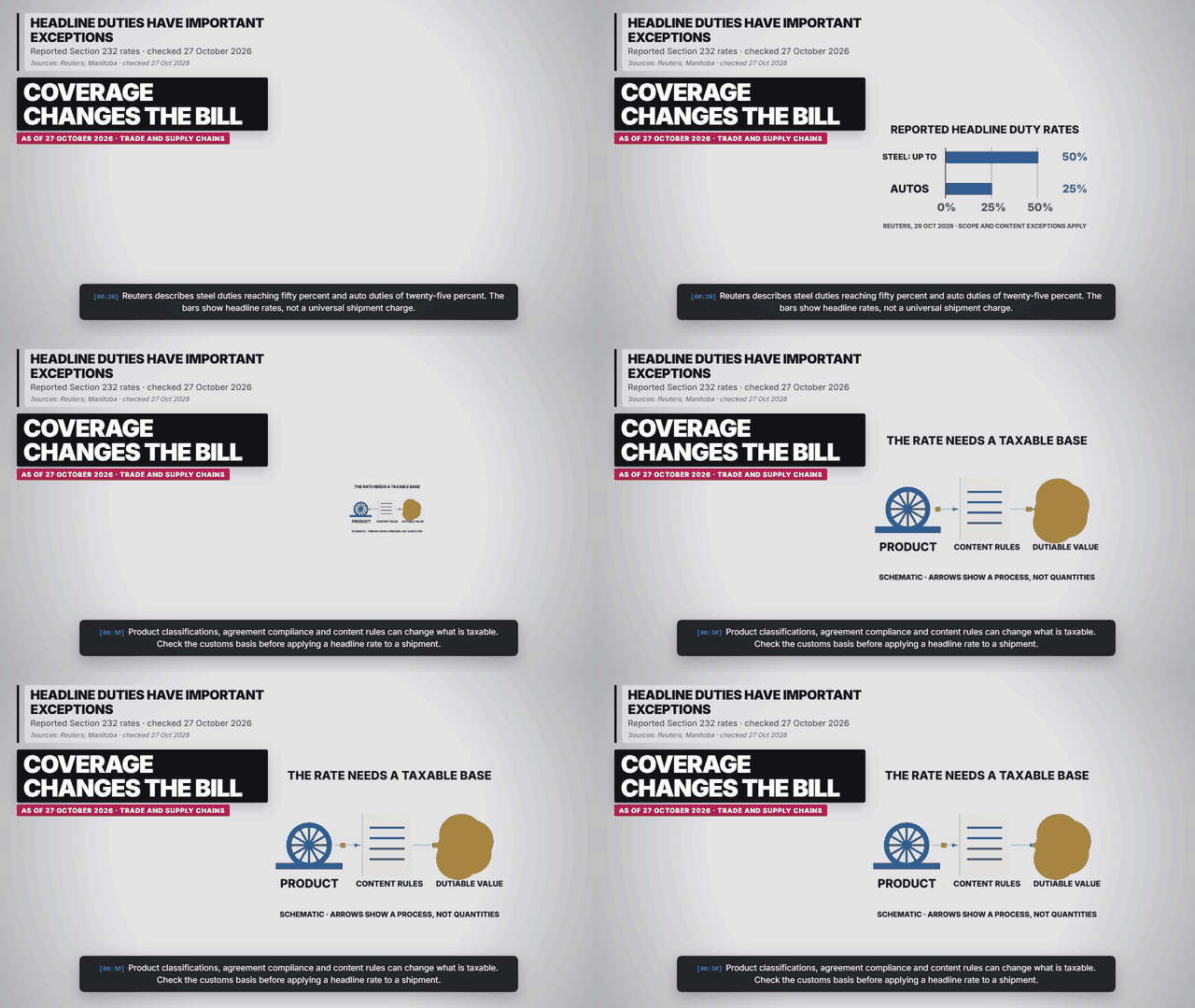
| Checked 27 Oct 2026 | Up to 50% steel; 25% autos | Reported Section 232 headline rates; scope varies | Reuters: US and Canada discuss tariff relief |
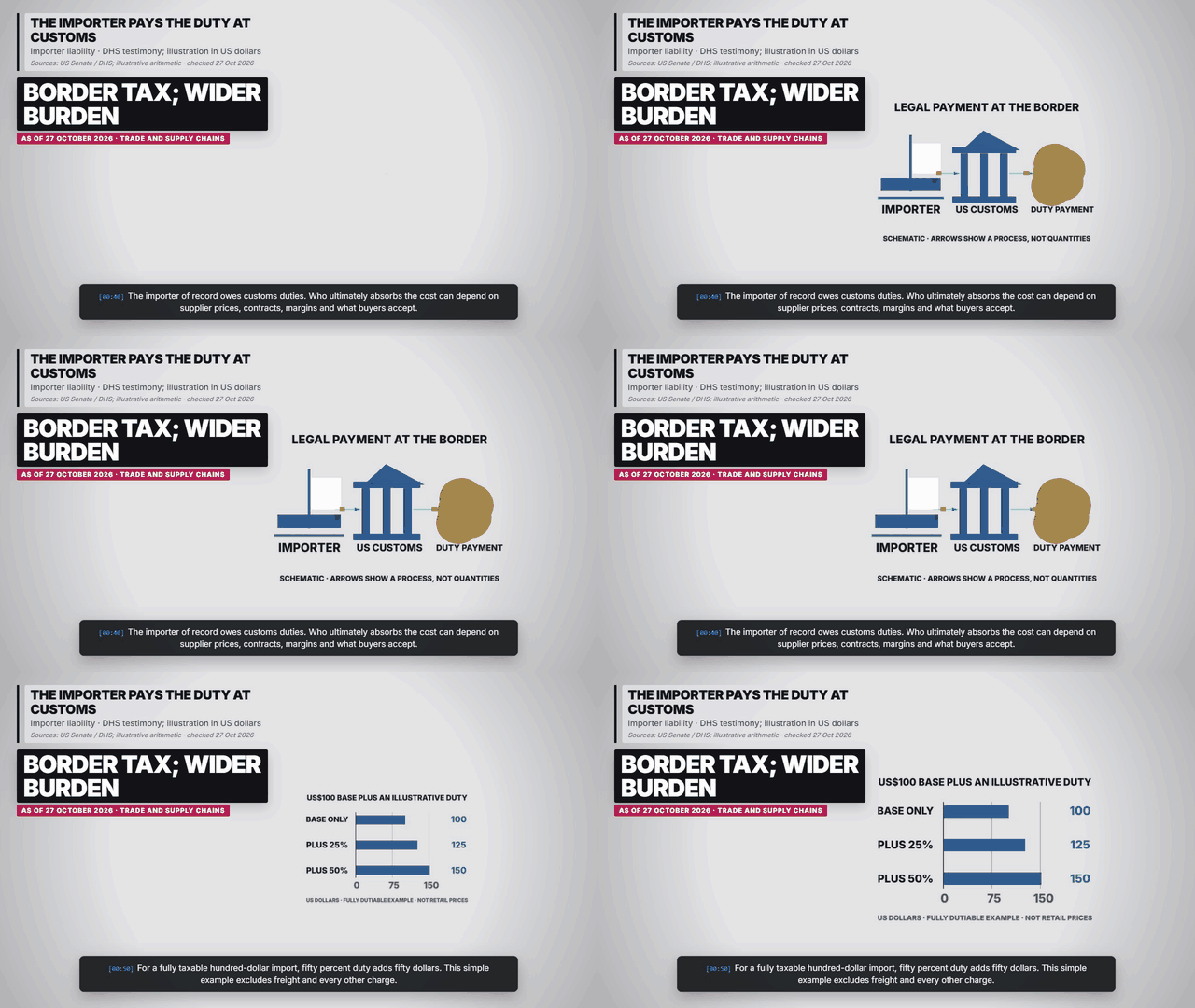
| Illustrative arithmetic | US$100 → US$150 | Fully dutiable base plus 50%; before other costs | US Senate: DHS testimony on importer liability |
| Illustrative arithmetic | US$100 → US$125 | Fully dutiable base plus 25%; before other costs | US Senate: DHS testimony on importer liability |
What is being negotiated
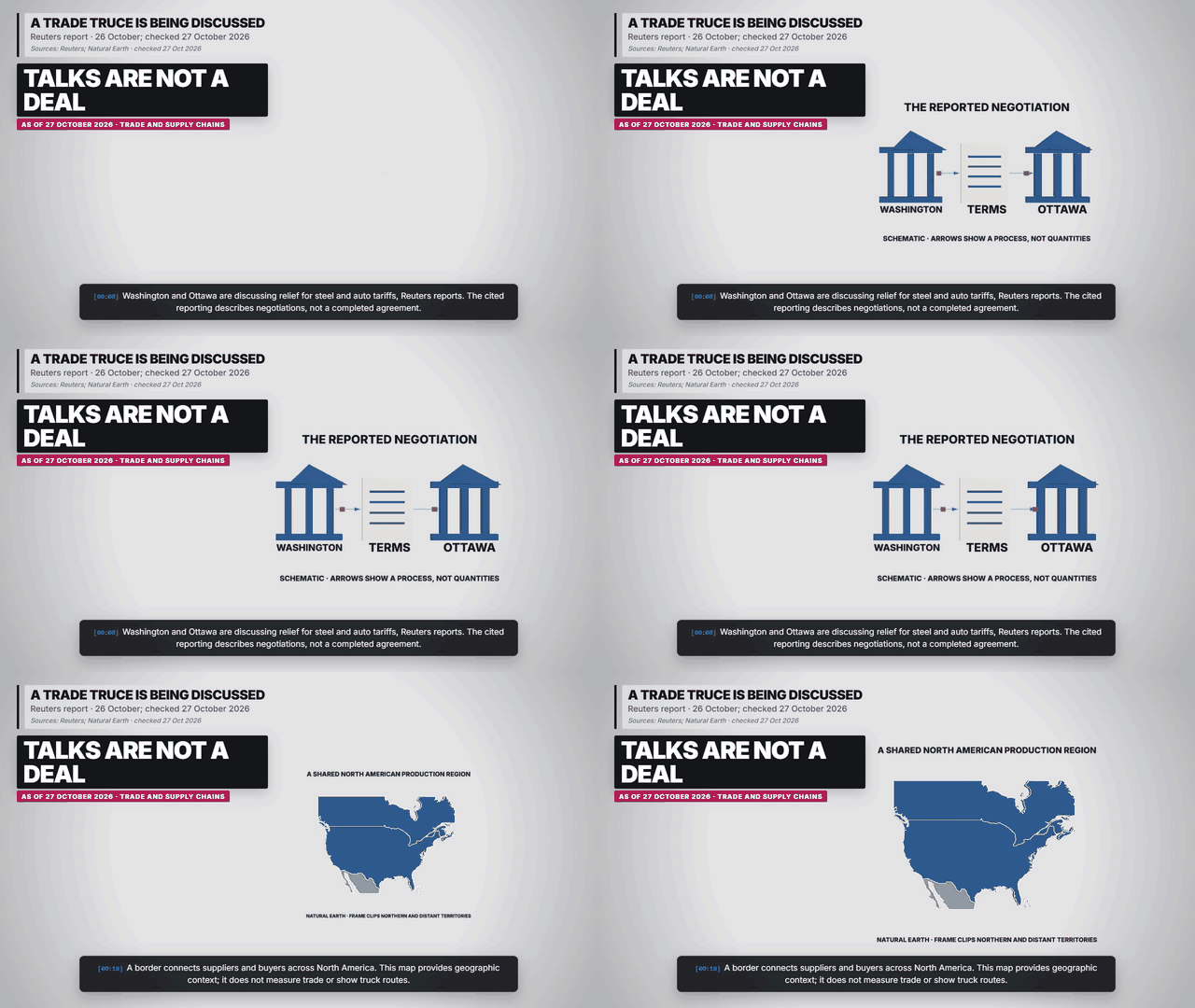
Reuters reported on 26 October that officials were discussing relief for Canadian steel and autos under US Section 232 tariffs. The report cites sources on both sides. Until terms are published, the scale and timing of any relief remain open. Source: Reuters: US and Canada discuss tariff relief.
Headline rates need qualifications
The reported rates reach 50% for steel and 25% for autos. Manitoba lists important distinctions involving product type, trade-agreement compliance and US content. A single percentage is not a universal charge on every shipment, and announced future measures should not be confused with duties currently in force. Source: Manitoba: current US tariffs.
Who writes the cheque?
A DHS response in Senate hearing records identifies the importer of record as legally liable for duties. A simplified US$100 fully dutiable shipment plus a 50% duty becomes US$150 before other costs; at 25%, it becomes US$125. These calculations illustrate customs arithmetic, not a prediction of shop prices. Exporters, importers and buyers may negotiate how the economic burden is shared. Source: US Senate: DHS testimony on importer liability.
What would make a truce concrete?
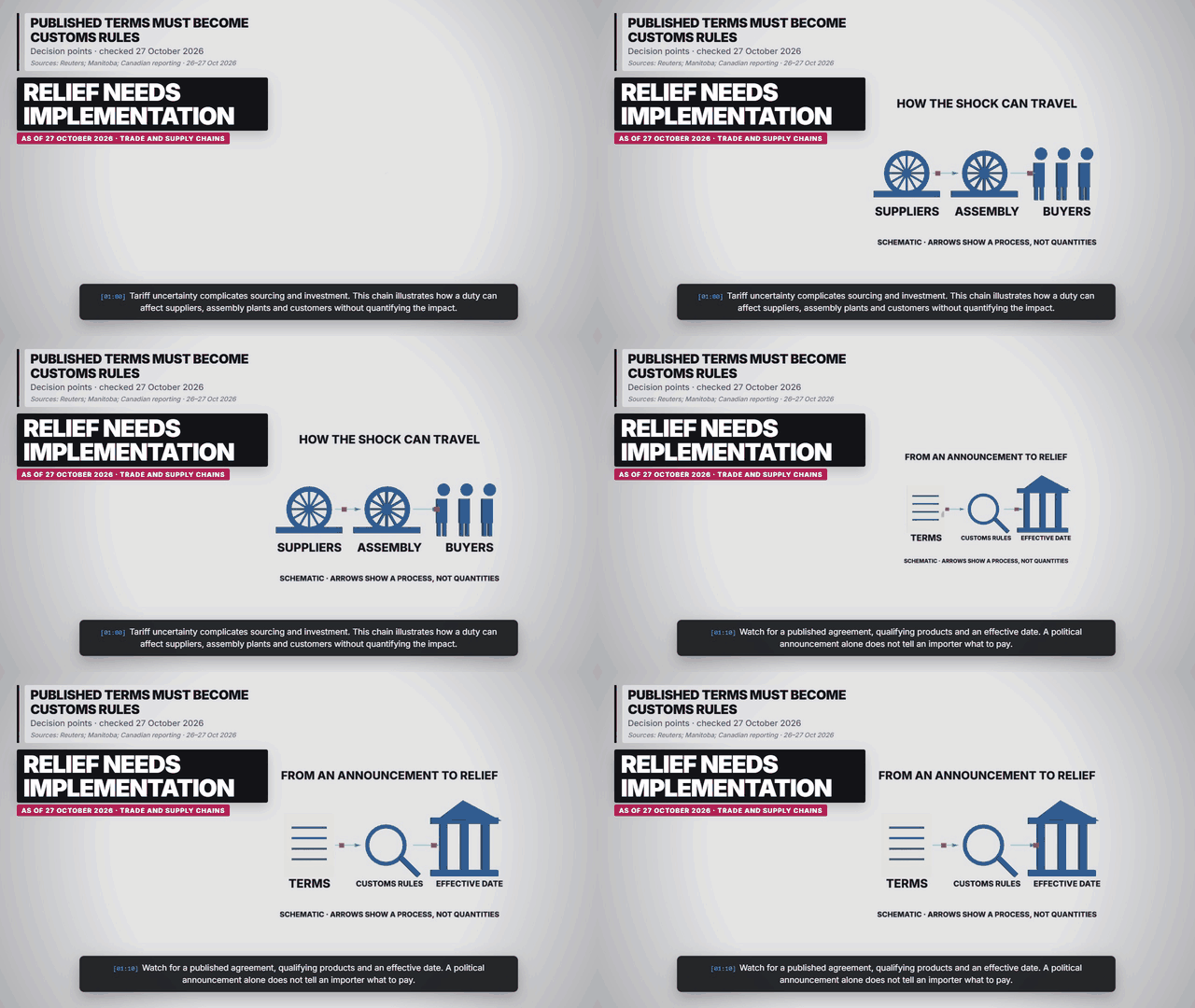
Carney described only a small intensification in talks. A useful agreement needs published coverage, customs instructions and an effective date. Businesses must know which goods qualify before changing sourcing or investment decisions. Our supply-chain arrows illustrate possible links, without measuring actual border crossings or trade volumes. Source: Canadian reporting: Carney on trade talks.
Frequently asked questions
Has a deal been signed?
The cited 26 October reporting describes negotiations, not a completed deal.
Does a 25% tariff mean car prices rise 25%?
No. Coverage, taxable content, contracts and margins affect the eventual price.
Who pays customs?
The importer of record is legally liable for the import duties. The economic burden can be shared more widely.
Charts, maps and diagrams from the explainer
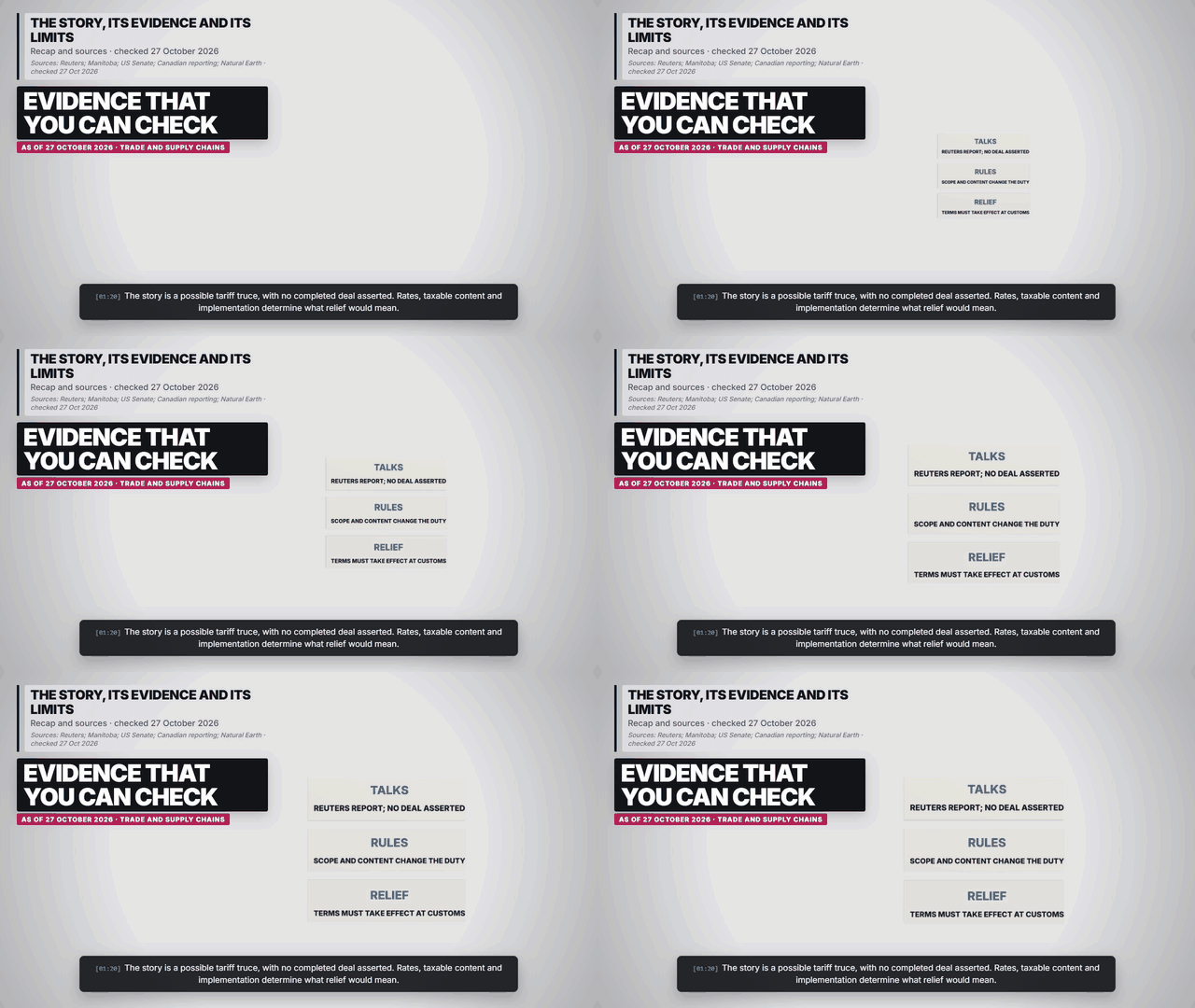
Sources and reporting scope
- Reuters: US and Canada discuss tariff relief. 26 Oct 2026. Sources report talks on Section 232 steel and auto duties. Negotiations are not a signed deal.
- Manitoba: current US tariffs. Checked 27 Oct 2026. Current sector rates and exceptions; separates announced future measures from measures in force.
- US Senate: DHS testimony on importer liability. 2025 hearing; published 2026. Post-hearing reply to Senator Hassan identifies the importer of record as liable for duties, taxes and fees.
- Canadian reporting: Carney on trade talks. 26 Oct 2026. Reports Carney describing a small intensification in negotiations, with conditions still unresolved.
- Natural Earth: country boundaries. v5.1.2; generated 27 Oct 2026. One projection per map; neighbouring countries clipped at frame edges. Geography only; no territorial endorsement or live movements.
Checked 27 October 2026, 14:45 UTC. Talks are attributed to Reuters reporting dated 26 October; no completed agreement is asserted. Rates are reported headline rates with product and content exceptions. The $100 example assumes a fully dutiable import and excludes all other charges; it is not a retail-price forecast.
Explore the five scenes