The ECB After Lagarde: A Leadership Change, an Energy Test
Christine Lagarde’s announced February 2027 departure, the ECB’s October rate hold and the energy shock shaping Europe’s policy choices. Checked 30 October 2026.
Explore the five-scene explainerKey takeaways
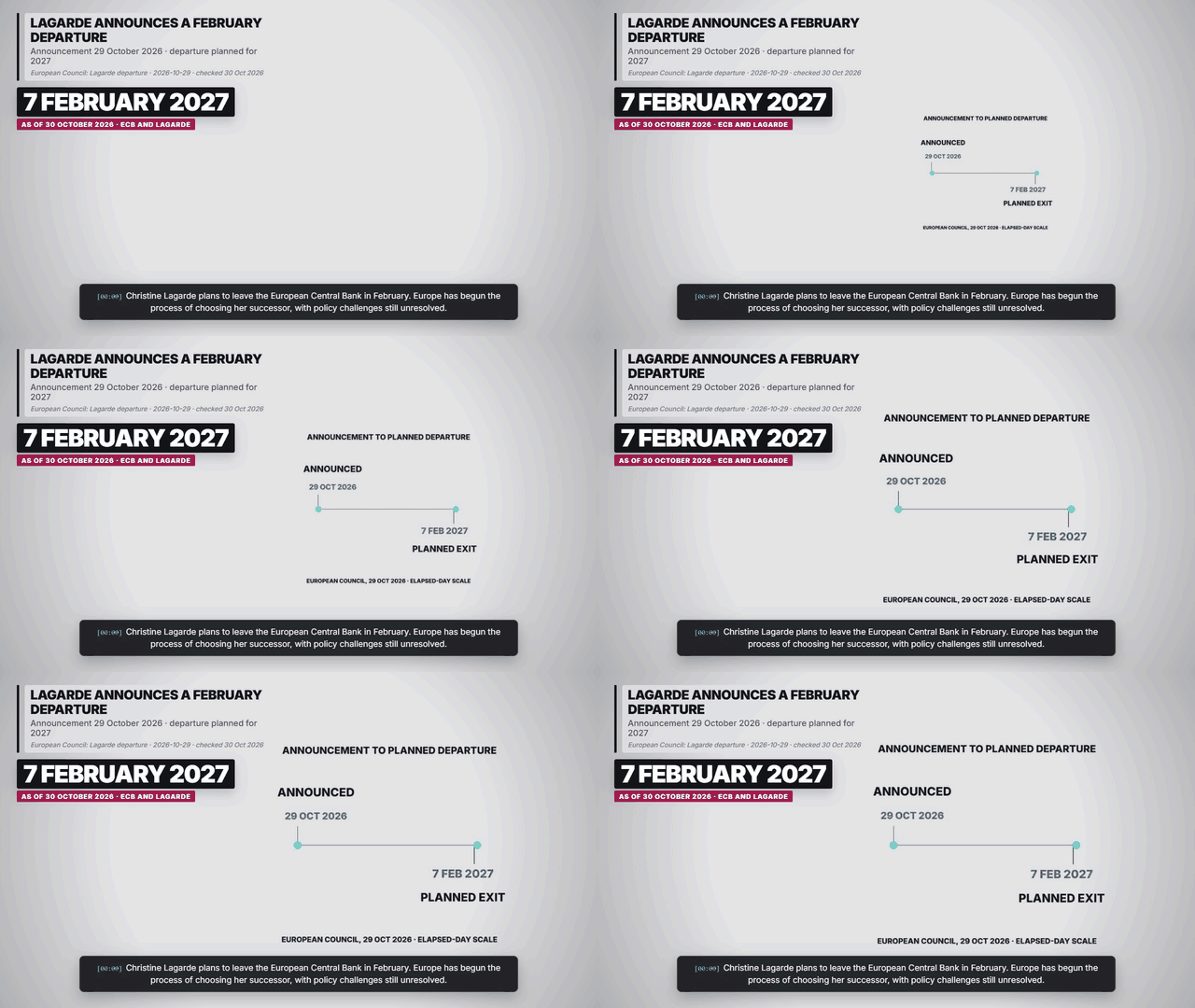
- Lagarde intends to leave on 7 February 2027; the successor selection process has begun.
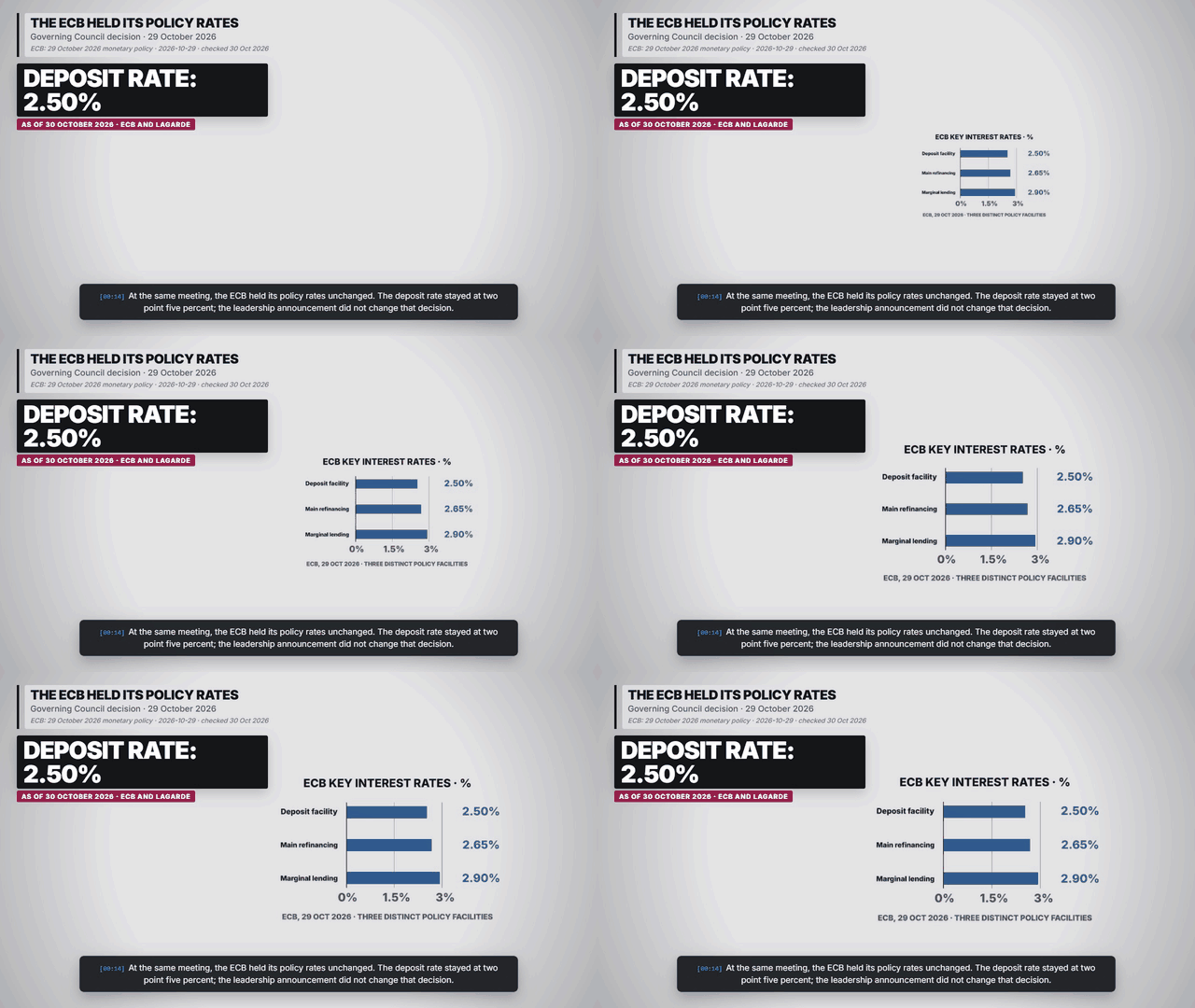
- The ECB held the deposit rate at 2.50% on 29 October 2026.
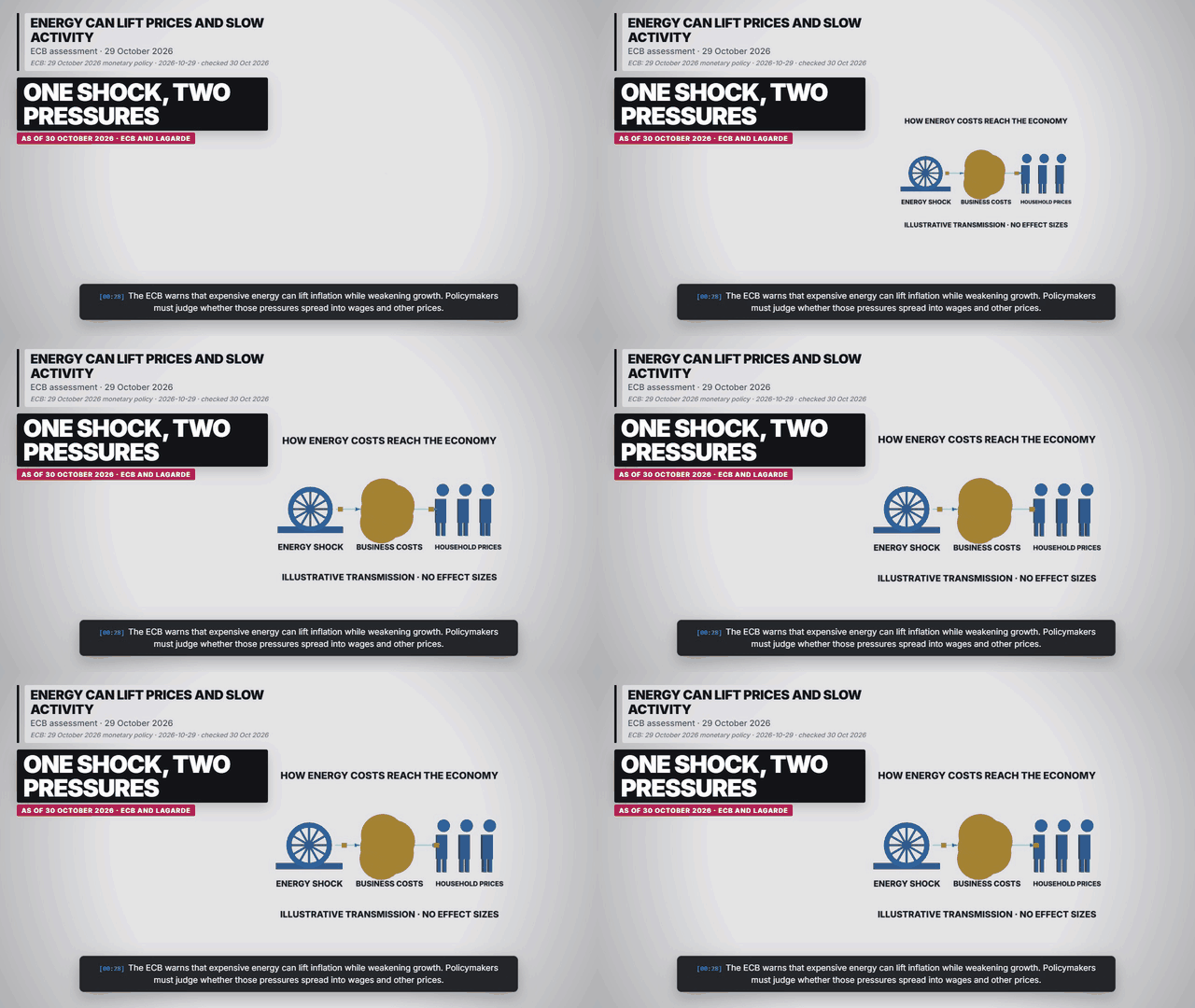
- Its policy statement identifies higher energy costs as an inflation risk and a drag on growth.
Sourced figures and status
| Period | Figure or status | Source |
|---|---|---|
| 29 October 2026 announcement | Lagarde intends to step down on 7 February 2027. The European Council is initiating the appointment process. | European Council: Lagarde departure |
| 29 October 2026 decision | Deposit facility 2.50%; main refinancing 2.65%; marginal lending 2.90%. All held unchanged. | ECB: 29 October 2026 monetary policy |
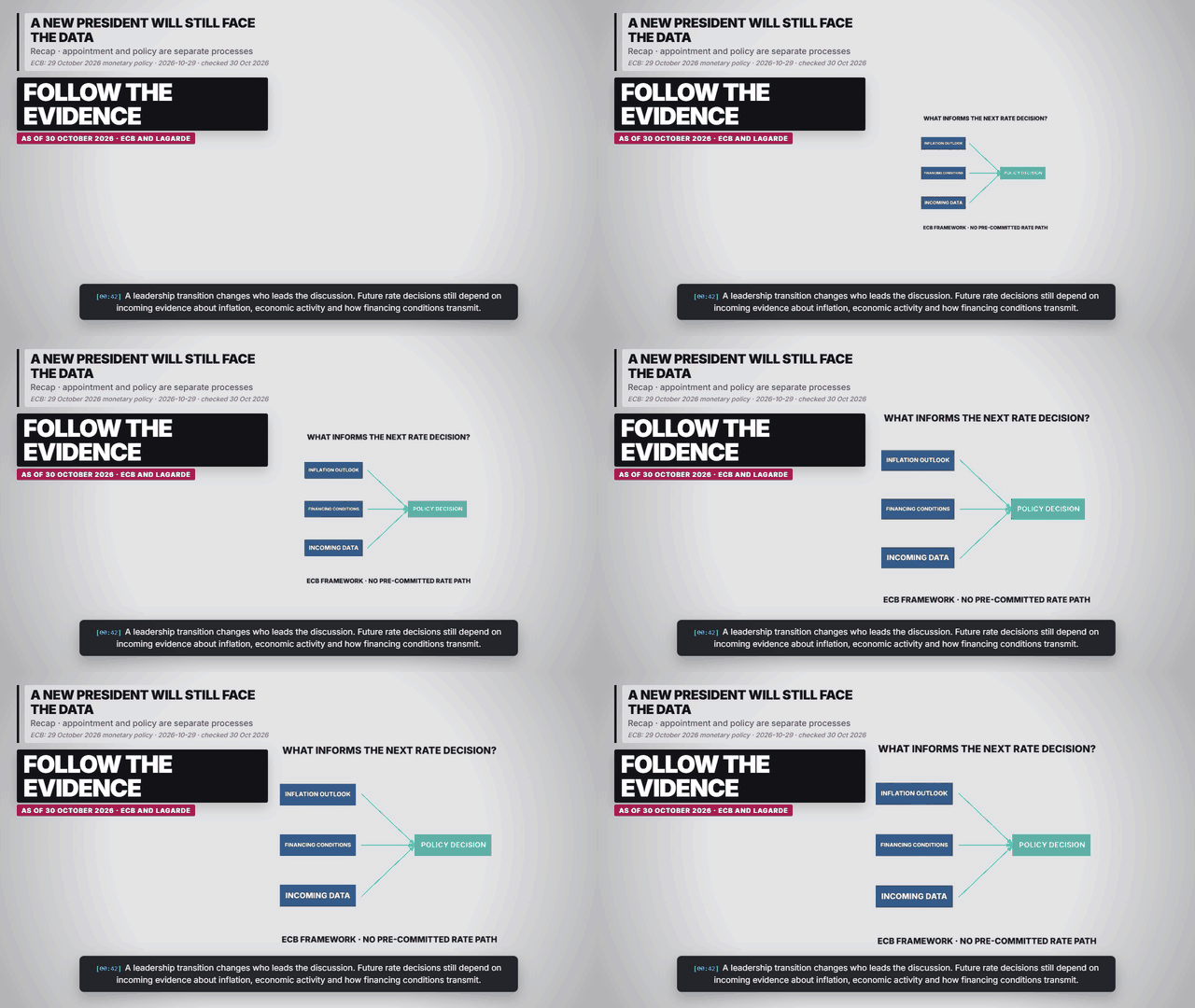
| 29 October 2026 assessment | The ECB reports rising energy prices, tighter financing and no pre-committed future rate path. | ECB: 29 October 2026 monetary policy |
What the departure announcement establishes
The European Council president acknowledged Lagarde’s intention to leave and said the process for appointing a successor would begin immediately under the treaty procedure. An announced exit and the start of a selection process do not establish who the next president will be. Source and definitions.
Why a hold still matters
Holding a policy rate keeps its level in place; it does not imply that credit becomes cheap or that all other borrowing rates are fixed. The ECB evaluates financing conditions and how policy reaches the economy. Its October statement explicitly leaves future decisions dependent on evidence. Source and definitions.
The next president inherits a difficult trade-off
An energy shock can increase household and business costs even as it weakens demand. That creates pressure in different directions. Our diagram explains this transmission rather than predicting its size or the date of a future policy move. Source and definitions.
Charts, maps and diagrams from the explainer
Frequently asked questions
Has Lagarde already left the ECB?
No. The announced departure date is 7 February 2027.
Who will replace her?
The sources reviewed announce the start of the appointment process, not an appointed successor.
Did the ECB promise its next rate move?
No. The October statement says decisions remain data dependent and does not pre-commit to a rate path.
Sources and reporting scope
European Council: Lagarde departure. 2026-10-29. Announces intended departure on 7 February 2027 and initiation of the successor appointment process.
ECB: 29 October 2026 monetary policy. 2026-10-29. Three policy rates held unchanged. Energy shock presents risks to inflation and growth; no rate path is pre-committed.
As of 30 October 2026. Lagarde’s announced departure date is 7 February 2027; this does not mean a successor has already been appointed. The 29 October policy hold is an announced decision. Future rates are not predetermined. Mechanism diagrams are illustrative, with no measured effect sizes. Re-check before re-rendering.