When Tirana Became Paris: The Protest-Footage Mix-up
How French broadcasters mislabeled Albanian protest images, why location matters and how verification can restore context. Reporting checked 26 October 2026.
▶ Explore the narrated graphic explainerKey takeaways
- The verified problem was a mismatch between footage location and its broadcast label.
- The channels reported corrections; an error’s existence does not by itself establish intent.
- Original source, time, location and wider context should be checked before reusing a clip.
The dated facts and their scope
| Period or item | Reported fact or figure | Scope | Source |
|---|---|---|---|
| 24–25 October reporting | CNEWS: Paris label → Tirana | AP-verified location and reported apology | AP: Albanian footage mislabeled as France |
| 24–25 October reporting | franceinfo: Lyon label → Tirana | AP-verified location and reported correction | AP: Albanian footage mislabeled as France |
| Verification method | Source, time, place and reverse search | Educational guidance, not a fresh forensic finding | CLEMI: Finding the origin and context of images |
What was mislabeled?
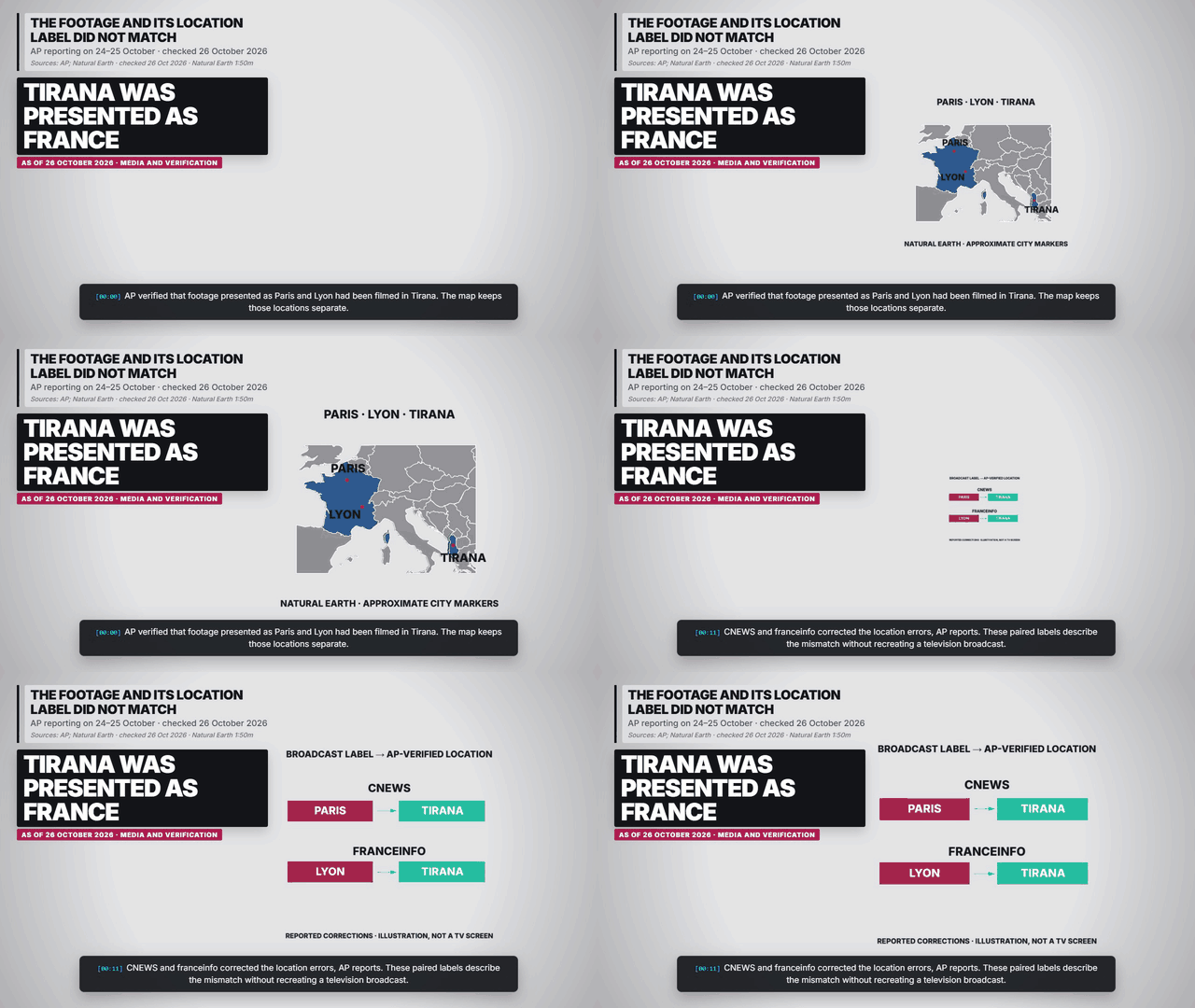
AP reported that CNEWS showed Albanian protest footage as Paris and that franceinfo presented other Albanian footage as Lyon. Its reporting verified Tirana locations and recorded corrections. The paired diagram preserves the distinction between what the labels said and where the footage was verified. Source: AP: Albanian footage mislabeled as France.
Why can genuine images still mislead?
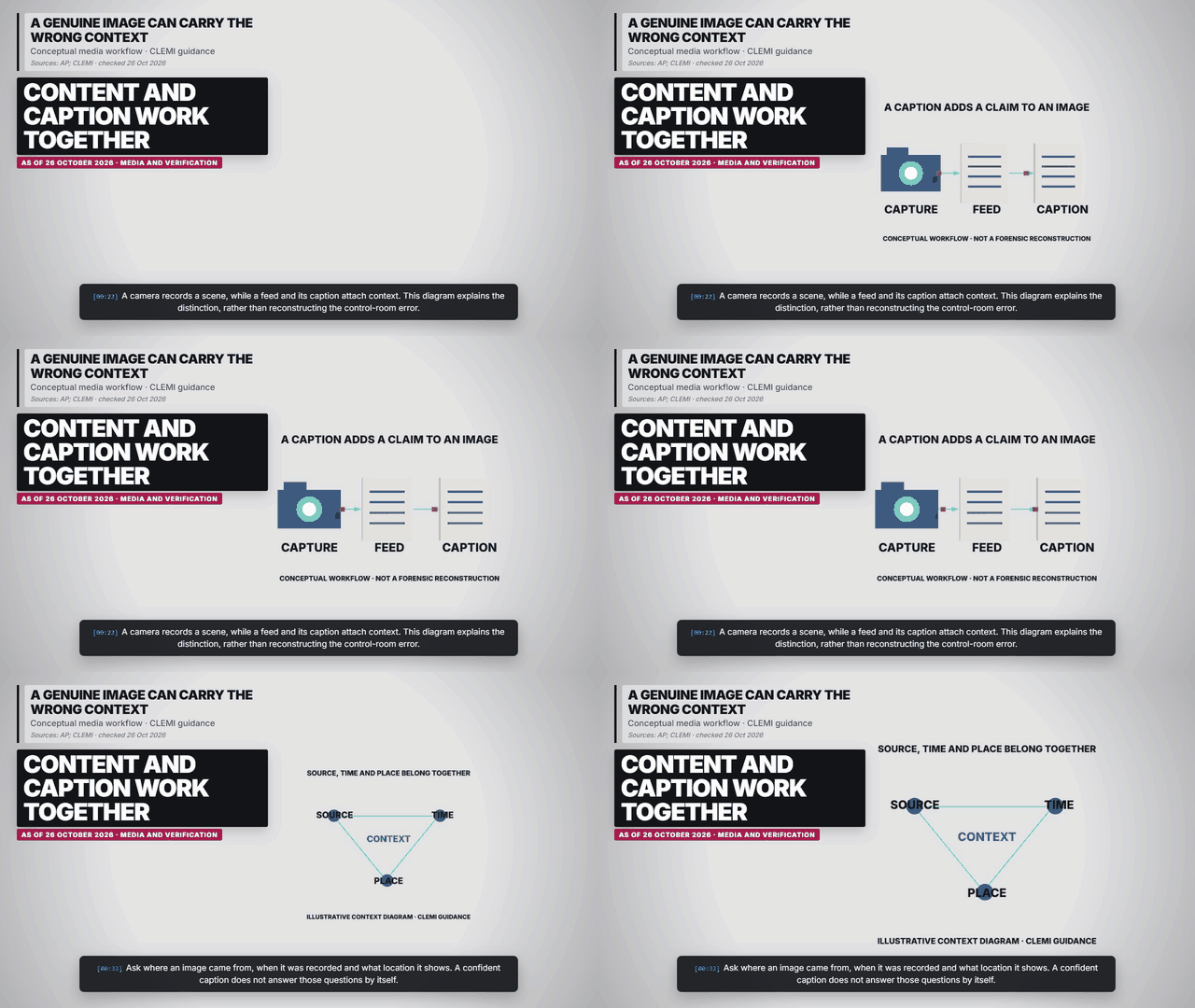
The content of an image and the claim attached to it are separate evidence. A genuine scene can create a false impression when assigned to the wrong city, date or event. The contextual triangle shows why source, time and place belong together. It does not claim that all protest footage from France was false. Source: CLEMI: Finding the origin and context of images.
What can reverse-image searching do?
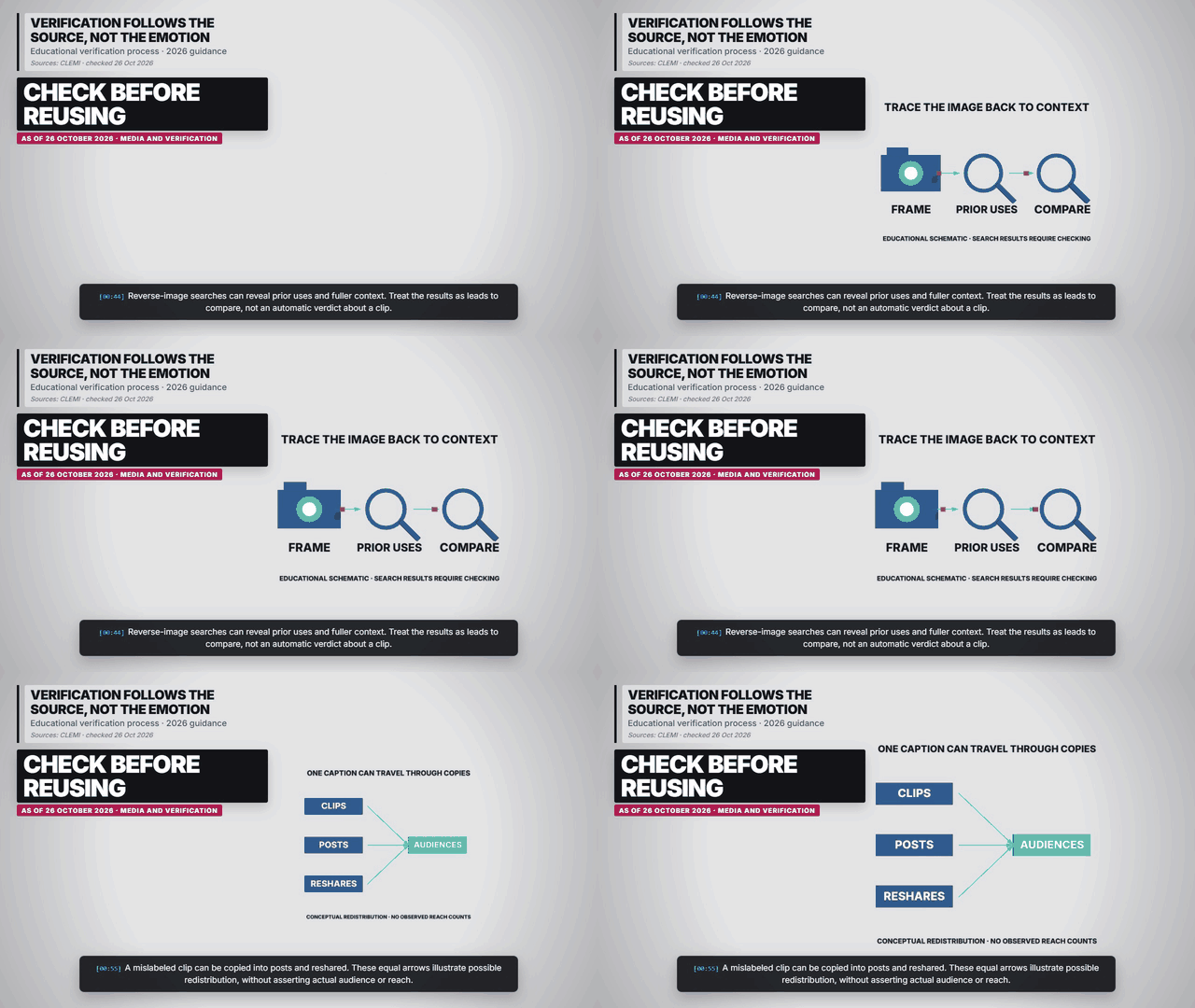
CLEMI describes using an image or captured video frame to look for prior appearances and source context. Results can provide leads: an earlier publication, a fuller frame or a credited source. Those leads still need comparison and corroboration. A missing result does not prove authenticity, and an old appearance does not by itself establish the exact date of every later copy. Source: CLEMI: Finding the origin and context of images.
Why show a wider frame and a crop?
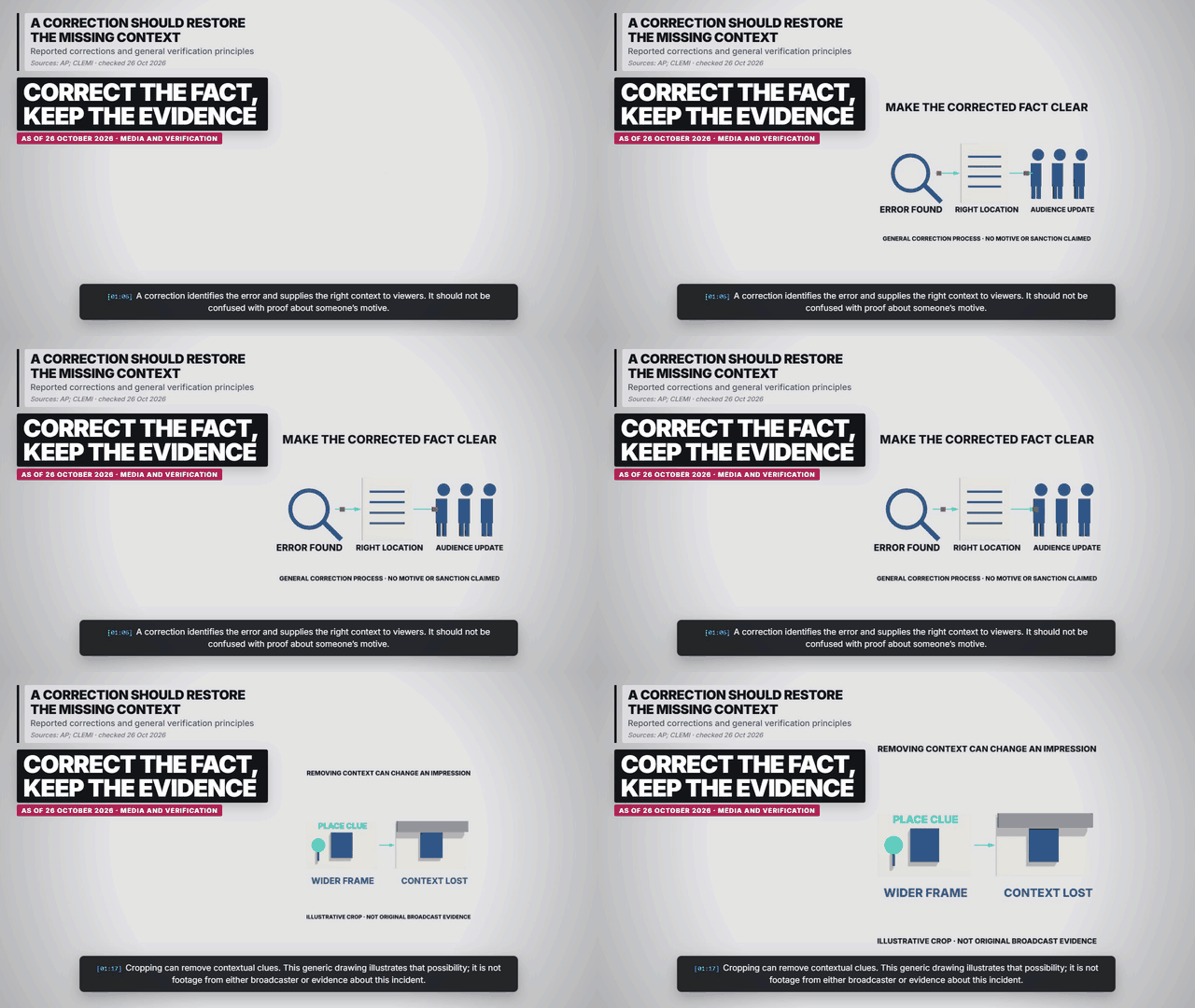
The illustration demonstrates how removing surrounding details can conceal contextual clues. It is not a reconstruction of either broadcaster’s pictures. Its buildings, tree and labels are intentionally generic. The lesson concerns checking context before reuse, rather than presenting invented clues as a fresh investigation of the incident. Source: CLEMI: Finding the origin and context of images.
What should a correction accomplish?
A useful correction makes the error and corrected fact clear to the audience. AP’s standards provide general context for accuracy and corrections, while its incident report documents what was said to viewers. This explainer does not infer an audience size, a broadcaster’s motive, a legal sanction or the ultimate reach of the correction. Source: AP: News values and principles.
How the graphics should be read
The charts and diagrams retain their dates, units and whether a figure is reported, estimated, projected or illustrative. Equal arrows do not encode quantities. Maps locate the subject and use generated country boundaries; they do not supply evidence about individual votes or live movements.
Frequently asked questions
Were the images from Paris and Lyon?
AP verified Tirana locations for the Albanian footage that CNEWS and franceinfo labeled as Paris and Lyon.
Does the page show the original broadcasts?
No. Its maps and diagrams are labelled illustrations; they are not original broadcast evidence.
Does a wrong label prove deliberate deception?
The documented error establishes a location mismatch. This page does not claim an independently established motive.
Can reverse search prove a clip’s context alone?
It can find useful leads, but source, date, location and corroborating evidence still need checking.
Charts, maps and diagrams from the explainer
Sources and reporting scope
- AP: Albanian footage mislabeled as France. 2026-10-25. AP verified Tirana locations in footage shown by CNEWS as Paris and by franceinfo as Lyon, and reported on-air apologies/corrections. No deliberate motive is established here.
- CLEMI: Finding the origin and context of images. 2026 guide; checked 2026-10-26. Media-literacy guidance on reverse-image searches, source checks and context. Search results are leads for verification, not automatic proof.
- AP: News values and principles. Checked 2026-10-26. Standards context for accuracy and corrections; this is not a regulator’s judgment about the incident.
- Natural Earth: 1:50m country boundaries. v5.1.2; generated 26 Oct 2026. Shared-projection geographic context. Edge territories are clipped; boundaries do not endorse disputed territorial claims. No map shows regional vote results, live shipping or military movements.
As of 26 October 2026, covering broadcasts and corrections on 24–25 October. The reported incident concerns CNEWS and franceinfo; AP verified Tirana locations in footage labeled Paris and Lyon. The page asserts the documented location error and reported corrections without inventing a motive, regulatory sanction, audience count or independent review of original video. All camera, cropping and workflow visuals are labelled illustrations, not recreated broadcasts or evidence from the event. Maps use Natural Earth and approximate city markers. No actual broadcast screenshots, logos, seals or invented official documents are created.
▶ Explore the five scenes