Israel Votes: What Could Actually Change?
Israel votes on 27 October 2026. How party ballots become seats, why 61 matters, and why counting votes is only the start of forming a government.
Explore the interactive explainerKey takeaways
- Israel is voting; this snapshot does not call a winner.
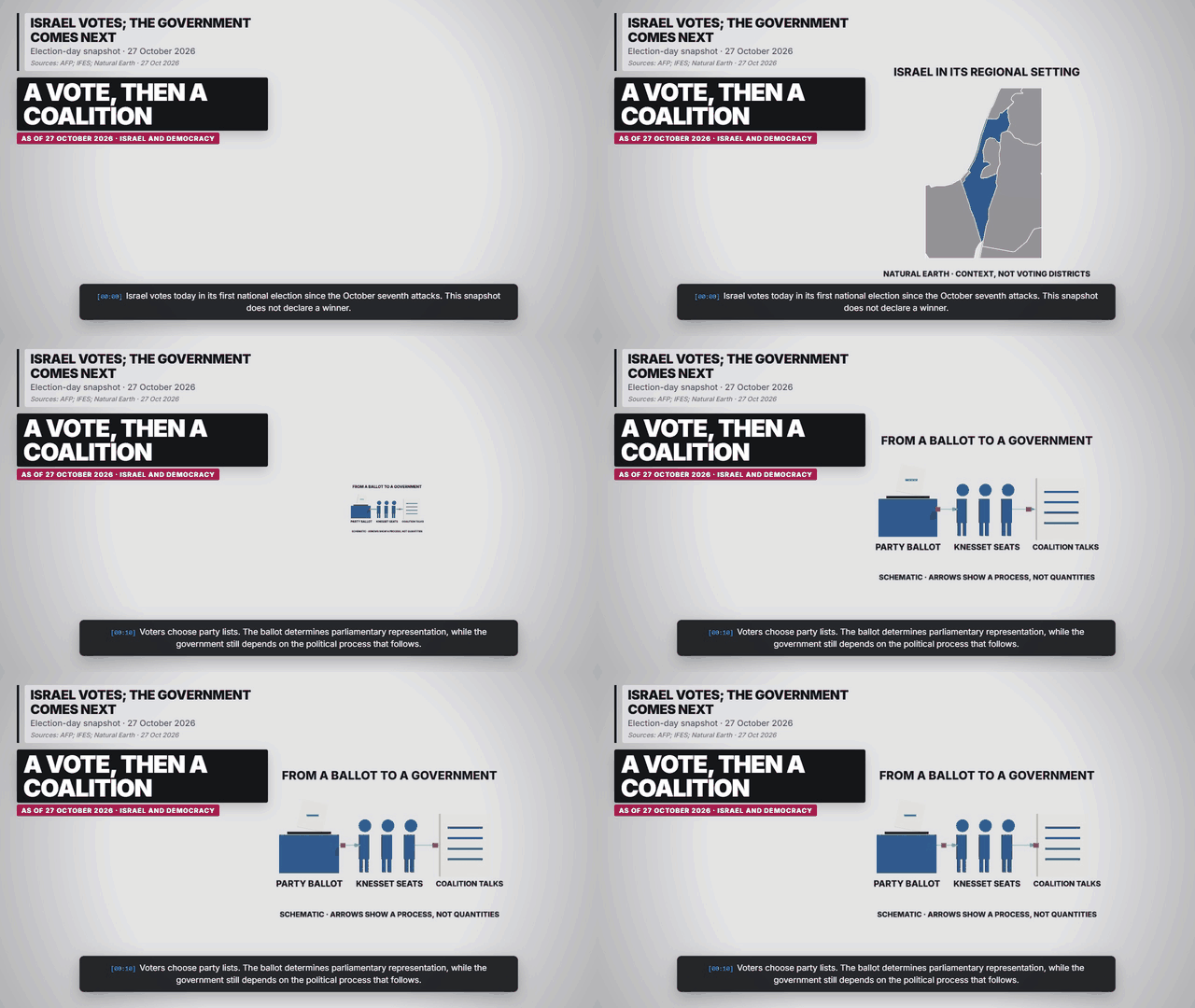
- A party ballot elects a parliament, with coalition talks to follow.
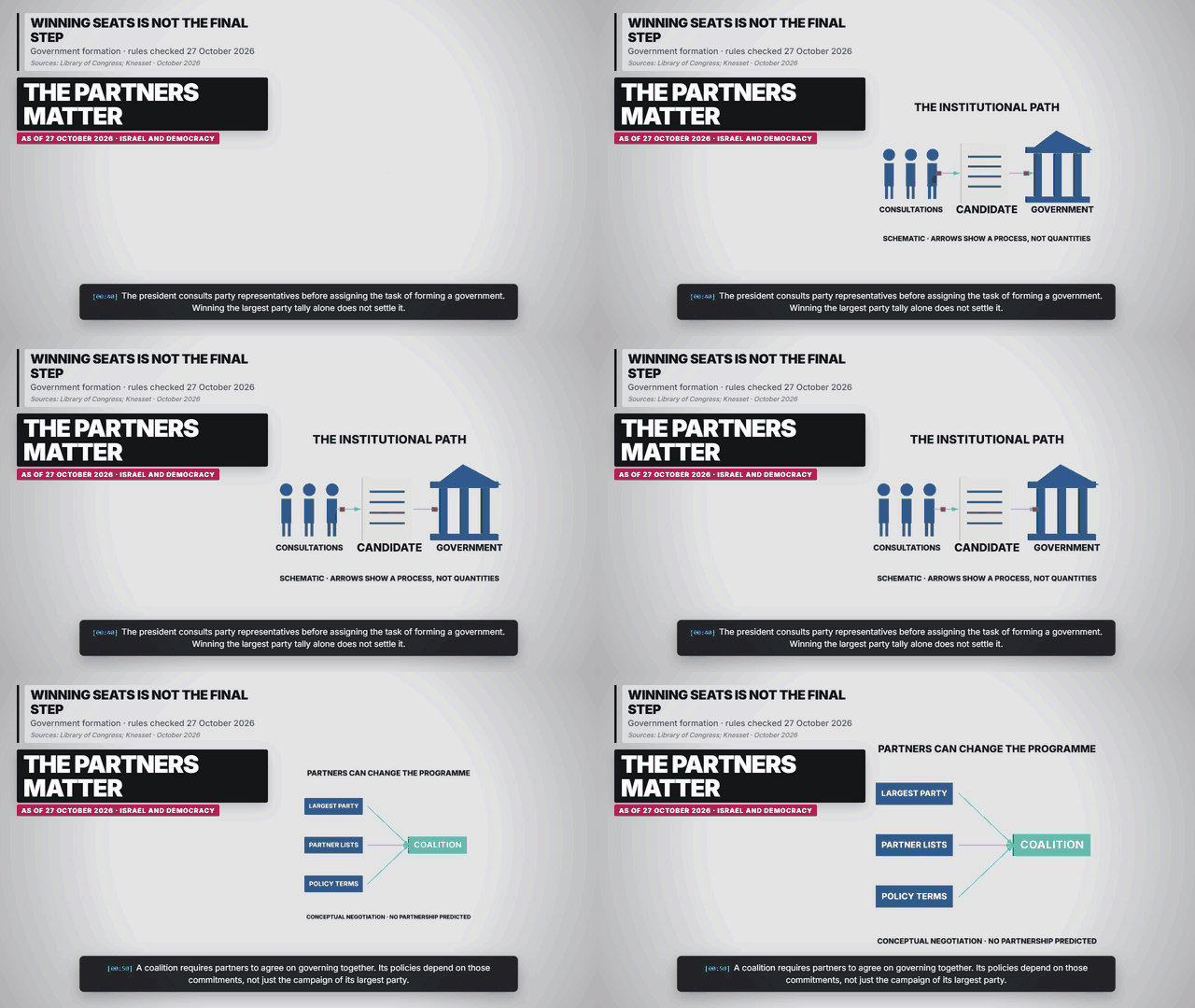
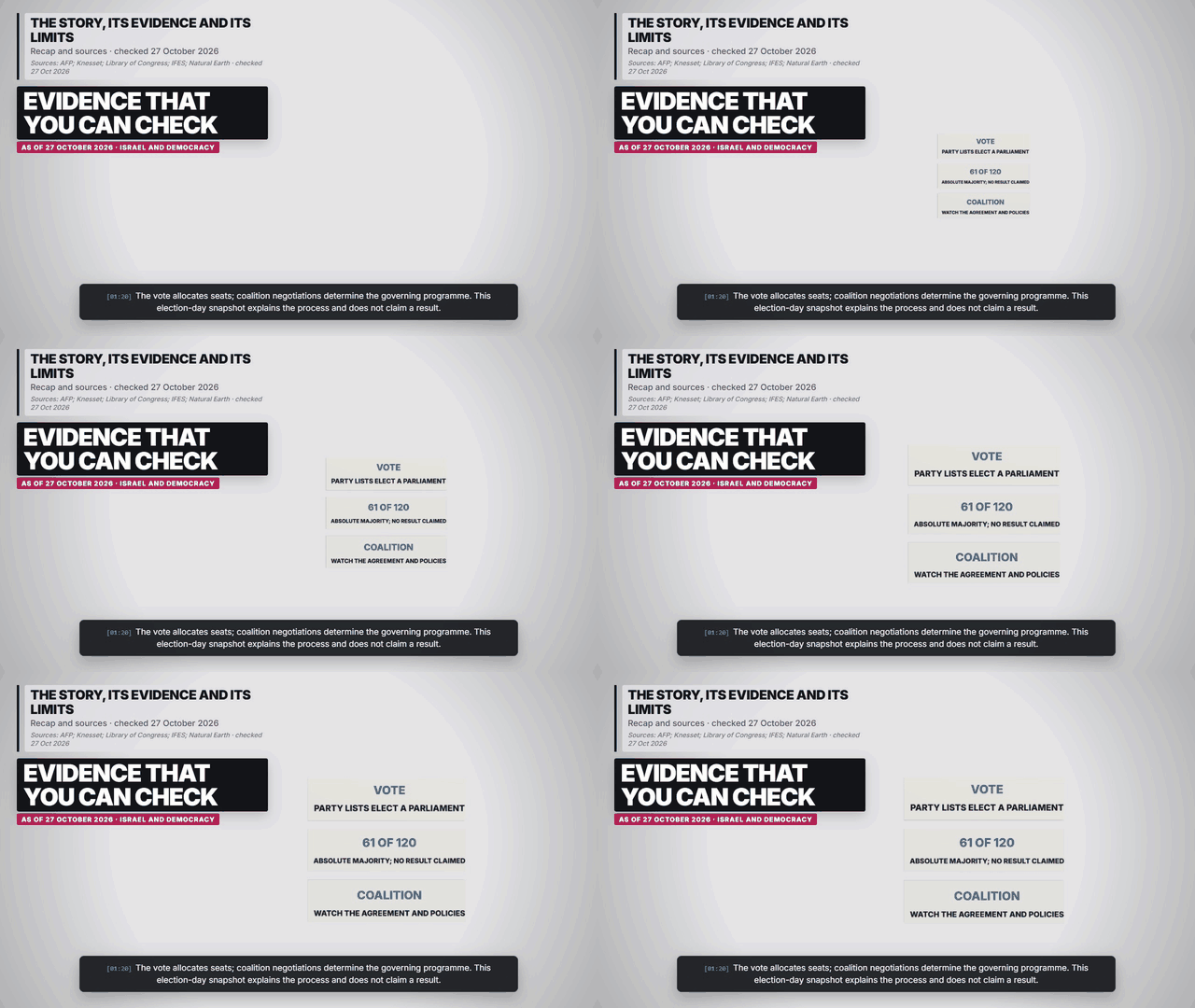
- An absolute majority is 61 of 120 seats.
Sourced facts and figures
| Period | Fact or figure | Definition | Source |
|---|---|---|---|
| 27 Oct 2026 | Election day | No result claimed | AFP: Israel votes in pivotal election |
| Current rules, checked 27 Oct 2026 | 120 seats | Knesset chamber | IFES: Israel election guide |
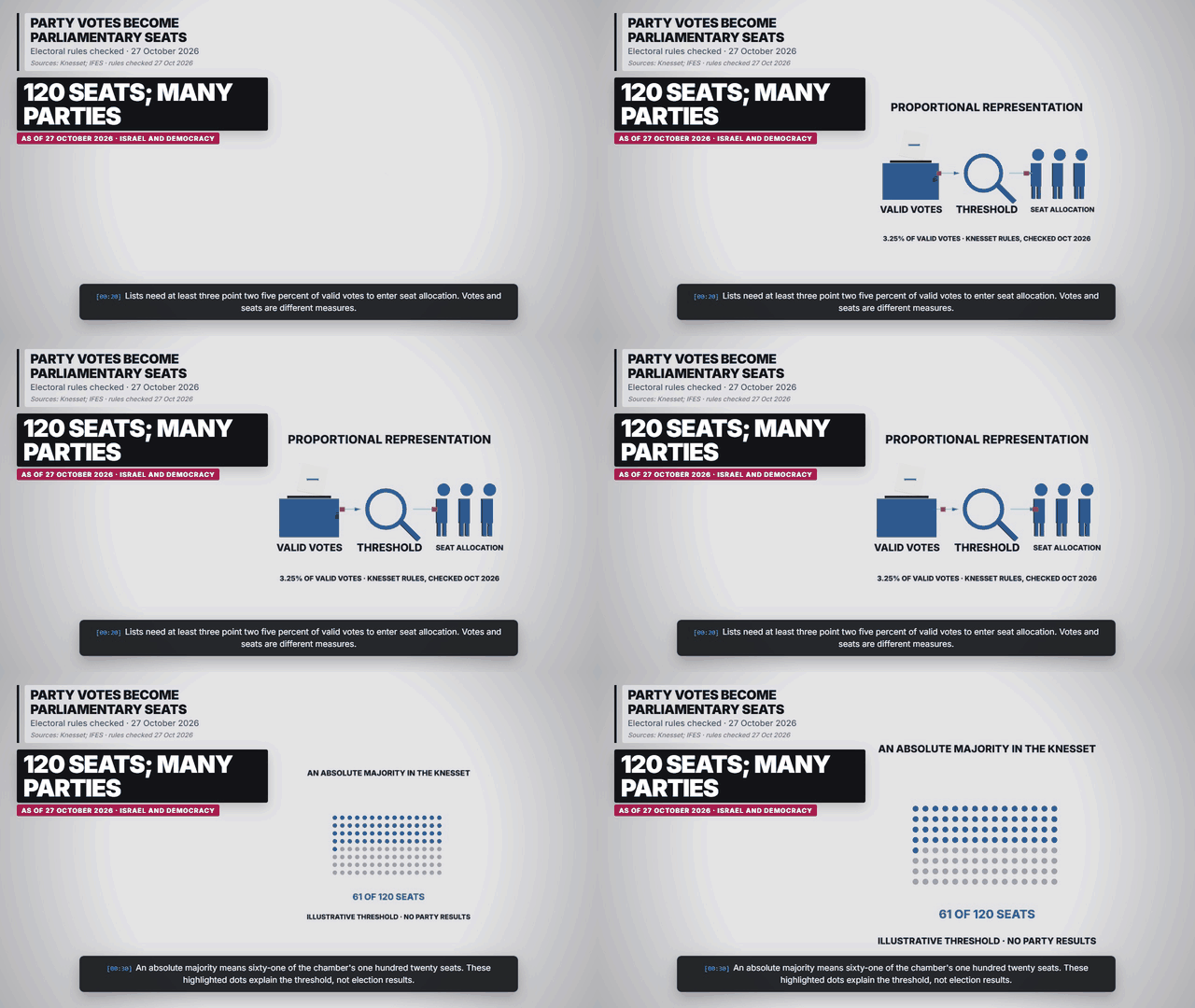
| Current rules, checked 27 Oct 2026 | 3.25% | Share of valid votes required for representation | Knesset: electoral system |
| Current rules, checked 27 Oct 2026 | 61 seats | Absolute majority of 120; illustrative, not results | Library of Congress: election and government formation |
The vote and the stakes
Voters are judging Benjamin Netanyahu after years of regional conflict. AFP describes accountability and security as central campaign issues. A change in parliamentary arithmetic could change the government, but election-day expectations cannot establish who will govern. Source: AFP: Israel votes in pivotal election.
Why the biggest party may not govern
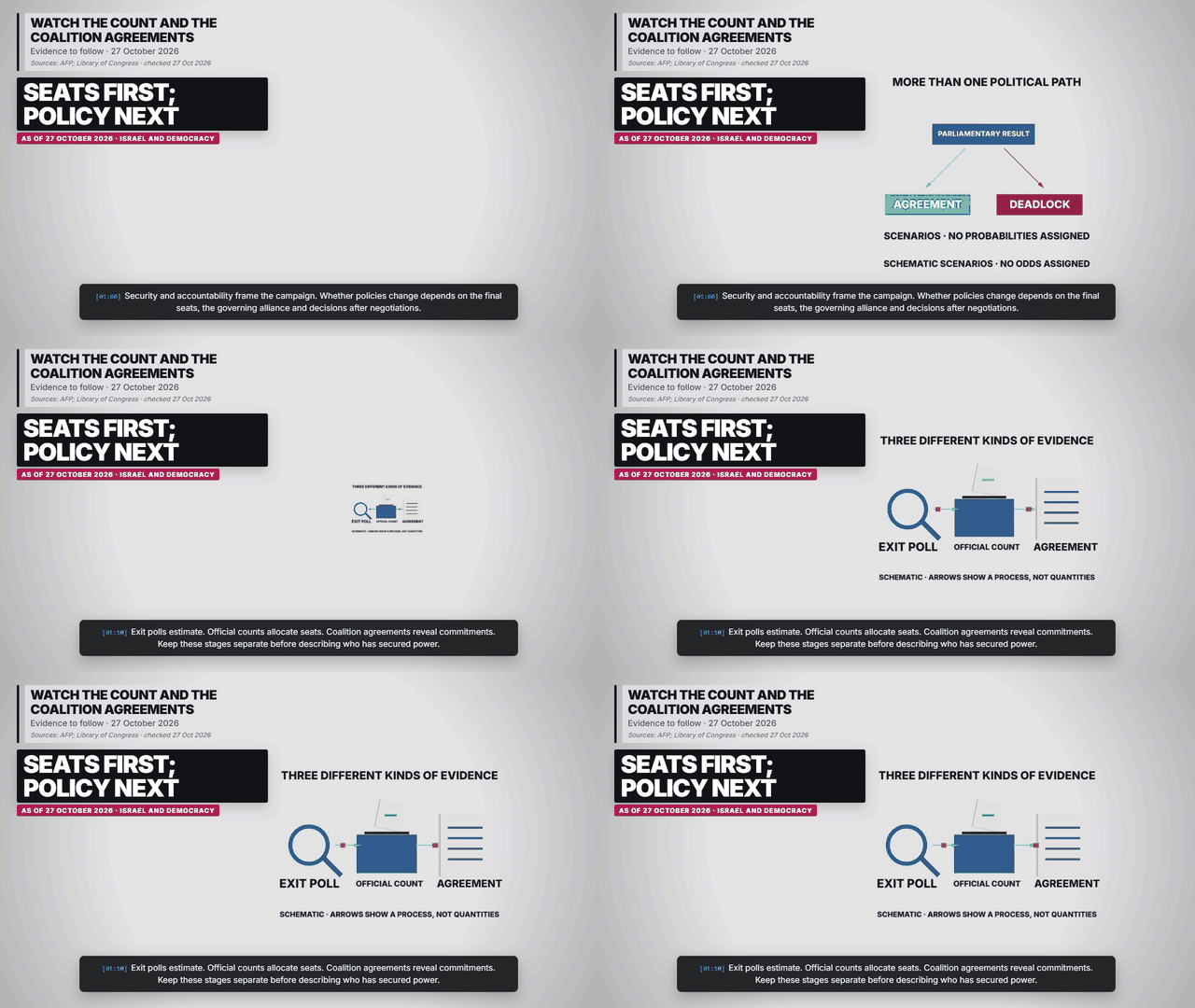
The Knesset uses nationwide party-list elections. Lists must clear 3.25% of valid votes to participate in seat allocation. Being the largest list does not itself secure power: coalition partners and their policy conditions matter. Source: Knesset: electoral system.
The number to watch
The chamber has 120 members. The highlighted 61 dots show the smallest absolute majority, without assigning seats to any contender. After consultations, the president gives a candidate the task of forming a government. Negotiations can continue after vote counting ends. Source: Library of Congress: election and government formation.
What this snapshot can establish
IFES confirms the election date and system. This page separates ballots, seat allocation and government formation, and provides no exit-poll estimate. Follow certified results and announced coalition commitments before treating a campaign promise as government policy. Source: IFES: Israel election guide.
Frequently asked questions
Has anyone won?
No winner is declared in this election-day snapshot, checked before polls close.
Do the dots show Netanyahu seats?
No. They illustrate 61 of 120 seats, an absolute majority.
Does the largest party automatically lead the government?
No. Forming a government depends on the institutional process and parliamentary support.
Charts, maps and diagrams from the explainer
Sources and reporting scope
- AFP: Israel votes in pivotal election. 2026-10-27. Election-day reporting: Netanyahu faces voters in the first national election since October 7, 2023. No outcome asserted.
- Knesset: electoral system. Rules checked 27 Oct 2026. Citizens vote for lists; proportional representation and a 3.25% electoral threshold.
- Library of Congress: election and government formation. October 2026. Election date, allocation of 120 seats and the institutional process.
- IFES: Israel election guide. Checked 27 Oct 2026. Confirms election date, nationwide constituency, 120-seat chamber and party-list system.
- Natural Earth: country boundaries. v5.1.2; generated 27 Oct 2026. One projection per map; neighbouring countries clipped at frame edges. Geography only; no territorial endorsement or live movements.
Checked 27 October 2026, 14:45 UTC. Election-day snapshot before polls close; no winner, turnout or final seat totals claimed. The 61-seat grid illustrates an absolute majority, not a party result. Process diagrams are schematic.
Explore the five scenes