Oleshky: A Local Ceasefire and a Humanitarian Test
The announced local ceasefire for Oleshky, scheduled for 27 October 2026: aid, voluntary evacuation and the limits of the agreement. Checked 25 October.
▶ Explore the narrated explainerKey takeaways
- The announcement concerns one locality and humanitarian access.
- 27 October is the reported scheduled start; it is still future at this page’s cutoff.
- A local arrangement, successful delivery and a wider peace agreement are separate outcomes.
The dated facts and their scope
| Date or item | Reported fact or scheduled event | Scope and condition | Source |
|---|---|---|---|
| Oleshky | Russian-occupied Ukrainian town | Local scope of the announced agreement | Reuters via Internazionale: Oleshky agreement and proposed talks |
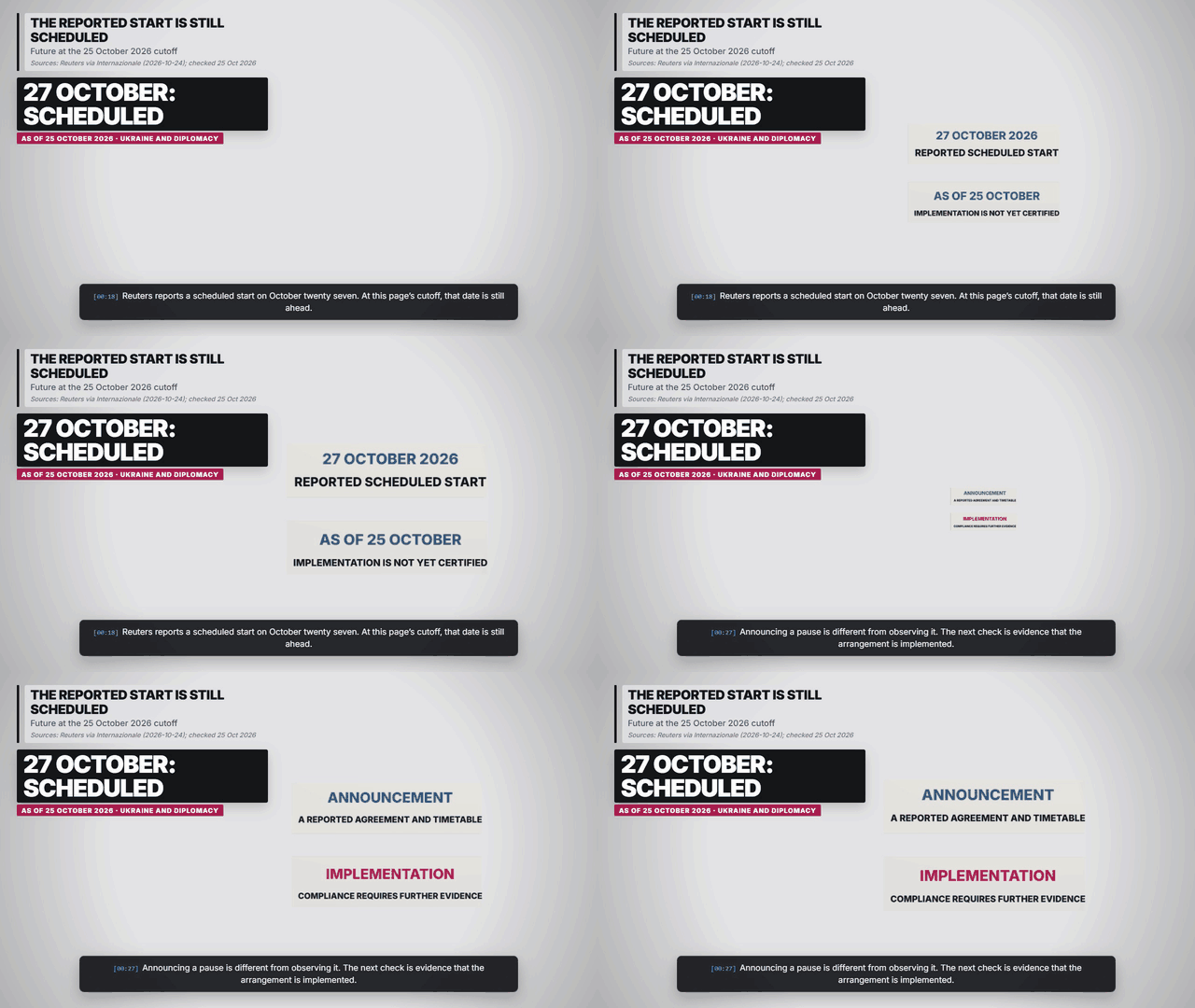
| 27 October 2026 | Reported scheduled ceasefire start | Future at the 25 October cutoff; not confirmed implementation | Reuters via Internazionale: Oleshky agreement and proposed talks |
| Aid and evacuation | Humanitarian purpose | Delivery and safe passage require follow-through | AP: What to know about the Oleshky ceasefire |
| November 2026 | Proposed further negotiations | Plans remain conditional; no settled venue asserted | Reuters via Internazionale: Oleshky agreement and proposed talks |
What has been announced?
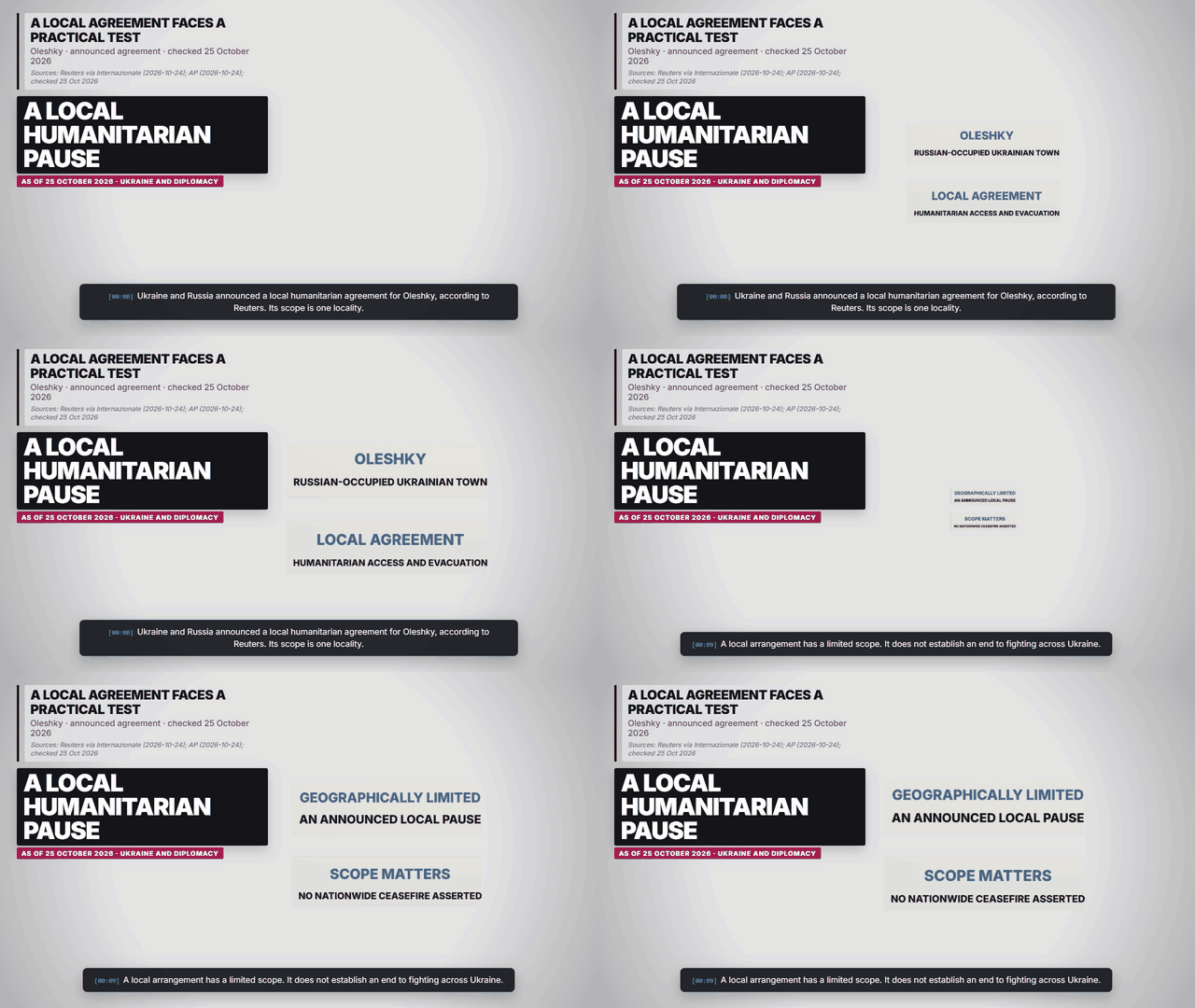
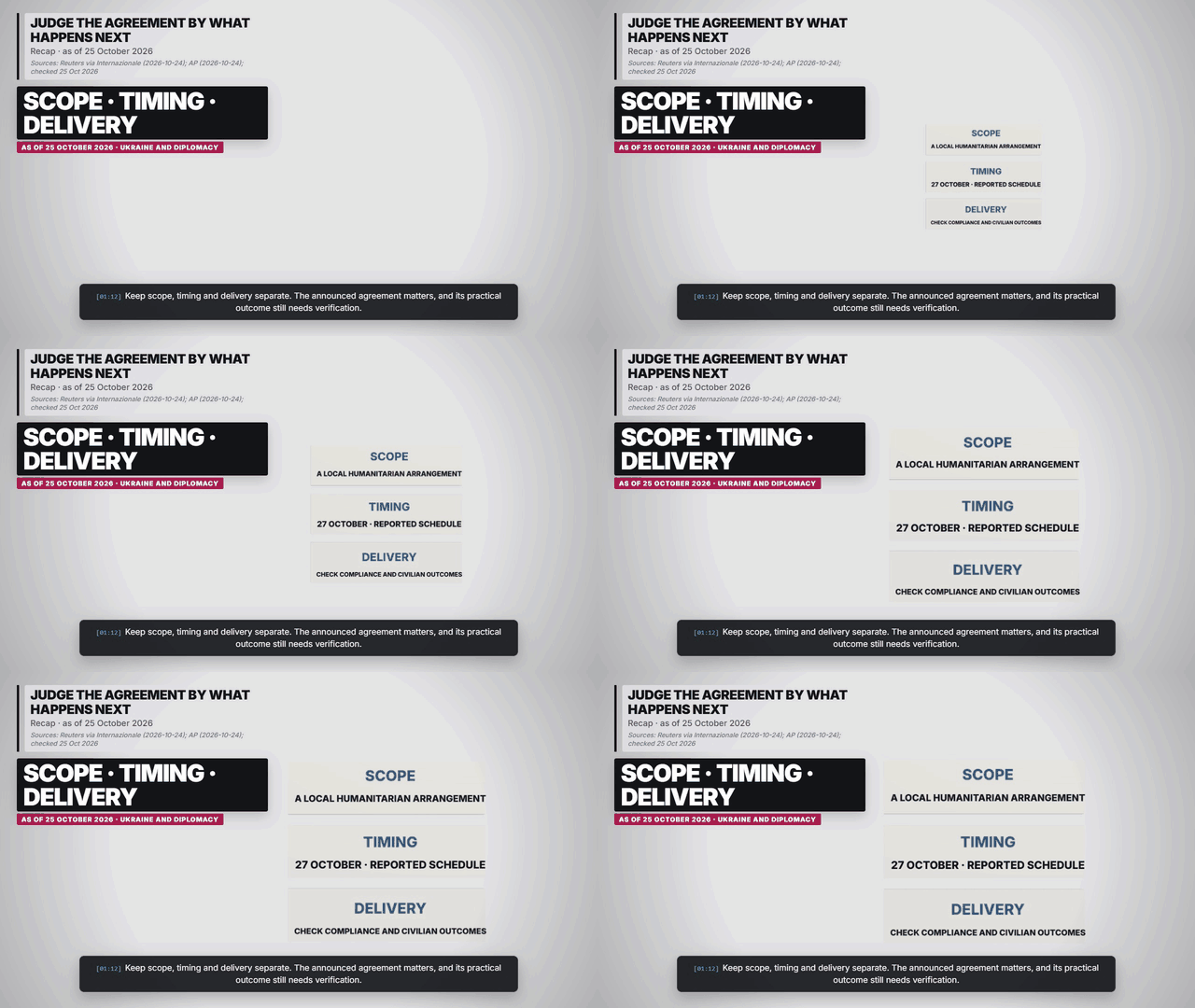
Reuters reports that Ukraine and Russia agreed to a localized ceasefire concerning Oleshky, a Russian-occupied Ukrainian town. The announced purpose is humanitarian access and civilian evacuation. The key boundary is geographic: the story concerns an arrangement for one locality. It does not establish an end to fighting elsewhere or a negotiated settlement of the war.
When is it supposed to begin?
The Reuters account reports a scheduled start on 27 October. Earlier reporting carried different timing; this page uses the later reported schedule and retains the word scheduled. At the 25 October research cutoff, the start is still in the future. An agreement’s announcement, its effective start and evidence of compliance should be recorded as separate milestones.
Why the sequence matters
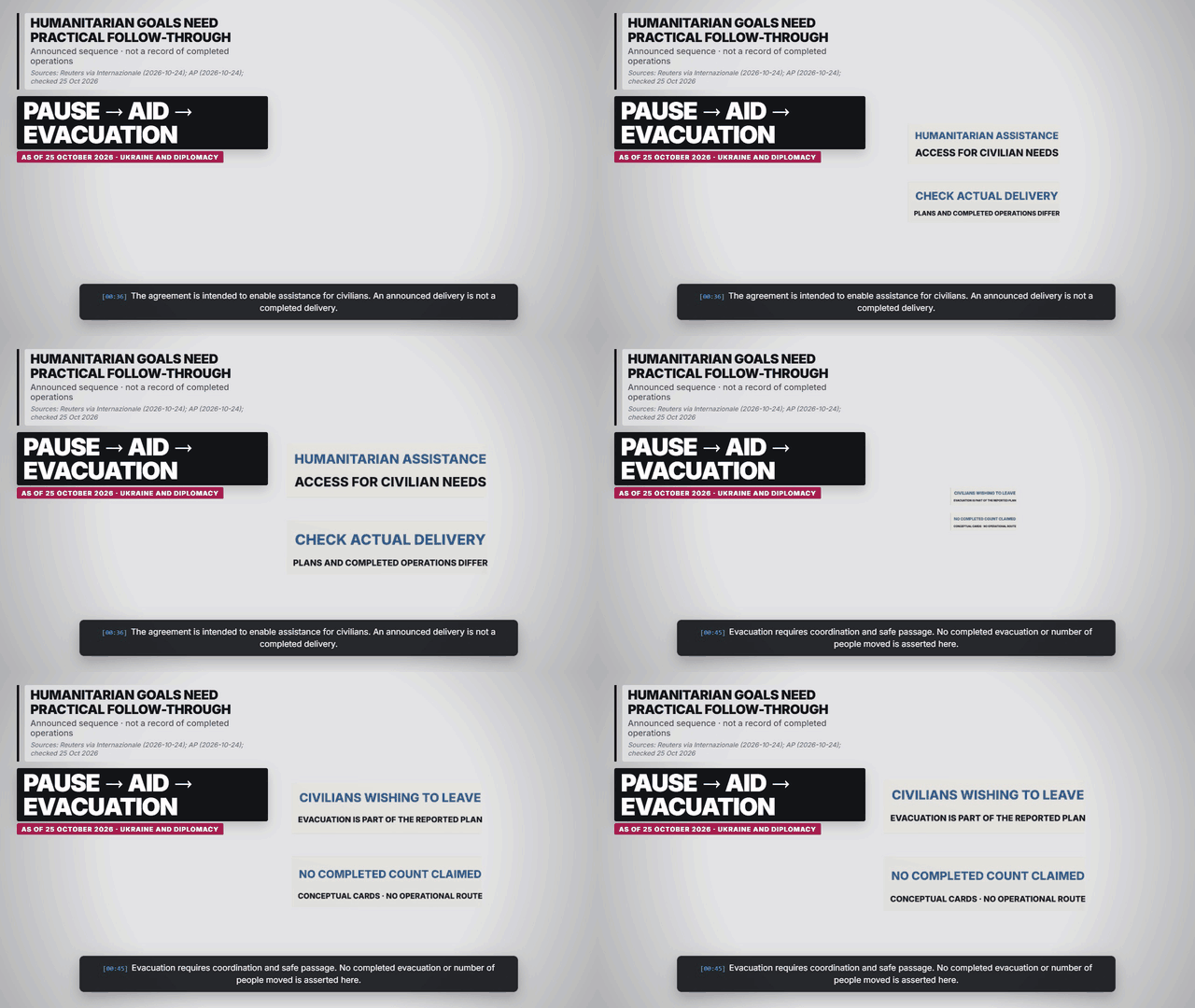
AP describes the arrangement in stages: a ceasefire, humanitarian aid and evacuation of civilians wishing to leave. Those stages depend on practical coordination. Safe routes, access for assistance and actual movement need evidence from the operation itself. The conceptual cards do not depict real routes or locations of personnel. No operational map, participant list or evacuation count is supplied.
How does this relate to diplomacy?
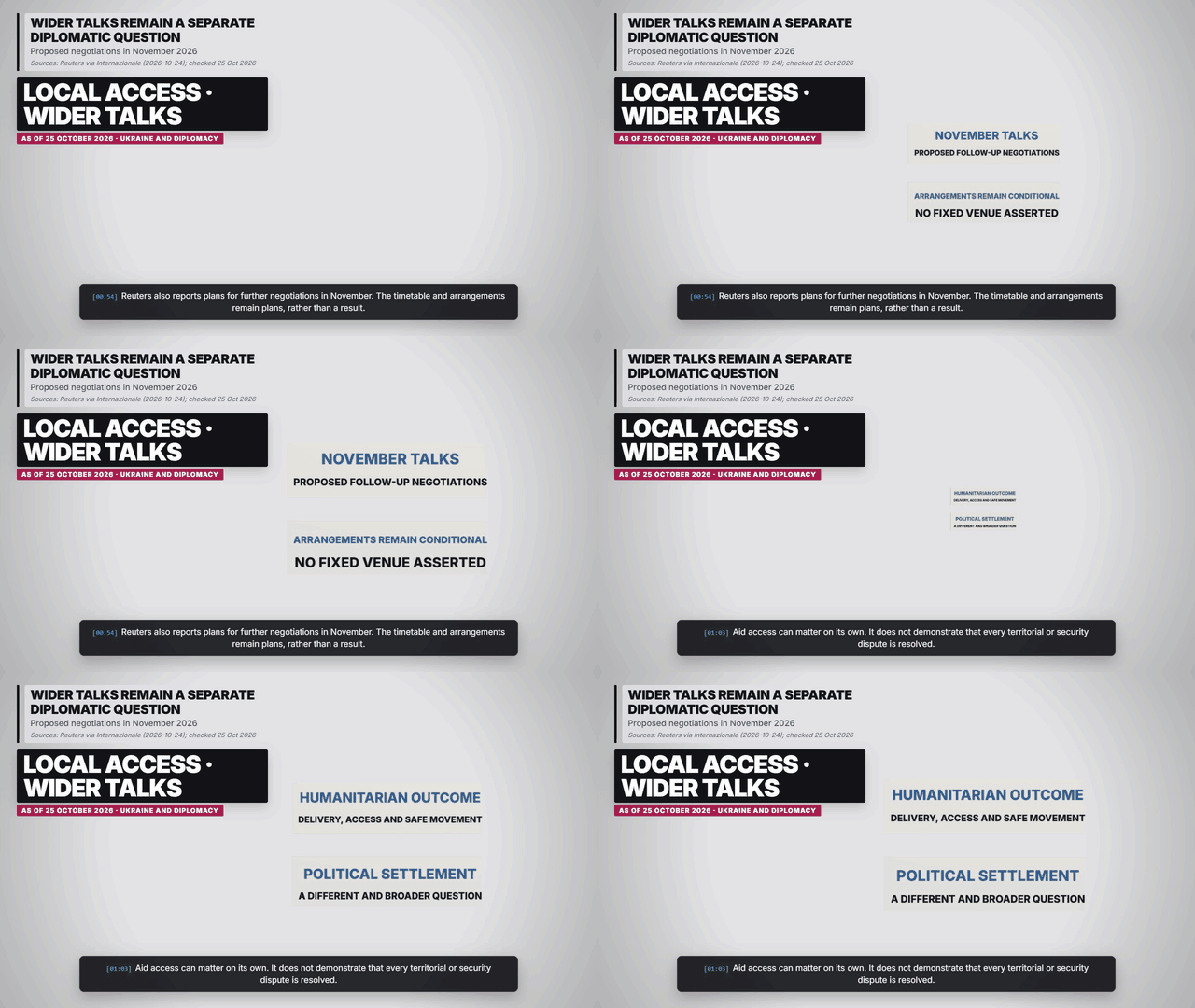
Reuters also reports plans for further negotiations in November. The page treats them as plans and avoids asserting a settled venue or a guaranteed leaders’ meeting. A humanitarian arrangement can be important on its own terms even while broader political disputes remain unresolved. Describing one successful negotiation would not establish agreement on every territorial or security issue.
What evidence would change this account?
The next checks concern implementation: whether the announced pause starts, whether aid reaches civilians and whether people who wish to leave can do so. Later reporting should distinguish an announced convoy from a completed delivery and a planned evacuation from people safely moved. This page makes no claim that these outcomes have already happened and supplies no casualty total.
Primary reporting and documents: Reuters via Internazionale: Oleshky agreement and proposed talks, AP: What to know about the Oleshky ceasefire.
Frequently asked questions
Is this a nationwide ceasefire?
No. The reported announcement concerns Oleshky and a localized humanitarian operation.
Has it already started?
At this page’s 25 October 2026 cutoff, Reuters reports a scheduled start on 27 October. Implementation is not presented as completed.
Does the agreement guarantee a peace settlement?
No. Humanitarian access, compliance with a local pause and a wider political agreement are separate questions.
Sources and reporting cutoff
- Reuters via Internazionale: Oleshky agreement and proposed talks. 2026-10-24. Report dated 23 October, republished 24 October. Both sides describe a local ceasefire scheduled for 27 October; future talks remain planned.
- AP: What to know about the Oleshky ceasefire. 2026-10-24. Explains the localized humanitarian agreement and the sequence of a ceasefire, aid and evacuation.
As of 25 October 2026. This concerns Oleshky, a Russian-occupied Ukrainian town, and an announced local humanitarian agreement scheduled for 27 October. Implementation, aid access and evacuation are not certified here as completed. Earlier reports carried different start dates; this page uses the subsequent 27 October timing reported by Reuters and labels it scheduled. Talks in November are proposed, with no fixed venue asserted. No nationwide ceasefire, peace settlement, evacuation count or casualty total is claimed.
▶ Explore the five scenesCharts, maps and diagrams from the explainer