US Midterms: What a Democratic Congress Means for AI
Democrats won control of Congress in the 2026 midterms. Why investors are weighing AI oversight, data-centre spending and a policy outcome that remains unsettled.
Explore the five-scene explainerKey takeaways
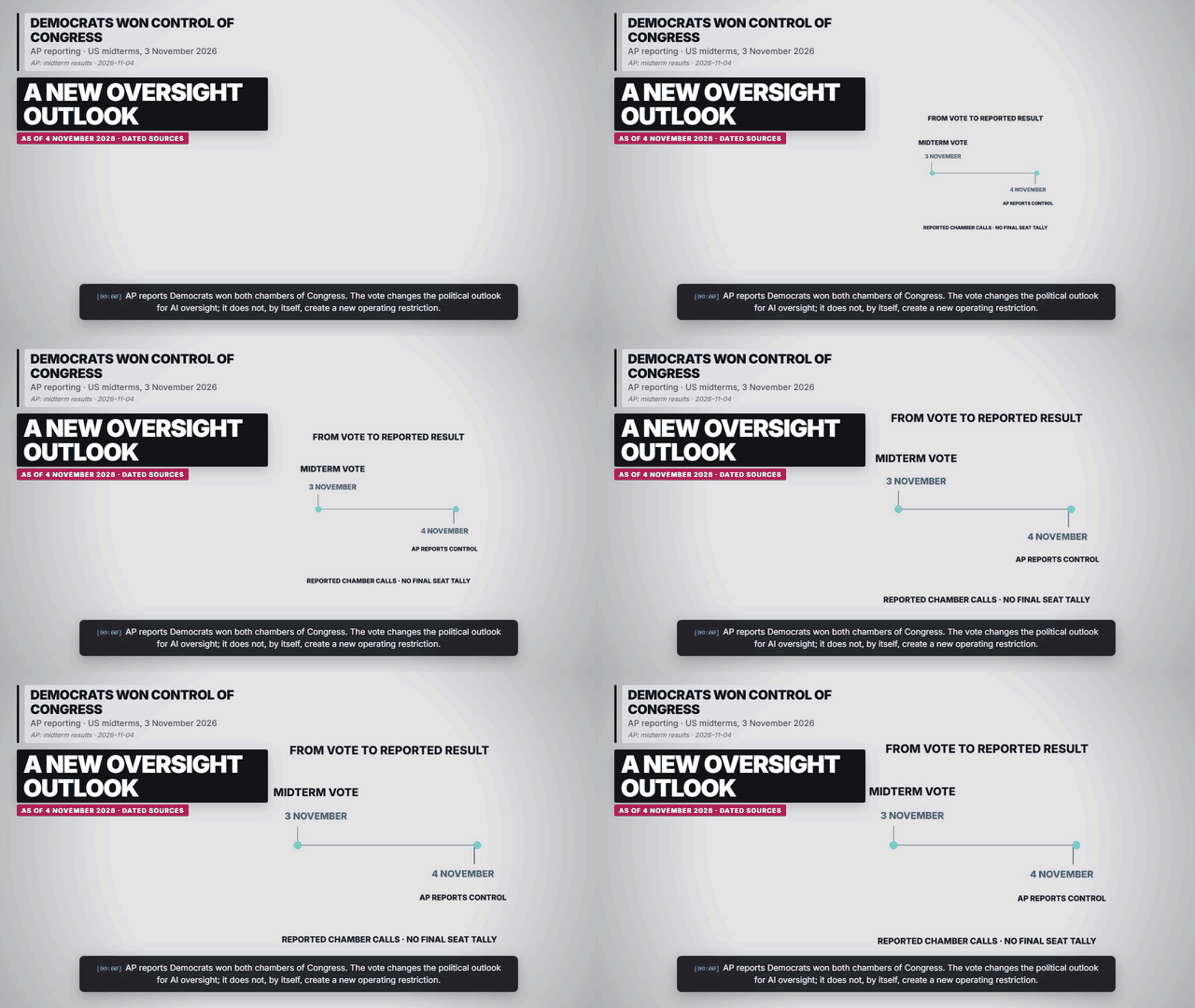
- AP reports Democratic control of both chambers; final certified seat totals are not shown.
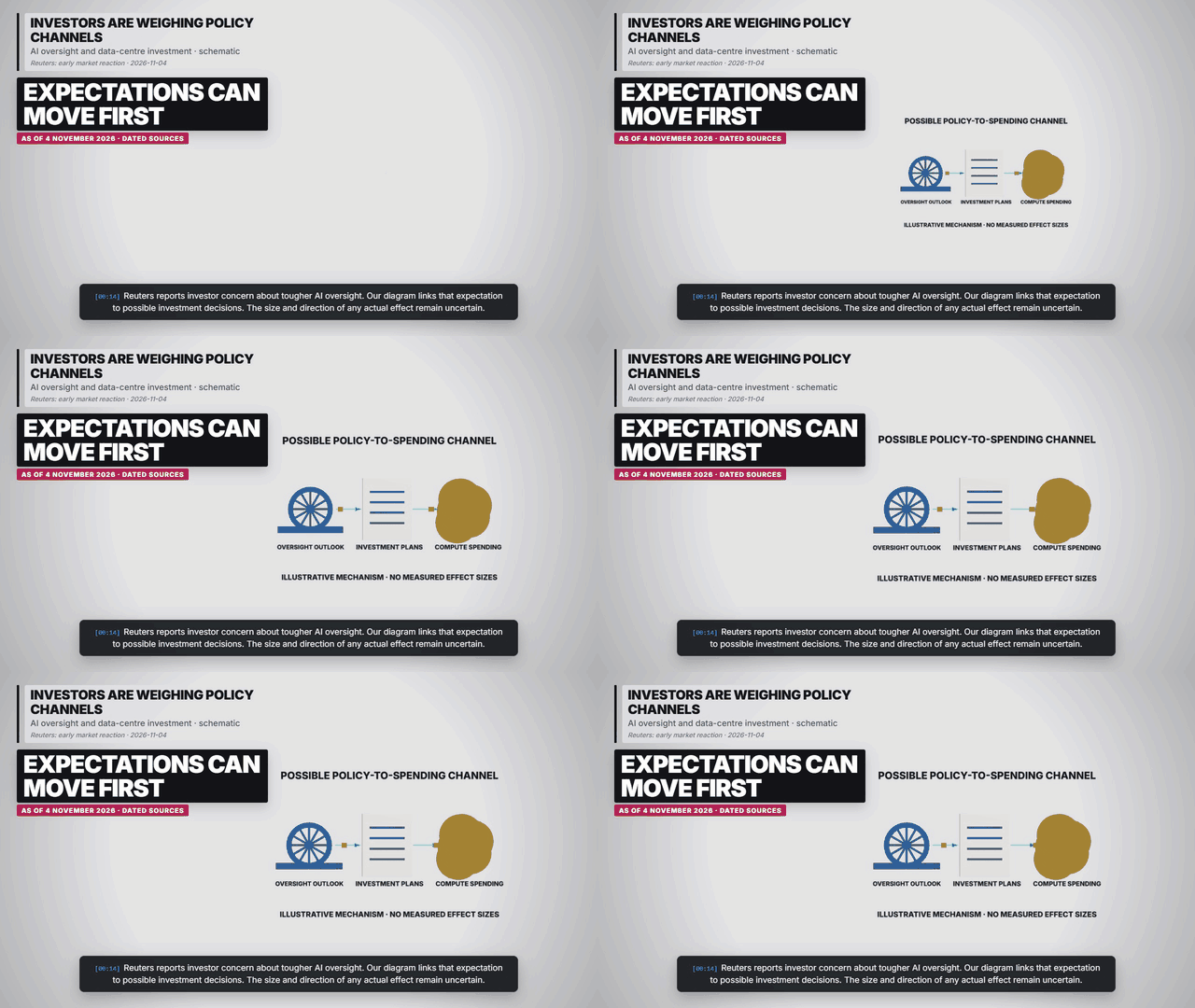
- AI regulation concerns are investor expectations, not enacted restrictions.
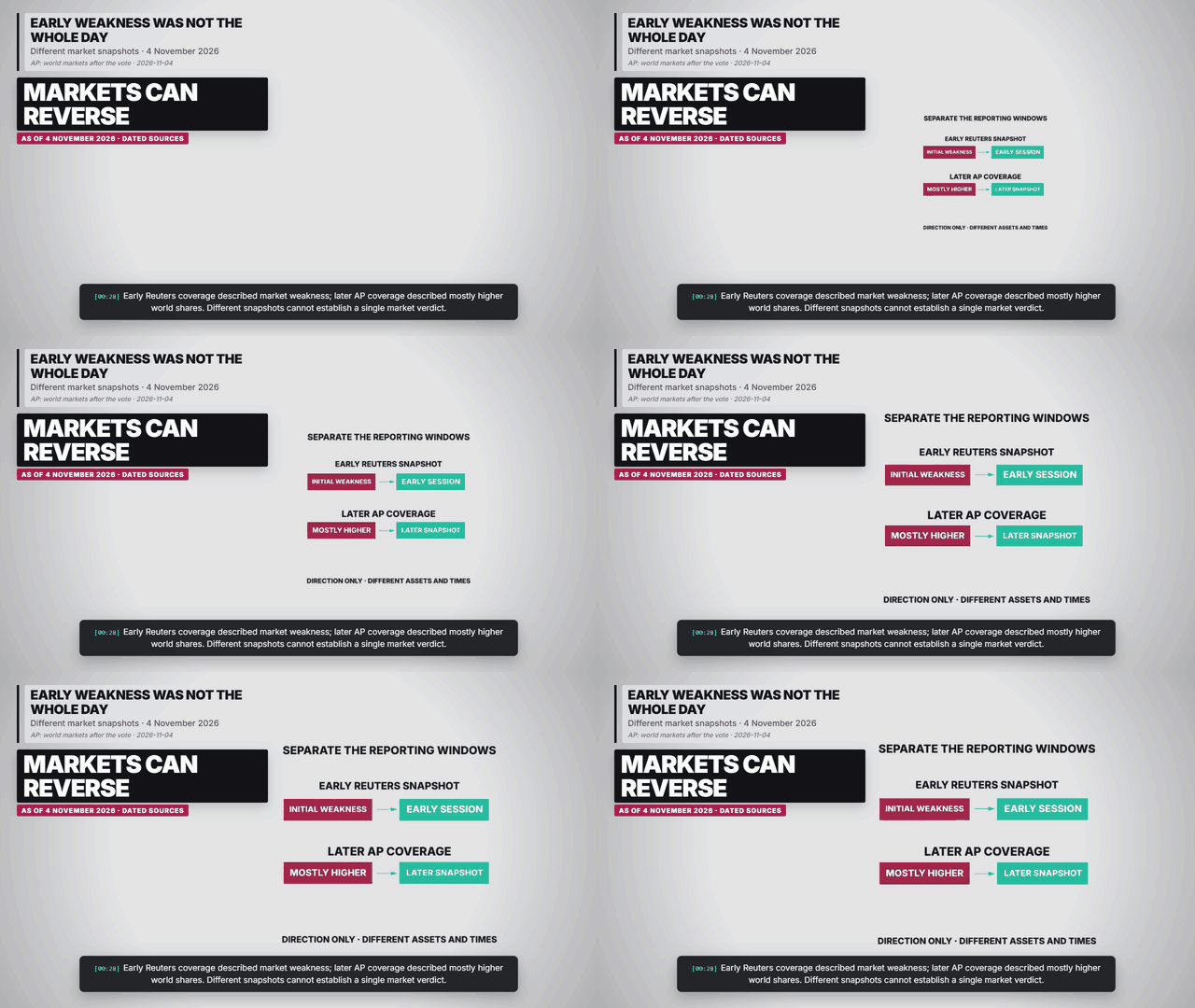
- Early trading weakness and later gains must be read in their own time windows.
Sourced figures and status
| Period | Figure or status | Source |
|---|---|---|
| 3 Nov vote / 4 Nov reporting | AP reports Democrats won control of the House and Senate. | AP: midterm results · 2026-11-04 |
| 4 Nov, early Asian-session reporting | Reuters describes initial weakness as investors weigh possible AI oversight. | Reuters: early market reaction · 2026-11-04 |
| 4 Nov, later reporting | AP describes mostly higher world shares. This is a different snapshot. | AP: world markets after the vote · 2026-11-04 |
Why can prices move before policy changes?
Our interpretation is that investors price possible future cash flows. A change in who controls oversight can alter their range of expectations before a specific measure exists. The diagram does not estimate the likelihood of legislation or attribute a whole market move to one political event. Source and context.
What evidence matters next?
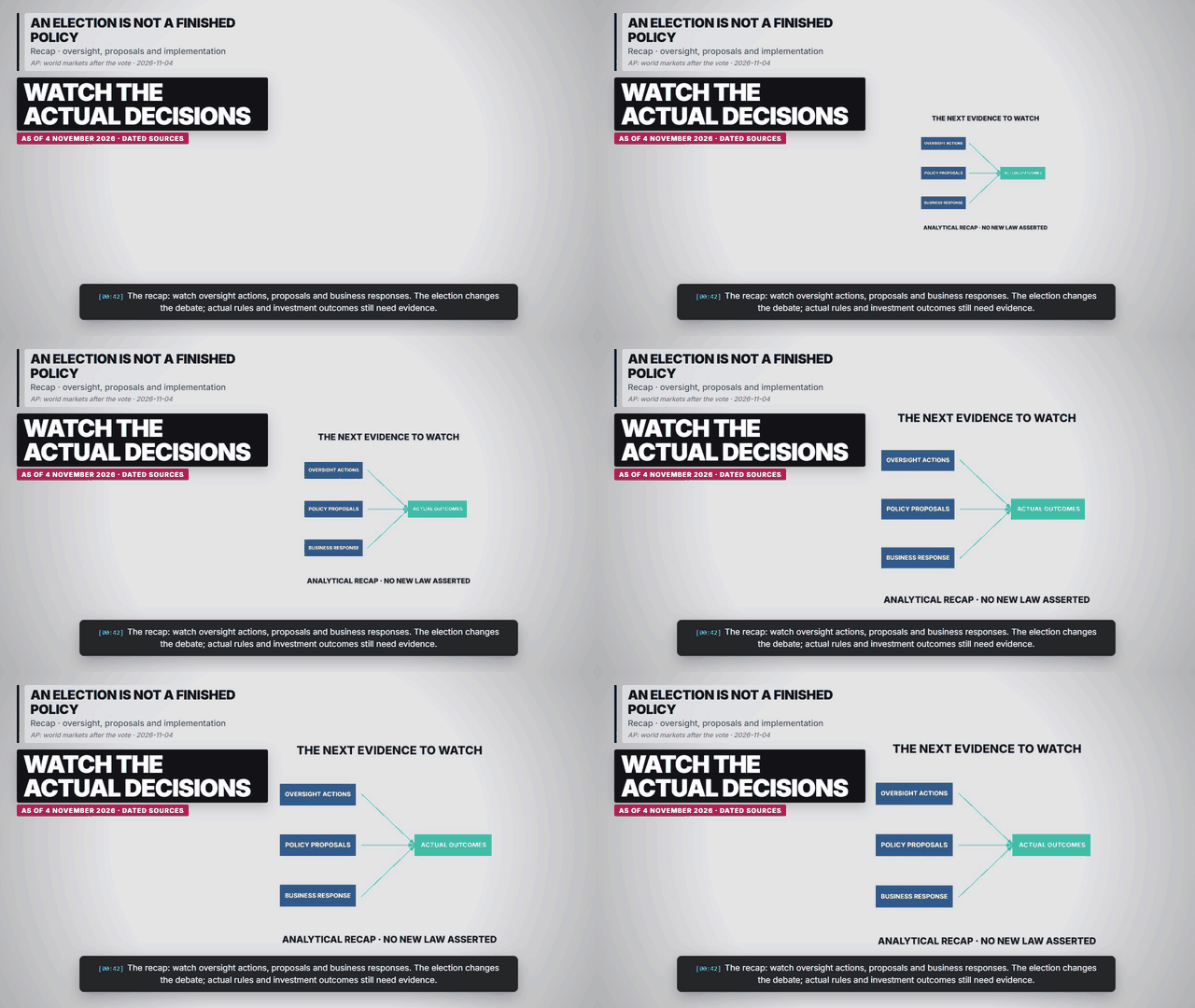
For this story, concrete proposals and company decisions are more informative than extrapolating one early price move. Track what is proposed, what is adopted and what is implemented as separate milestones. The page deliberately avoids inventing a policy timetable or a final seat count. Source and context.
Charts, maps and diagrams from the explainer
Frequently asked questions
Has Congress enacted new AI restrictions because of this vote?
This page does not establish any new restriction. It explains the oversight outlook and investor expectations.
Did world markets all fall after the result?
No. Early weakness and later mostly higher shares appeared in different reports and time windows.
Sources and reporting scope
AP: midterm results. 2026-11-04. Election-night reporting calls control of both chambers for Democrats; not a final certified seat tally.
Reuters: early market reaction. 2026-11-04. Early Asian-session report, published 3 November US Eastern time. Initial market weakness is a dated snapshot, not the eventual session outcome.
AP: world markets after the vote. 2026-11-04. Later market reporting describes mostly higher world shares; political change does not enact AI regulation by itself.
As of 4 November 2026. AP reports Democrats won control of both chambers after the 3 November vote. These are reported calls, not certified final seat totals. Investors’ concerns about AI oversight are expectations, not an enacted restriction. Early market weakness and later gains describe different snapshots. Diagrams are analytical mechanisms with no measured policy effects or forecasts. Re-check before re-rendering.