Venezuela’s oil and gold after Maduro
Nine months after US forces captured Nicolás Maduro, Venezuela’s oil is flowing again — north, to US-licensed buyers, with the money landing in a US Treasury account. Its gold is still stuck in London. This is where both stand, with every figure dated and sourced.
Key takeaways
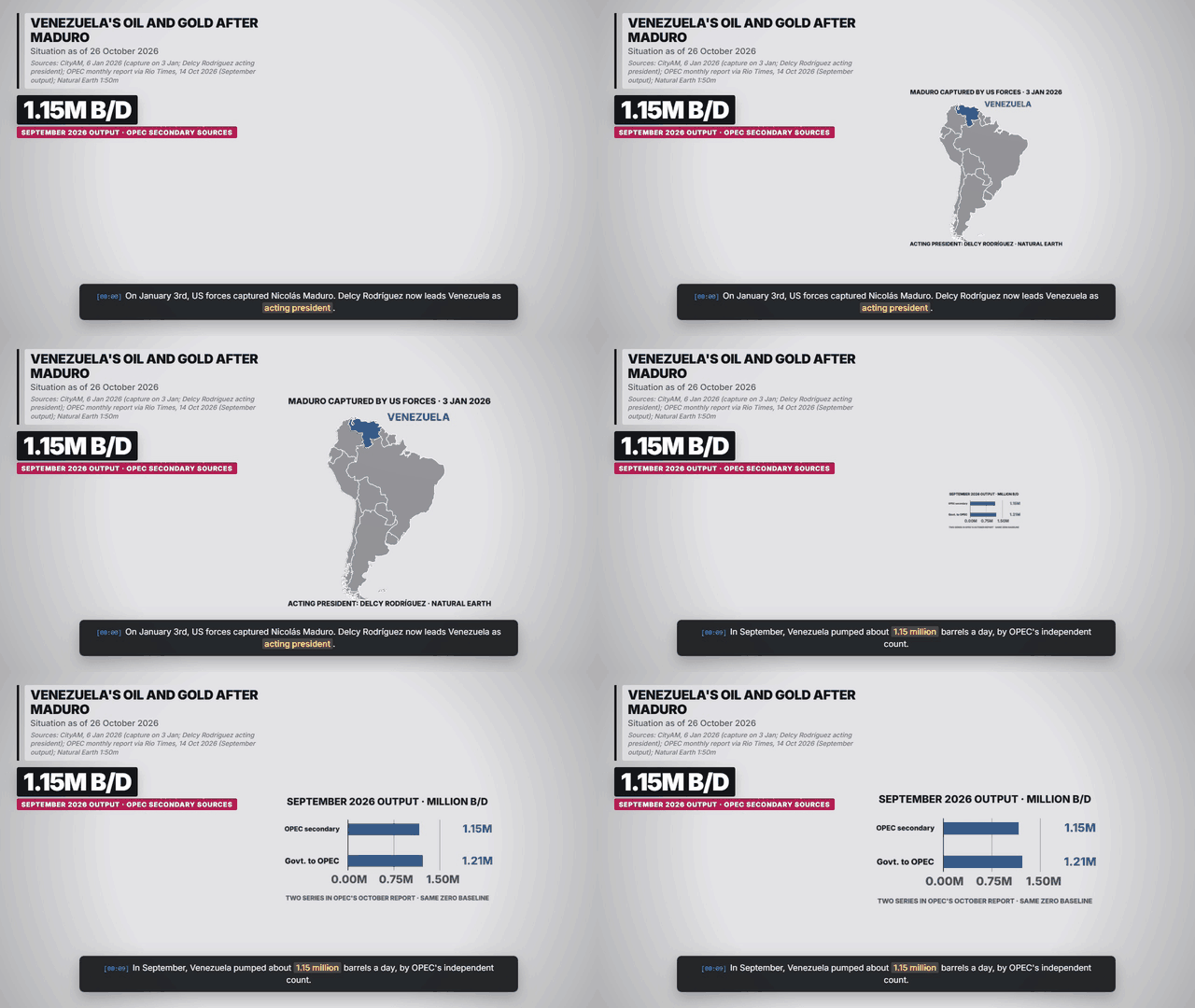
- US forces captured Maduro on 3 January 2026; Delcy Rodríguez leads as acting president.
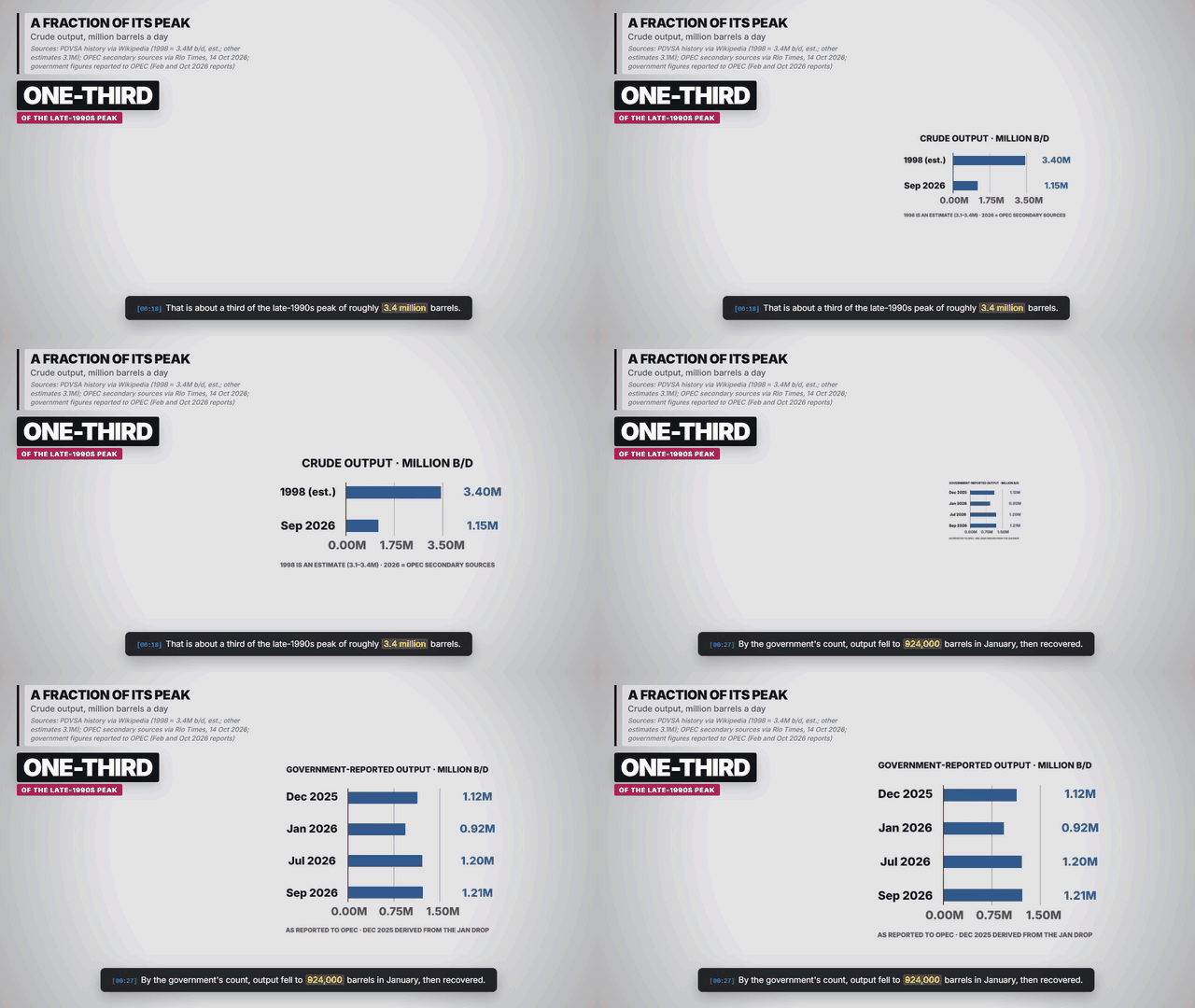
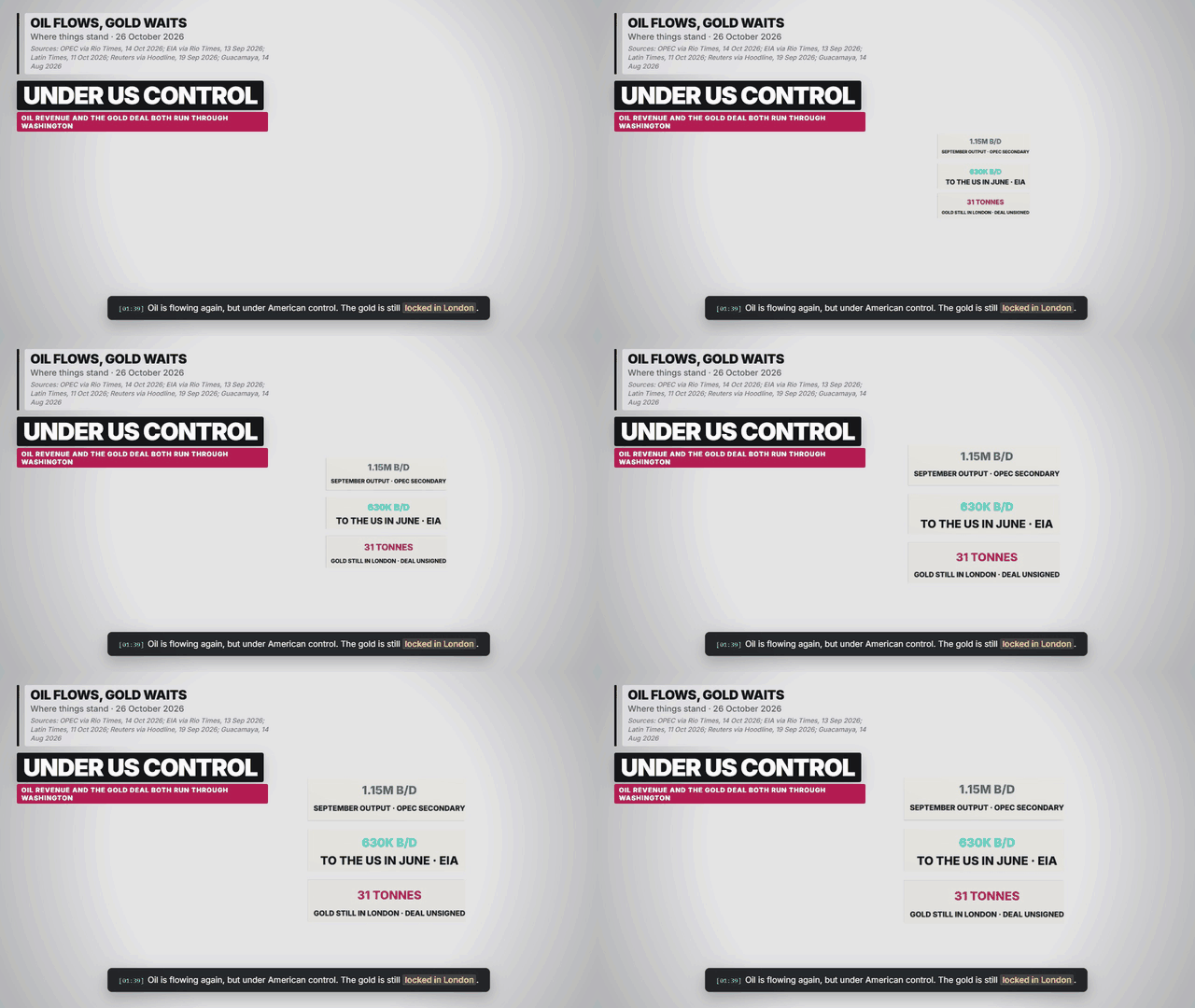
- September output was 1.15 million barrels a day (OPEC secondary sources) — about a third of the late-1990s peak.
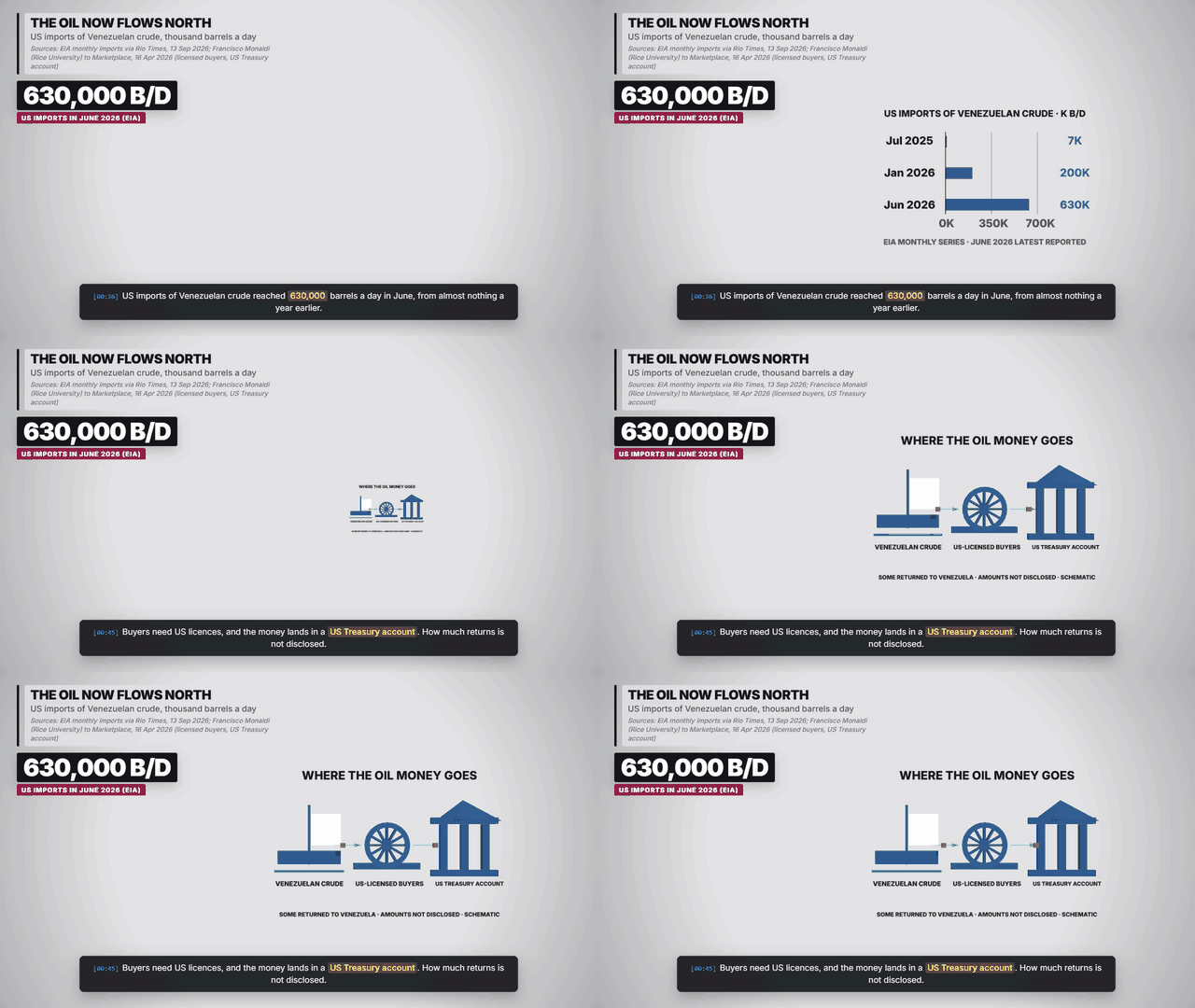
- US imports of Venezuelan crude reached 630,000 b/d in June; proceeds go into a US Treasury account.
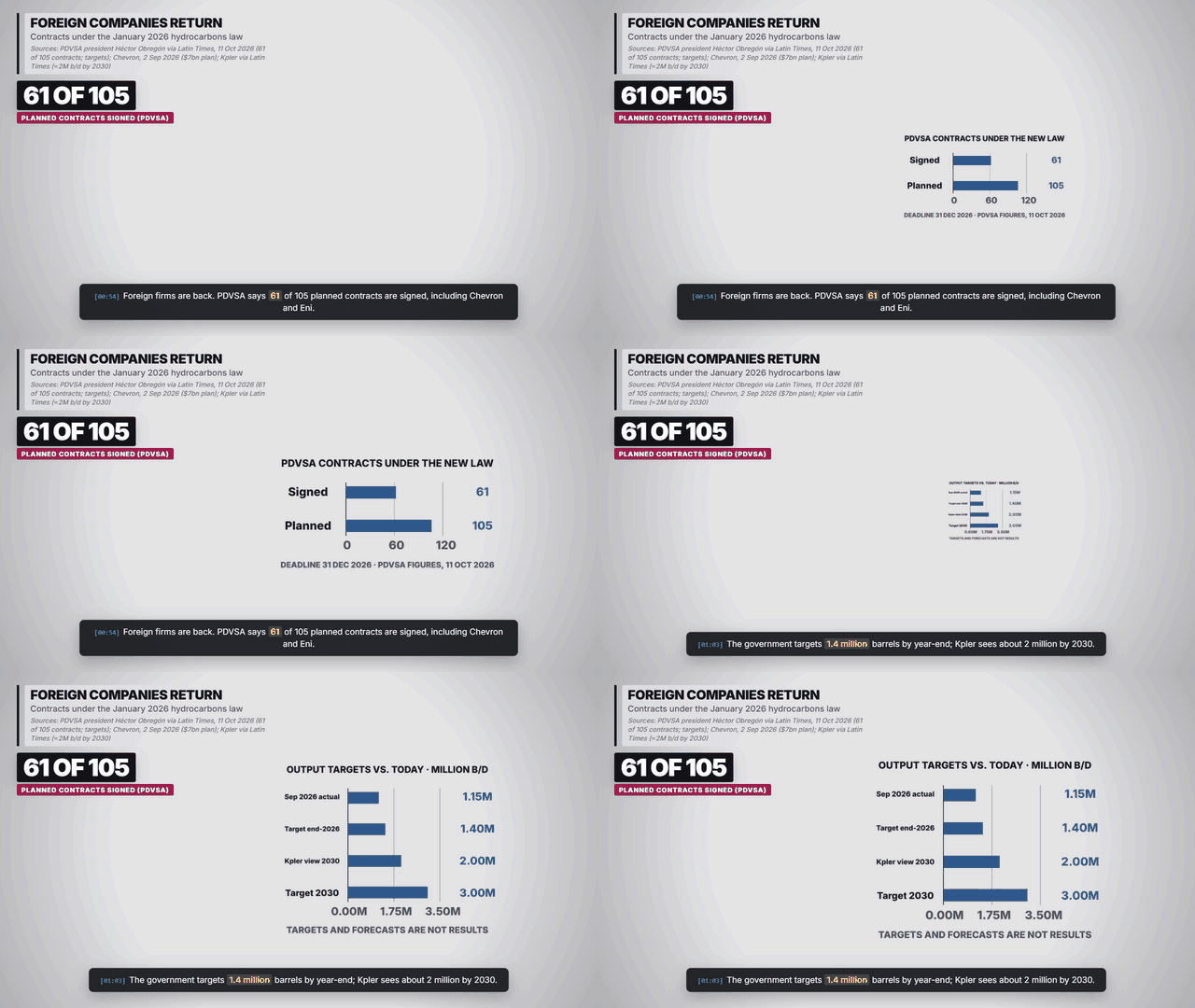
- PDVSA says 61 of 105 planned contracts with private and foreign firms are signed.
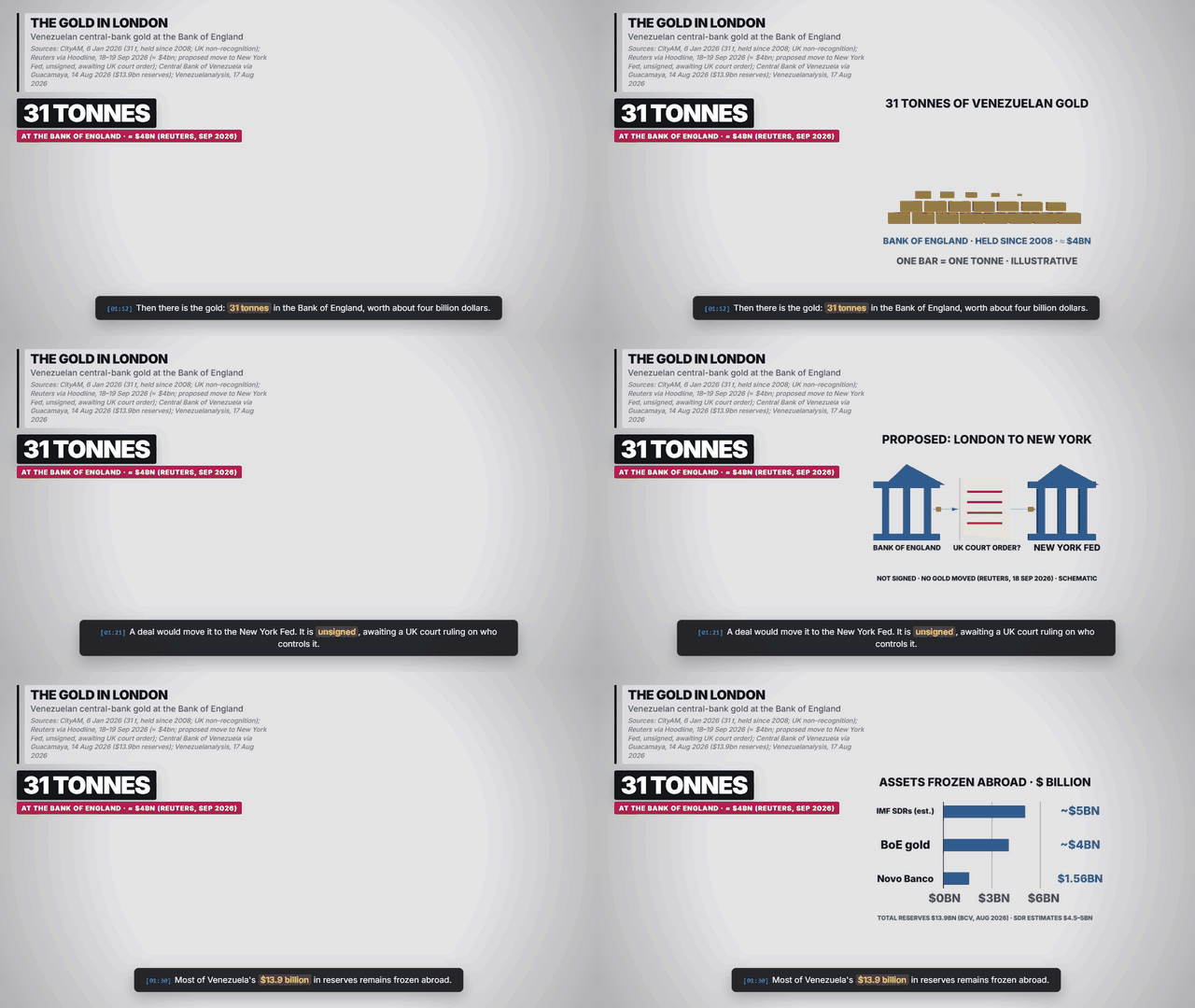
- 31 tonnes of gold (≈ $4 billion) remain at the Bank of England; a move to the New York Fed is unsigned.
The capture
On Saturday 3 January 2026, US special forces captured President Nicolás Maduro, who is now held in New York. Vice-President Delcy Rodríguez was sworn in as acting president and invited the US government to collaborate (CityAM, 6 Jan 2026; Marketplace, 16 Apr 2026).
Oil: a fraction of its peak
Venezuela holds the world’s largest oil reserves (Americas Quarterly, 4 Jan 2026), but output has collapsed since the late 1990s, when it reached roughly 3.1–3.4 million barrels a day (estimates differ). Two series track it today:
| Month | Output (b/d) | Series | Source |
|---|---|---|---|
| December 2025 | ≈ 1,120,000 | Government, derived from the January drop | OPEC Feb 2026 report, via Rio Times |
| January 2026 | 924,000 | Government, reported to OPEC | OPEC Feb 2026 report, via Rio Times |
| July 2026 | 1,200,000 | Government, reported to OPEC | Rio Times, 14 Oct 2026 |
| September 2026 | 1,206,000 | Government, reported to OPEC | Rio Times, 14 Oct 2026 |
| September 2026 | 1,150,000 | OPEC secondary sources (independent) | Rio Times, 14 Oct 2026 |
The government’s own figure is about 56,000 barrels a day higher than the independent estimate. PDVSA’s president Héctor Obregón has publicly claimed 1.23 million (Latin Times, 11 Oct 2026).
The oil now flows north — and so does the money
Before the US blockade in December 2025, about 80% of Venezuela’s exports went to China’s black market. Now everything goes to buyers licensed by the US: mostly US refiners, India and storage in the Caribbean (Francisco Monaldi, Rice University, to Marketplace, 16 Apr 2026).
| Month | US imports of Venezuelan crude (b/d) | Source |
|---|---|---|
| July 2025 | 7,000 | EIA, via Rio Times, 13 Sep 2026 |
| January 2026 | 200,000 | EIA, via Rio Times |
| June 2026 (latest) | 630,000 | EIA, via Rio Times |
The proceeds are collected in a US Treasury account, and some is sent back to Venezuela. Monaldi notes that “we don’t know exactly how much money is being collected”, nor at what price or how much returns.
Foreign companies return
A reformed hydrocarbons law, passed unanimously on 29 January 2026, lets private companies explore, extract and export without a joint venture with PDVSA. Obregón says 61 of 105 planned contracts are signed, with a 31 December deadline for the rest. On 2 September Chevron announced a $7 billion plan to more than double its Venezuelan output to about 600,000 b/d within five years, and Eni signed a 25-year contract for the Junín 5 block (Latin Times, 11 Oct 2026).
The government targets 1.4 million b/d by the end of 2026, 1.5 million in 2027 and 3 million by 2030. The analytics firm Kpler sees about 2 million by the end of the decade as realistic, citing rig shortages and decayed infrastructure (Latin Times). Targets are not results.
The gold in London
About 31 tonnes of Venezuelan central-bank gold have been held at the Bank of England since 2008, frozen in a recognition dispute since 2019–2020, which UK courts resolved against the Maduro government (CityAM, 6 Jan 2026; Guacamaya, 14 Aug 2026). After the capture, UK Foreign Secretary Yvette Cooper suggested Britain would keep withholding recognition of the new leadership.
In August, the government and the 2015-elected National Assembly agreed to seek the gold’s release into a US Treasury account with international audits (Venezuelanalysis, 17 Aug 2026). In September, Reuters reported a proposal to move it to the Federal Reserve Bank of New York, under the acting government’s legal control and initially without a sale — possibly as collateral for rebuilding after the June earthquakes. The arrangement was not signed, and the Bank of England said it needs a further UK court order on who controls the account (Reuters via Hoodline, 18–19 Sep 2026). We found no report of a signed deal as of 26 October.
| Asset | Value | Source and date |
|---|---|---|
| Gold at the Bank of England (31 t) | ≈ $4 billion | Reuters via Hoodline, 18 Sep 2026 (earlier estimates $4.3–4.8bn) |
| IMF Special Drawing Rights | ≈ $4.5–5 billion (sources differ) | Venezuelanalysis, 17 Aug; Guacamaya, 14 Aug 2026 |
| Novo Banco, Portugal | €1.35bn ($1.56bn) | Guacamaya, 14 Aug 2026 |
| Total international reserves | $13.9 billion, mostly frozen | Central Bank of Venezuela, via Guacamaya, 14 Aug 2026 |
Where it stands (26 October 2026)
Oil output has recovered to roughly where it was before the blockade, and exports have swung from China to the US — but the revenue runs through Washington, and how much reaches Venezuela is undisclosed. The gold remains in London pending a court decision.
Frequently asked questions
How much oil does Venezuela produce after Maduro’s capture?
About 1.15 million barrels a day in September 2026 by OPEC’s independent count, or 1.206 million by the government’s figure. Output dipped to 924,000 in January.
Who buys Venezuelan oil now?
US-licensed buyers — mostly US refiners, India and Caribbean storage. US imports reached 630,000 barrels a day in June 2026. Before the blockade, about 80% went to China’s black market.
Where does Venezuela’s oil money go?
Into a US Treasury account; some is returned to Venezuela. The amounts have not been disclosed.
What happened to Venezuela’s gold at the Bank of England?
About 31 tonnes (≈ $4 billion) are still there. A deal to move them to the New York Fed was unsigned as of mid-September, pending a UK court order.
Who runs Venezuela now?
Acting President Delcy Rodríguez, sworn in after US forces captured Maduro on 3 January 2026.
Sources
- CityAM, Bank of England Venezuelan gold in focus after Maduro capture (6 Jan 2026): capture, acting president, 31 t since 2008, UK stance.
- Americas Quarterly, Venezuela: the post-Maduro oil, gas and mining outlook (4 Jan 2026): reserves, historical peak.
- Marketplace, How Venezuela’s oil industry has changed since Maduro’s capture (16 Apr 2026): buyers, US Treasury account.
- Rio Times, Venezuela oil production and US imports fact-check (13 Sep 2026): EIA import series.
- Rio Times, Venezuela oil output holds near 1.2 million (14 Oct 2026): OPEC September figures.
- Latin Times, Contracts signed, barrels still missing (11 Oct 2026): contracts, targets, Chevron, Eni, Kpler.
- Wikipedia, “PDVSA” (accessed 26 Oct 2026): 1998 output estimate.
- Guacamaya, Venezuela’s international reserves (14 Aug 2026): reserves, Novo Banco, SDRs.
- Venezuelanalysis, Venezuela’s UK-held gold to be released to US control (17 Aug 2026): August agreement, audits.
- Hoodline, citing Reuters, Venezuela’s proposed gold transfer (19 Sep 2026): New York Fed proposal, unsigned, court order.
Charts, maps and diagrams from the explainer