Full transcript
The narration below matches the explainer. Its original reporting dates and qualifications still apply.
AI COMPETITION IS BECOMING A PARTNERSHIP CONTEST
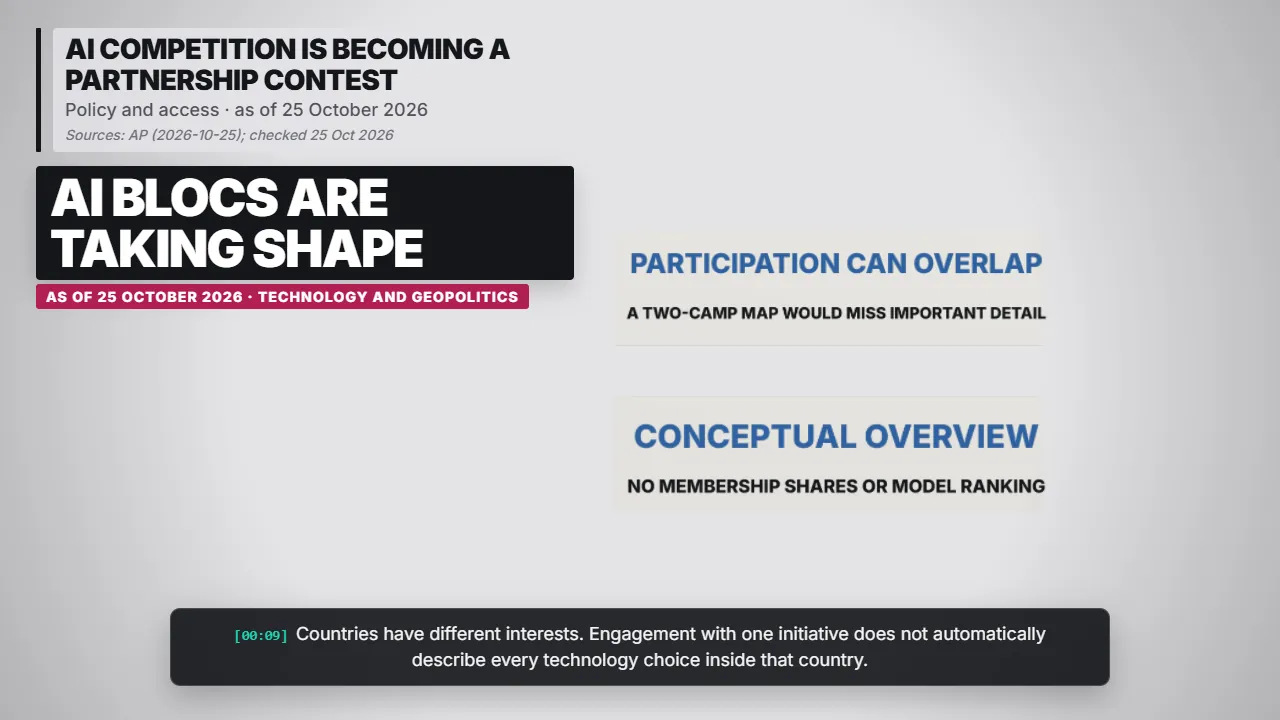
AI competition now reaches international partnerships. AP reports countries trying to benefit from both US and Chinese ecosystems.
Countries have different interests. Engagement with one initiative does not automatically describe every technology choice inside that country.
Sources: AP (2026-10-25); checked 25 Oct 2026
THE US INITIATIVE FOCUSES ON AI SUPPLY CHAINS
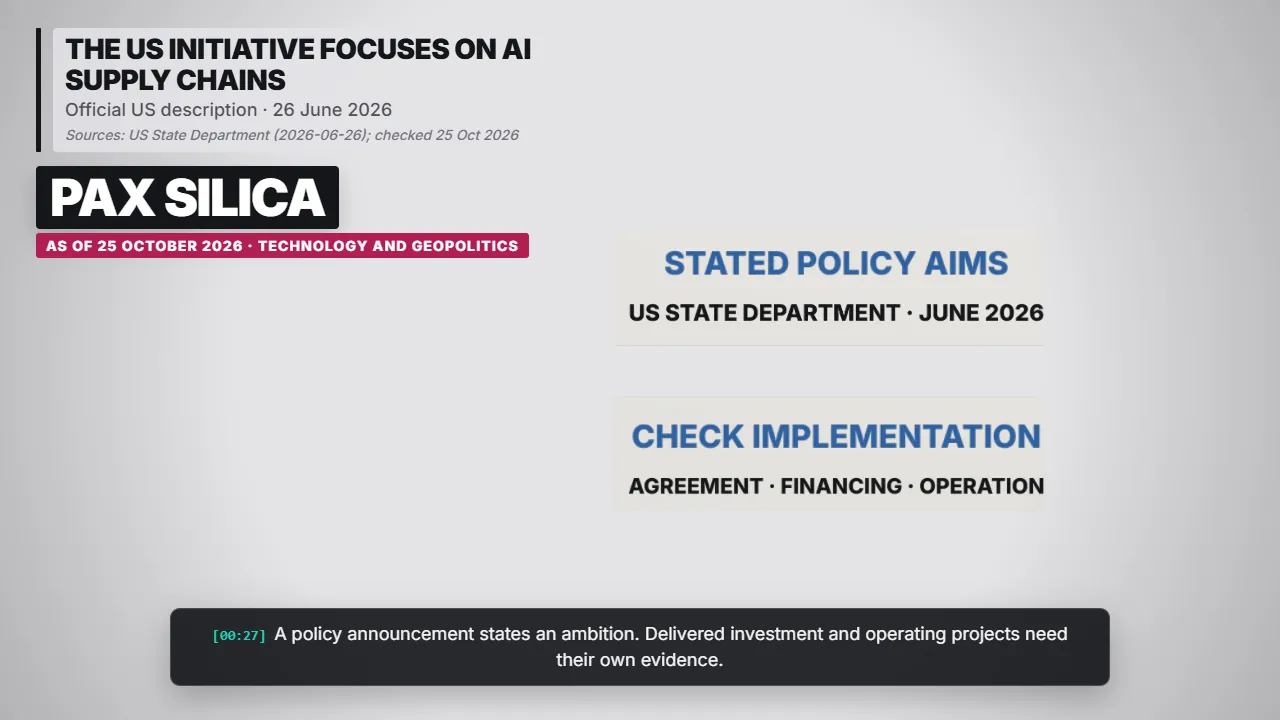
The US describes Pax Silica as a partnership covering AI supply chains, from industrial inputs to infrastructure.
A policy announcement states an ambition. Delivered investment and operating projects need their own evidence.
Sources: US State Department (2026-06-26); checked 25 Oct 2026
CHINA PROMOTES A SEPARATE COOPERATION BODY
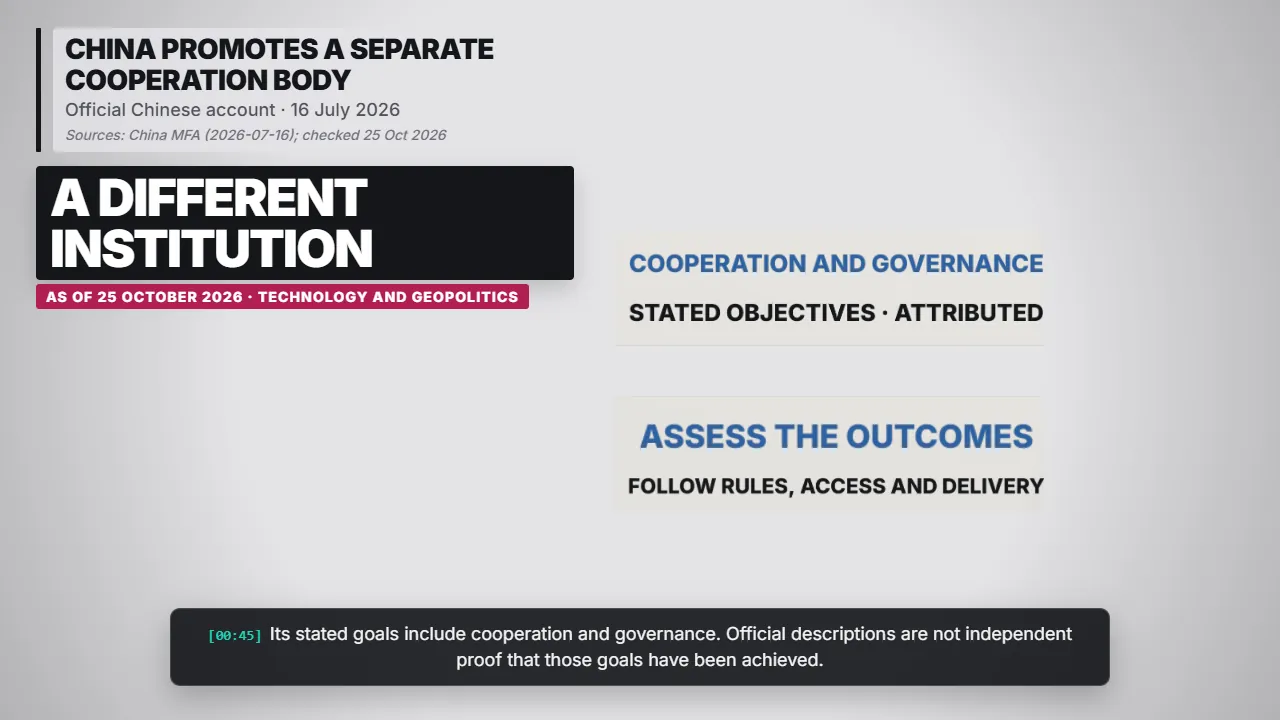
China’s foreign ministry reported an agreement establishing an international AI cooperation organization in Shanghai.
Its stated goals include cooperation and governance. Official descriptions are not independent proof that those goals have been achieved.
Sources: China MFA (2026-07-16); checked 25 Oct 2026
COUNTRIES ARE TRYING TO KEEP THEIR OPTIONS OPEN
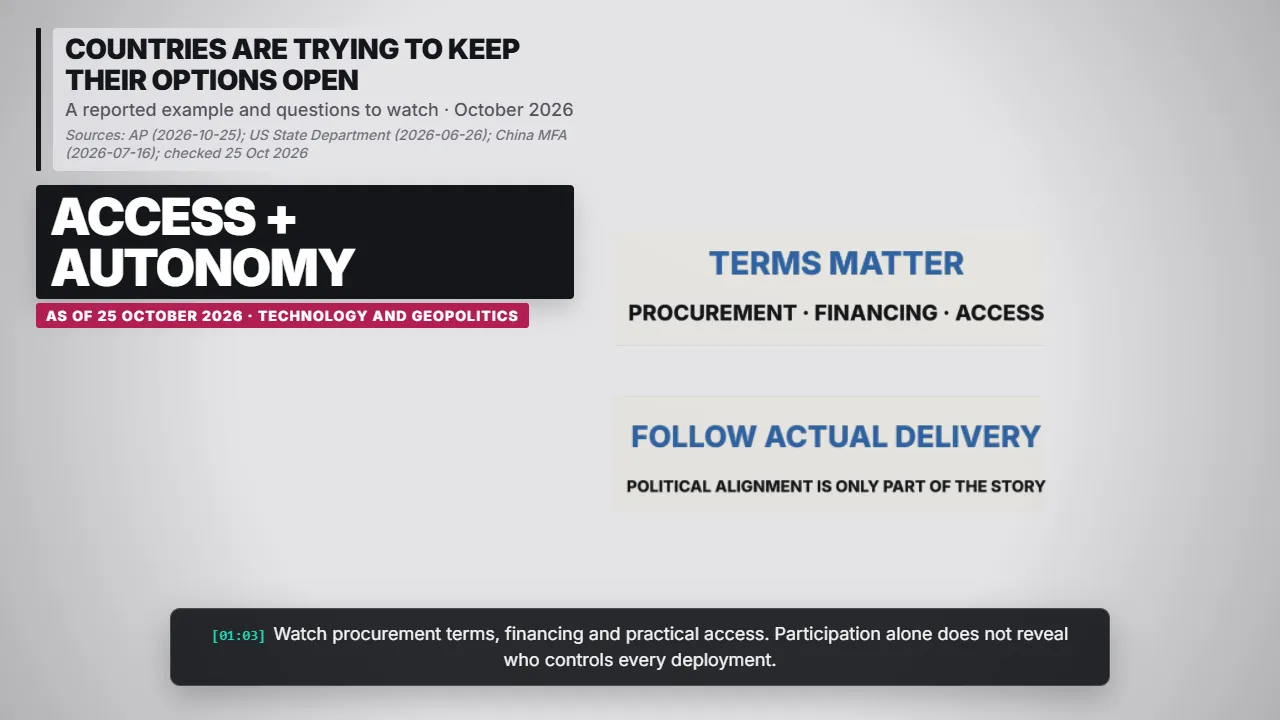
AP describes Kazakhstan engaging with both initiatives. That example complicates the idea of a clean global split.
Watch procurement terms, financing and practical access. Participation alone does not reveal who controls every deployment.
Sources: AP (2026-10-25); US State Department (2026-06-26); China MFA (2026-07-16); checked 25 Oct 2026
FOLLOW THE TERMS, THEN THE OUTCOMES
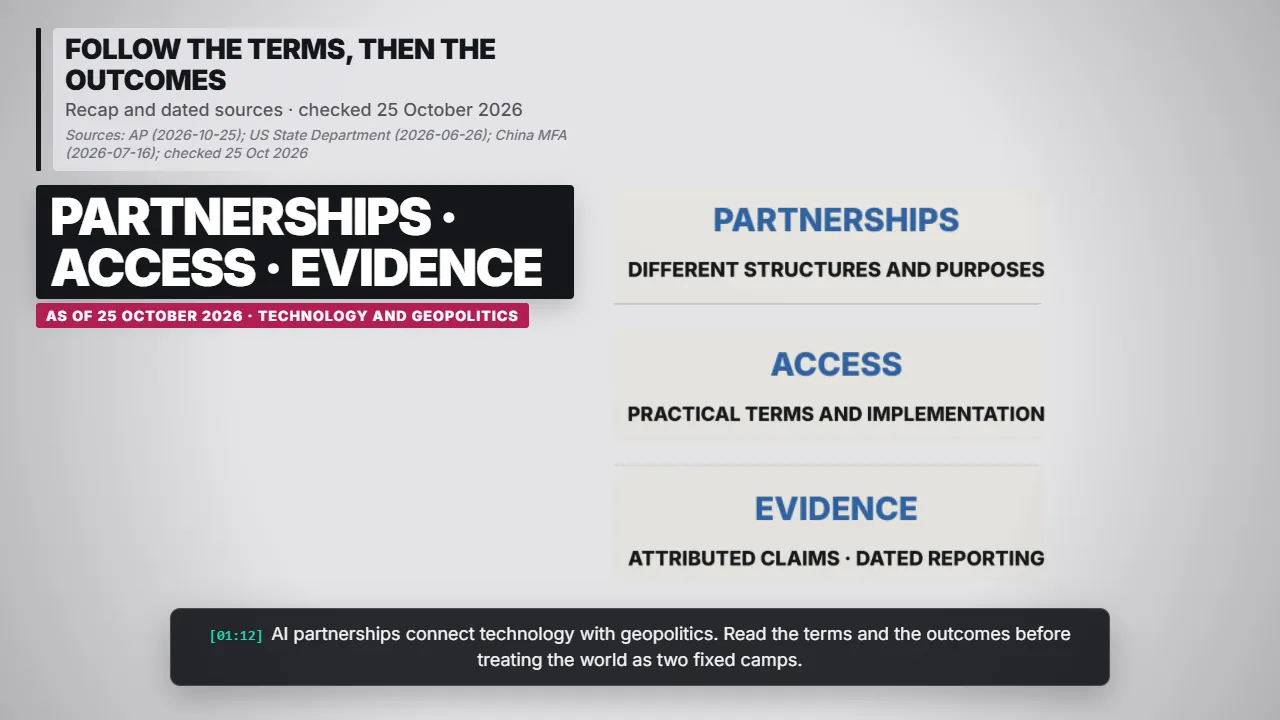
AI partnerships connect technology with geopolitics. Read the terms and the outcomes before treating the world as two fixed camps.
These sources separate current reporting from official policy statements. Recheck developments before relying on this snapshot.
Sources: AP (2026-10-25); US State Department (2026-06-26); China MFA (2026-07-16); checked 25 Oct 2026