The World Is Splitting Into AI Blocs
US and Chinese AI partnerships, the countries navigating both, and the difference between policy goals and outcomes. Sources checked 25 October 2026.
▶ Explore the narrated explainerKey takeaways
- AI diplomacy reaches beyond chatbots to infrastructure, supply chains and governance.
- US and Chinese official descriptions explain intentions; outcomes need separate evidence.
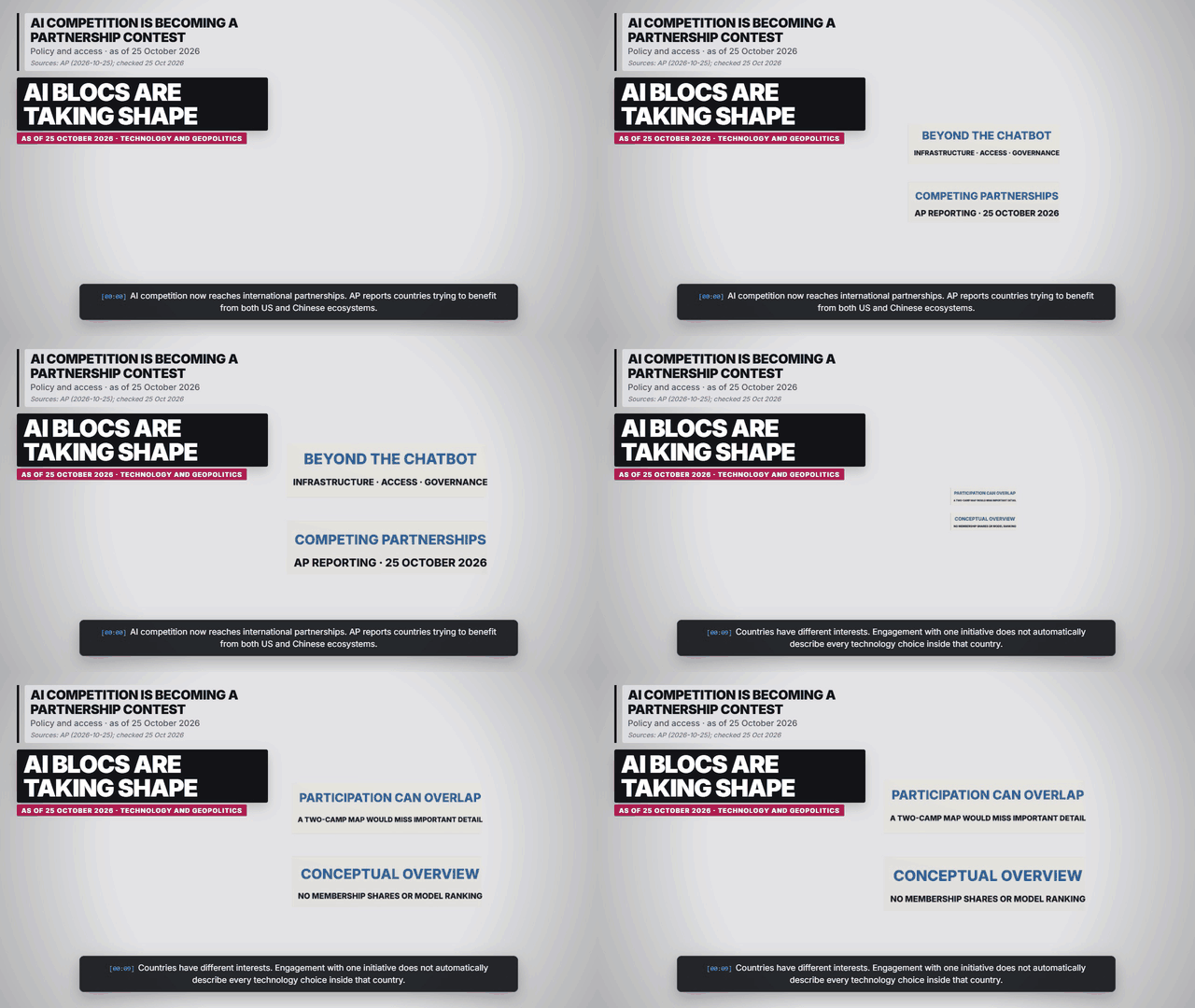
- Countries can engage with more than one initiative. A rigid two-camp map would obscure that.
The dated facts and their scope
| Date or item | Reported fact or scheduled event | Scope and condition | Source |
|---|---|---|---|
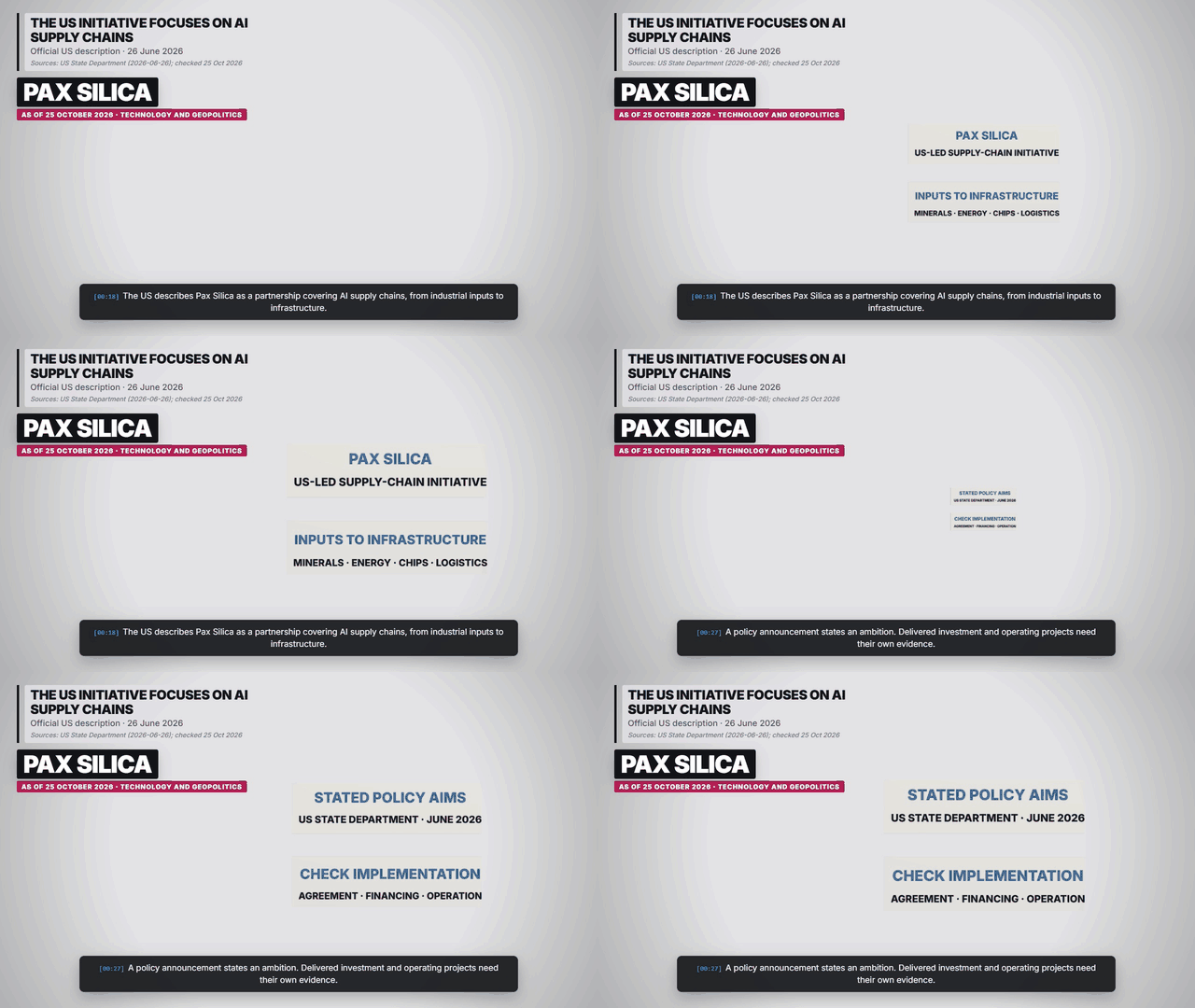
| Pax Silica | US-led AI and supply-chain initiative | Official summit note, 26 June 2026 | US State Department: Second Pax Silica summit, via Publicnow |
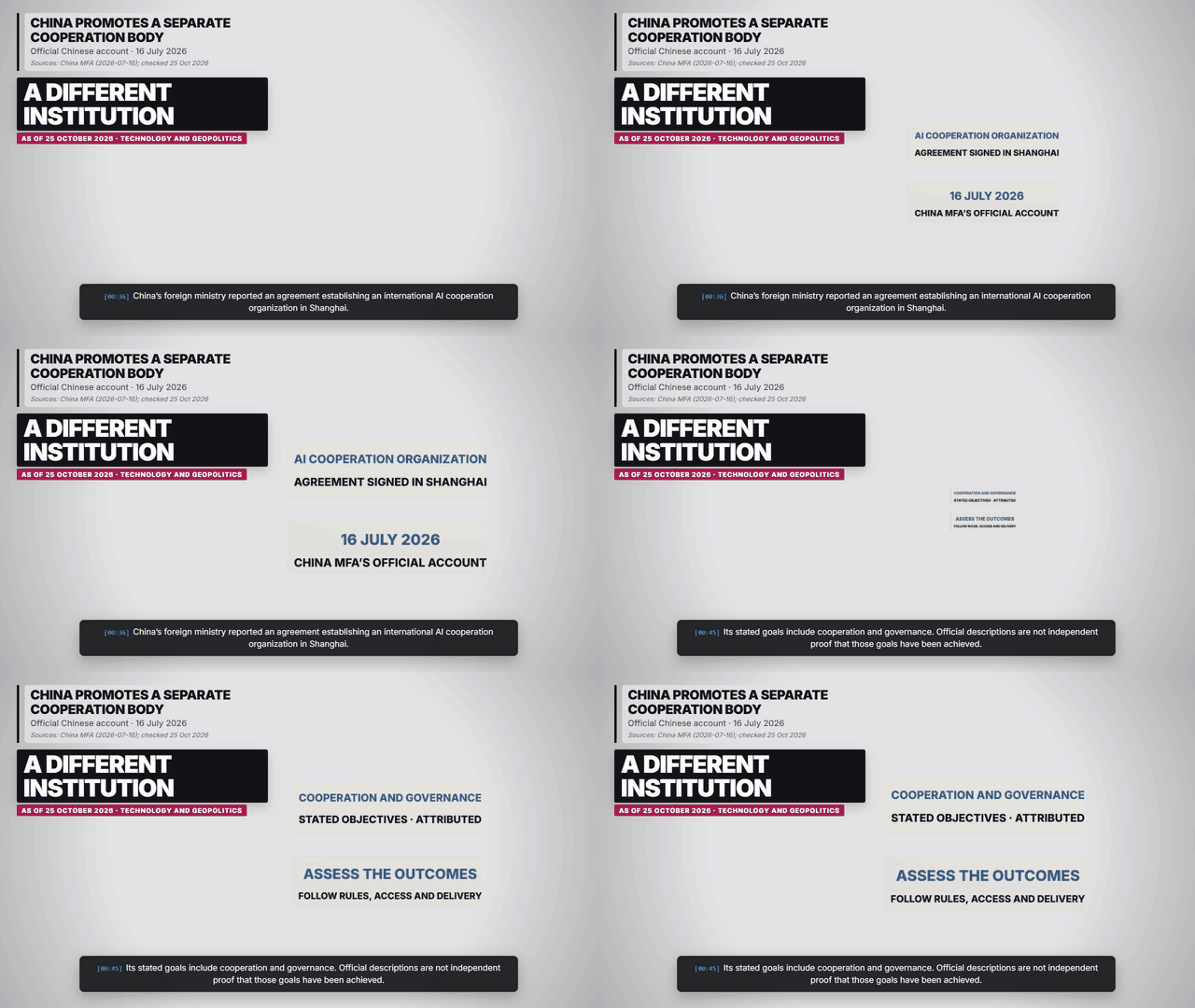
| World Artificial Intelligence Cooperation Organization | Agreement signed in Shanghai | China MFA account, 16 July 2026 | China MFA: AI cooperation organization agreement |
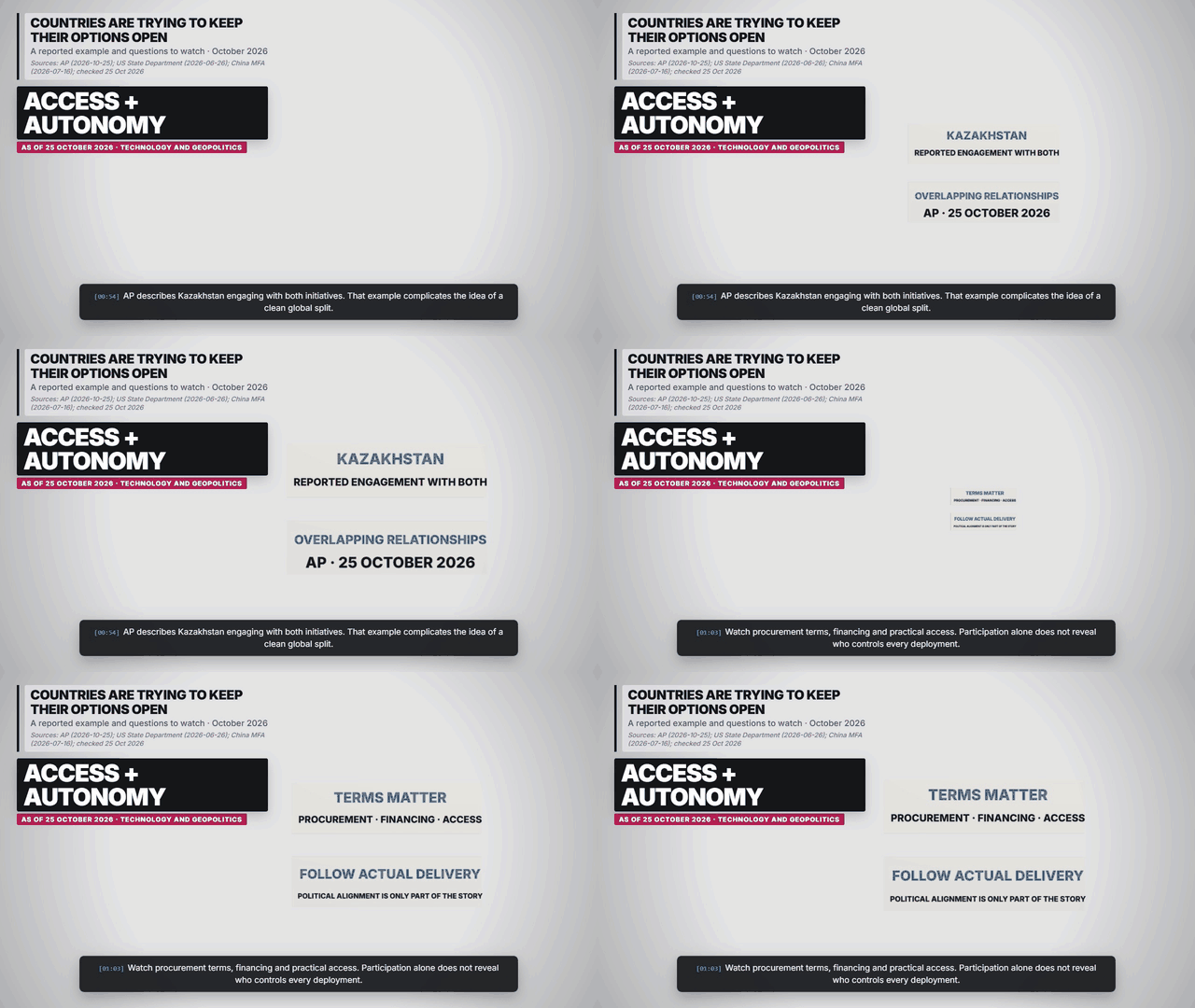
| Kazakhstan | Reported engagement with both initiatives | AP reporting, 25 October 2026 | AP: Countries navigate rival AI groupings |
Why this is a story about infrastructure
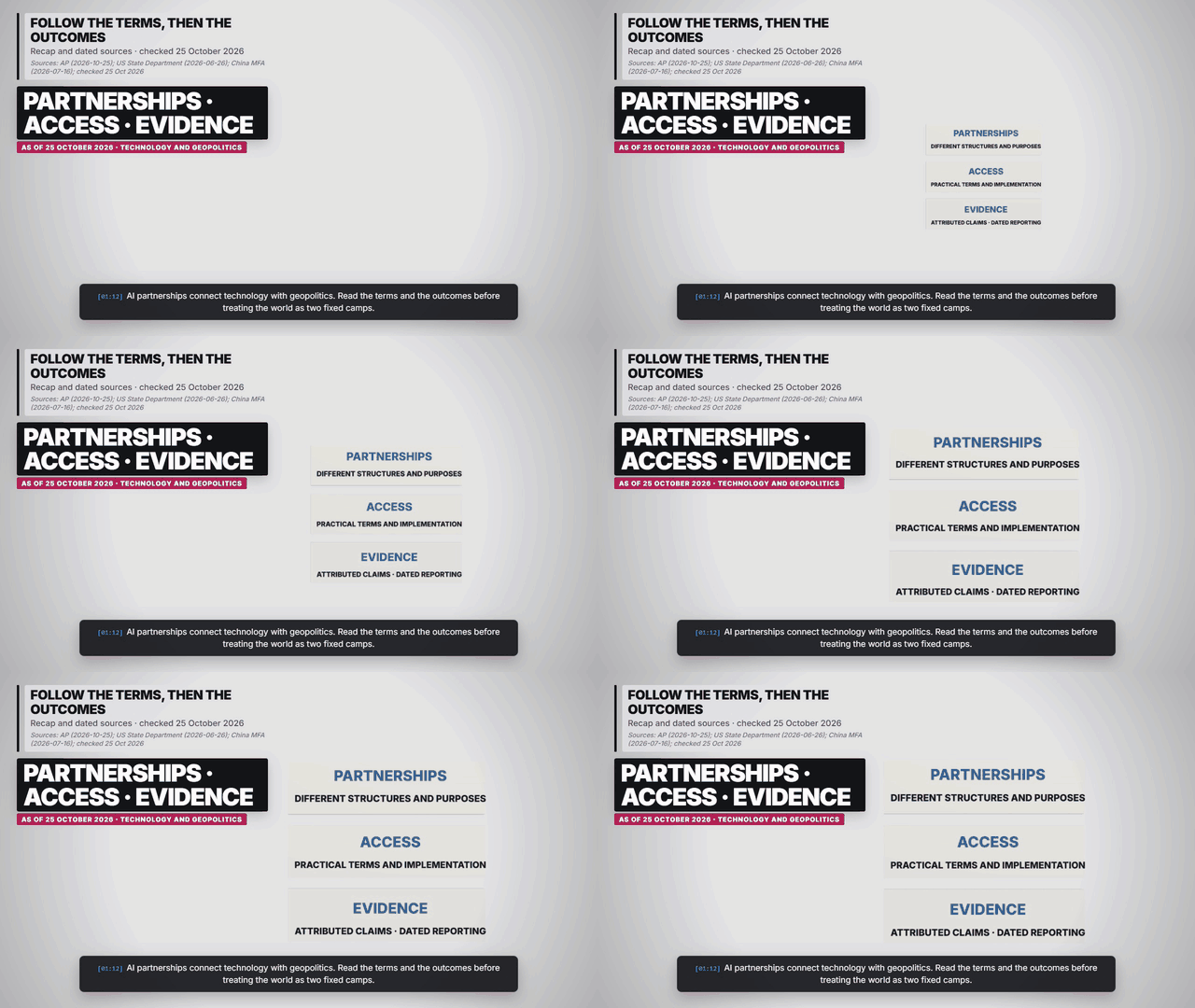
Access to artificial intelligence depends on more than choosing an application. Computing equipment, electricity, networks, skilled workers and commercial terms shape what a country can build or buy. International partnerships connect these practical inputs with questions about trust and influence. The diagrams here are conceptual cards; they do not encode investment values or a measured division of the world.
What the two initiatives say
The US State Department’s June summit note describes Pax Silica as an effort spanning critical minerals, energy, manufacturing, semiconductors, AI infrastructure and logistics. China’s foreign ministry describes the Shanghai organization as a vehicle for cooperation and governance. Those are the governments’ accounts of their objectives. They establish what was announced, rather than proving equal access, delivered investment or successful cooperation.
Why countries seek room to choose
AP’s October report uses Kazakhstan to illustrate engagement with both groupings. This matters because institutional participation, a cloud contract and the model used by a local business are different decisions. One agreement does not establish that every domestic company must use the same technology. The title describes a competitive direction, not a claim that all countries have already entered mutually exclusive camps.
What to examine next
Compare the actual membership terms, procurement rules, financing conditions and subsequent implementation. A promised project should remain distinct from an operational facility, and public policy language should remain distinct from measured access. Other countries, companies and multilateral institutions also shape AI; these two initiatives do not exhaust the field. This page makes no claim that every US model is closed, every Chinese model is open, or either ecosystem is uniformly superior.
Primary reporting and documents: AP: Countries navigate rival AI groupings, US State Department: Second Pax Silica summit, via Publicnow, China MFA: AI cooperation organization agreement.
Frequently asked questions
Are these two exclusive military-style alliances?
This page does not establish exclusivity. The initiatives have different purposes and structures; AP reports engagement with both by Kazakhstan.
Does signing a declaration mean an AI project is complete?
No. An agreement, a financing commitment and an operating facility are separate milestones. The explainer does not equate them.
Is this a ranking of US and Chinese models?
No. It concerns international partnerships, access and governance, without comparative model-performance scores.
Sources and reporting cutoff
- AP: Countries navigate rival AI groupings. 2026-10-25. Current reporting on competing partnerships and Kazakhstan’s engagement with both.
- US State Department: Second Pax Silica summit, via Publicnow. 2026-06-26. Unaltered government media note describing the US-led supply-chain initiative; policy goals are attributed.
- China MFA: AI cooperation organization agreement. 2026-07-16. Official account of the Shanghai signing and the organization’s stated aims; not an independent assessment.
As of 25 October 2026. AP reports countries navigating competing US and Chinese AI partnerships. Official US and Chinese documents describe their own policy aims. These initiatives are not identical institutions or an exhaustive map of AI development. Participation can overlap; no country-wide exclusivity, model ranking, guaranteed investment or completed transfer of technology is asserted. Cards are conceptual, not a map of membership shares.
▶ Explore the five scenesCharts, maps and diagrams from the explainer