The Human Cost of Colonization
How Parihaka resisted land confiscation before the Crown invaded
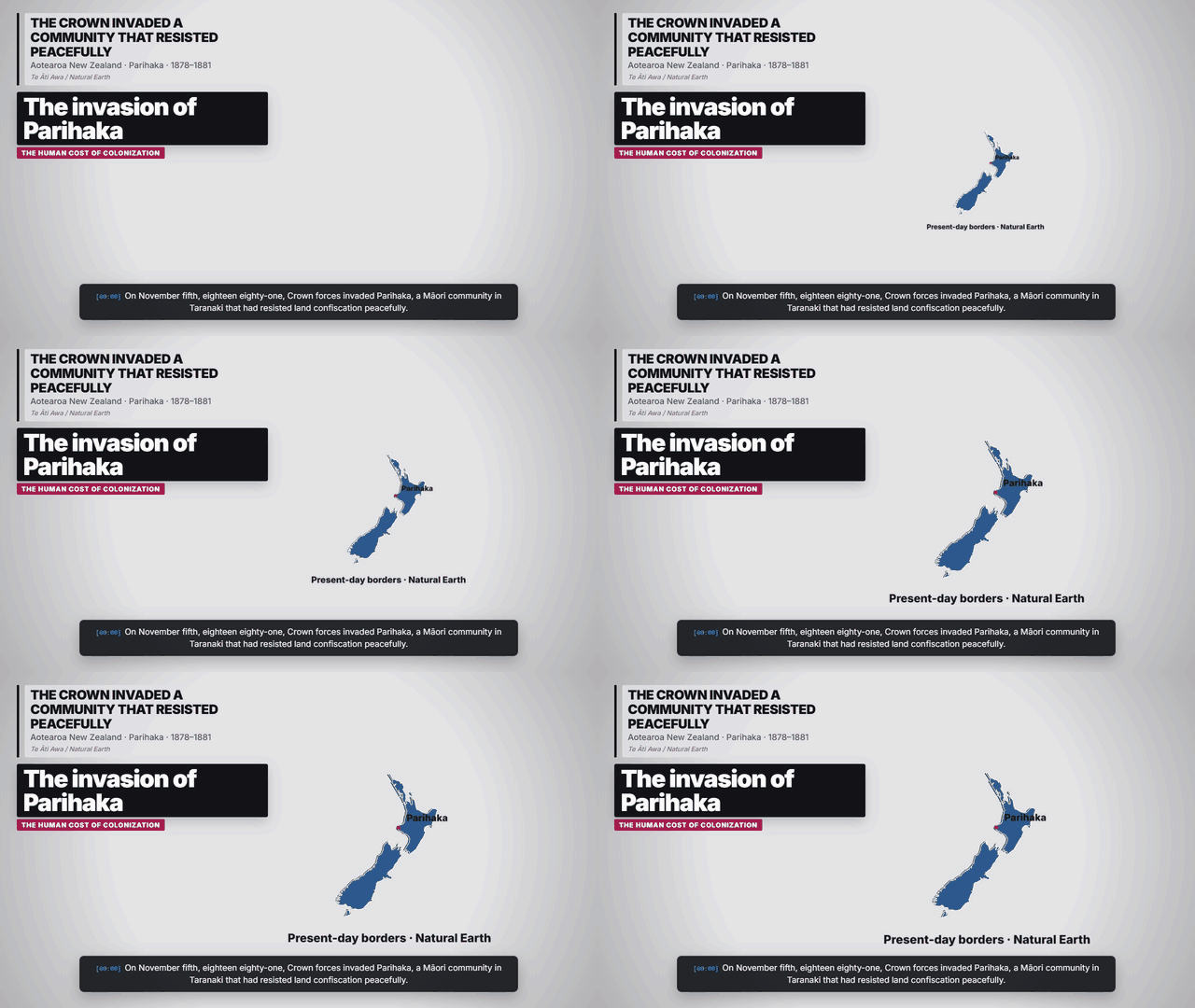
On November fifth, eighteen eighty-one, Crown forces invaded Parihaka, a Māori community in Taranaki that had resisted land confiscation peacefully.
Explore the six-scene explainerKey takeaways
- On November fifth, eighteen eighty-one, Crown forces invaded Parihaka, a Māori community in Taranaki that had resisted land confiscation peacefully.
- Native Minister John Bryce led Crown forces into Parihaka. The Crown arrested Te Whiti and Tohu, forced many residents out, and destroyed homes and crops.
Timeline and evidence
| Period | Documented event | Source |
|---|---|---|
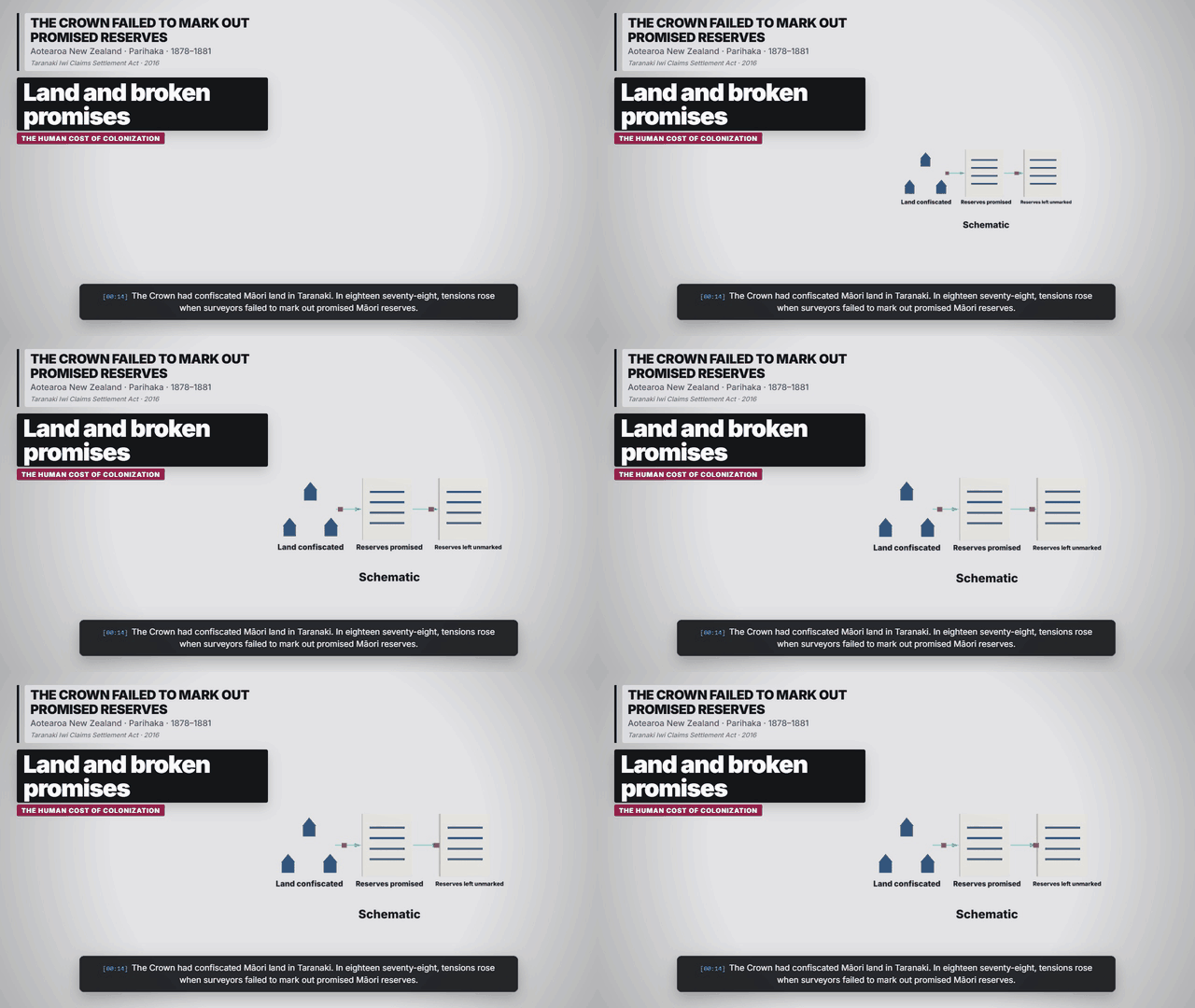
| 1878 | The Crown had confiscated Māori land in Taranaki. In eighteen seventy-eight, tensions rose when surveyors failed to mark out promised Māori reserves. | Taranaki Iwi Claims Settlement Act · 2016 |
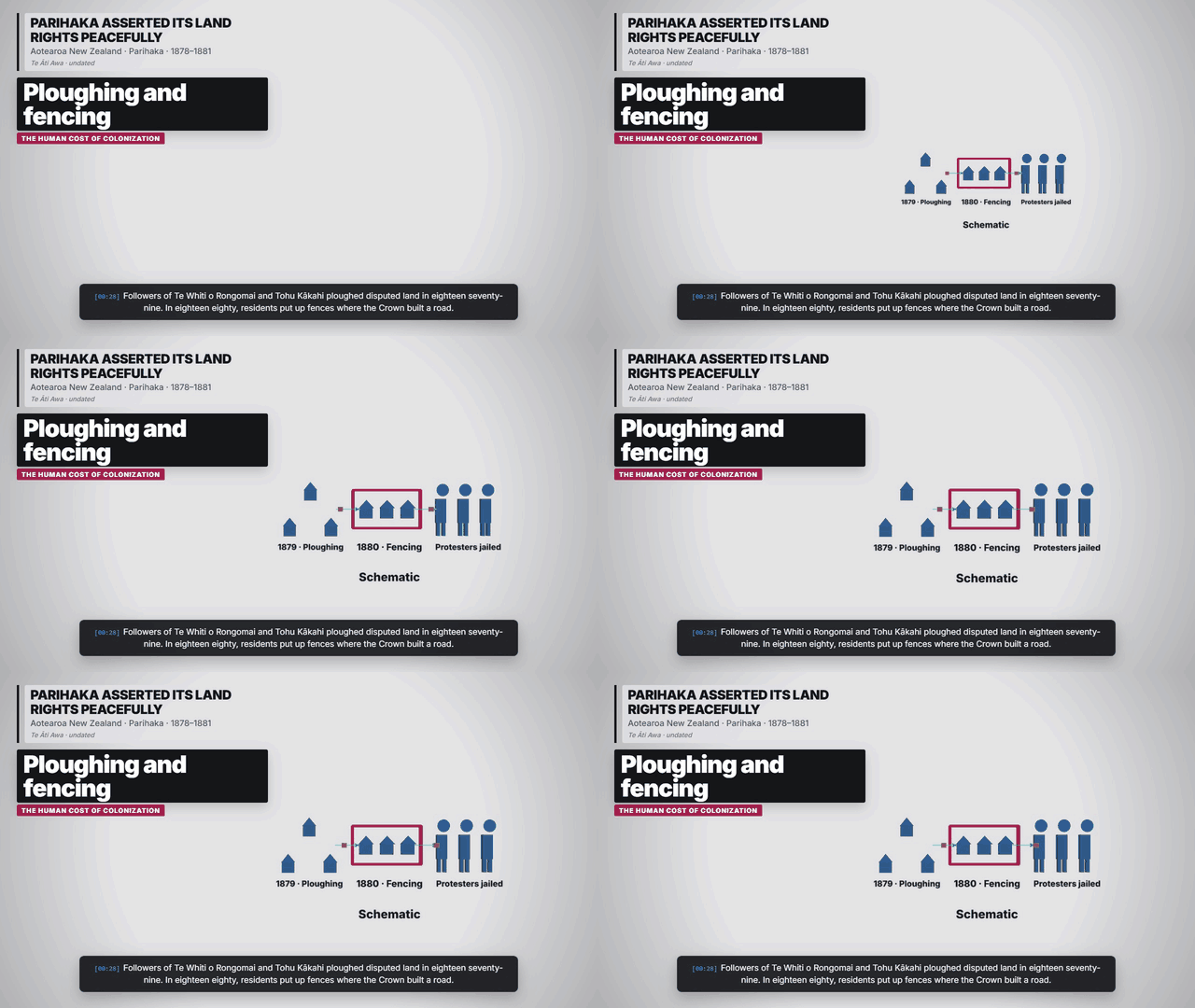
| 1879–1880 | Followers of Te Whiti o Rongomai and Tohu Kākahi ploughed disputed land in eighteen seventy-nine. In eighteen eighty, residents put up fences where the Crown built a road. | Te Āti Awa · undated |
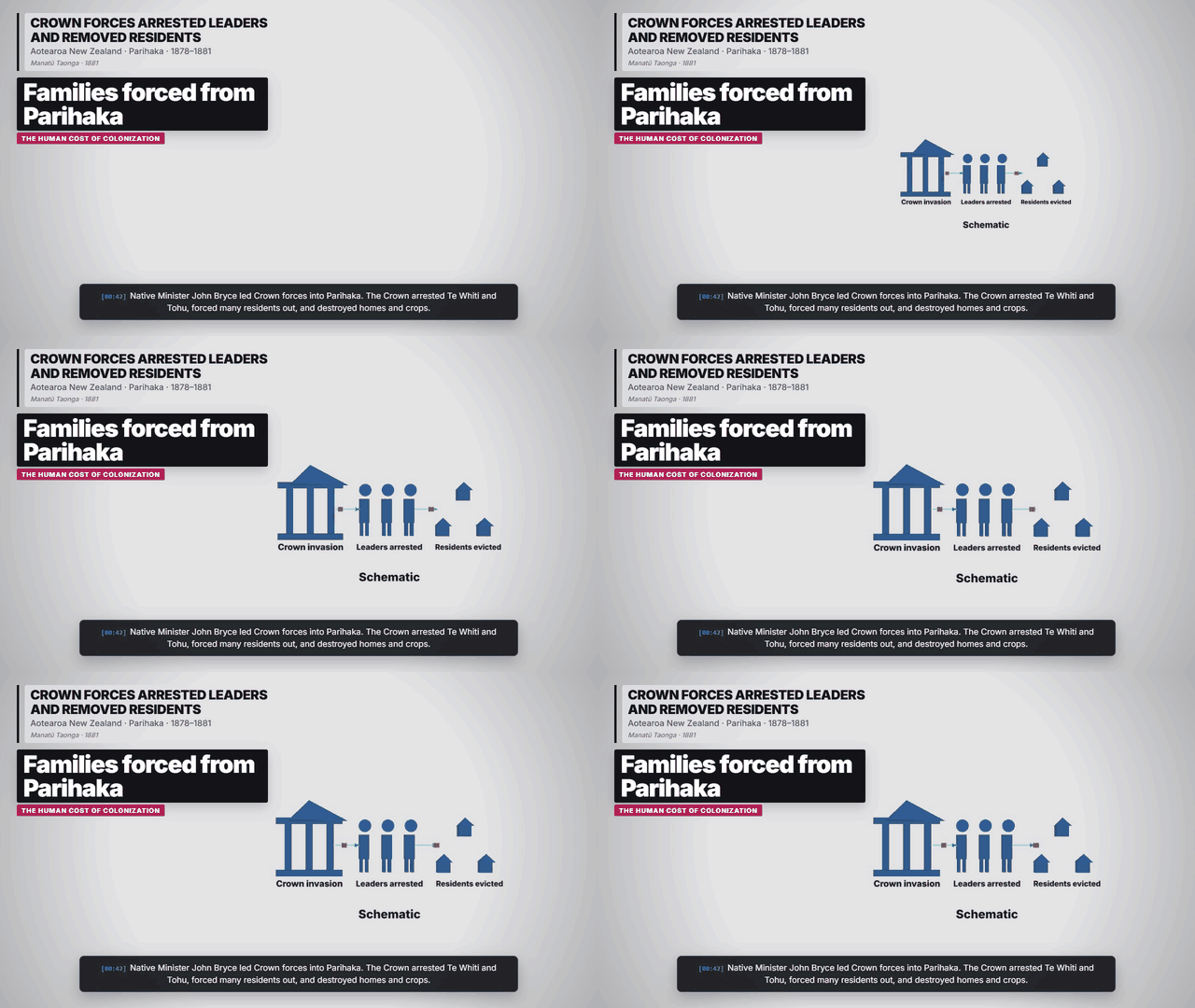
| 1881-11-05 | Native Minister John Bryce led Crown forces into Parihaka. The Crown arrested Te Whiti and Tohu, forced many residents out, and destroyed homes and crops. | Manatū Taonga · 1881 |
Land and broken promises
The Crown had confiscated Māori land in Taranaki. In eighteen seventy-eight, tensions rose when surveyors failed to mark out promised Māori reserves. Source and context.
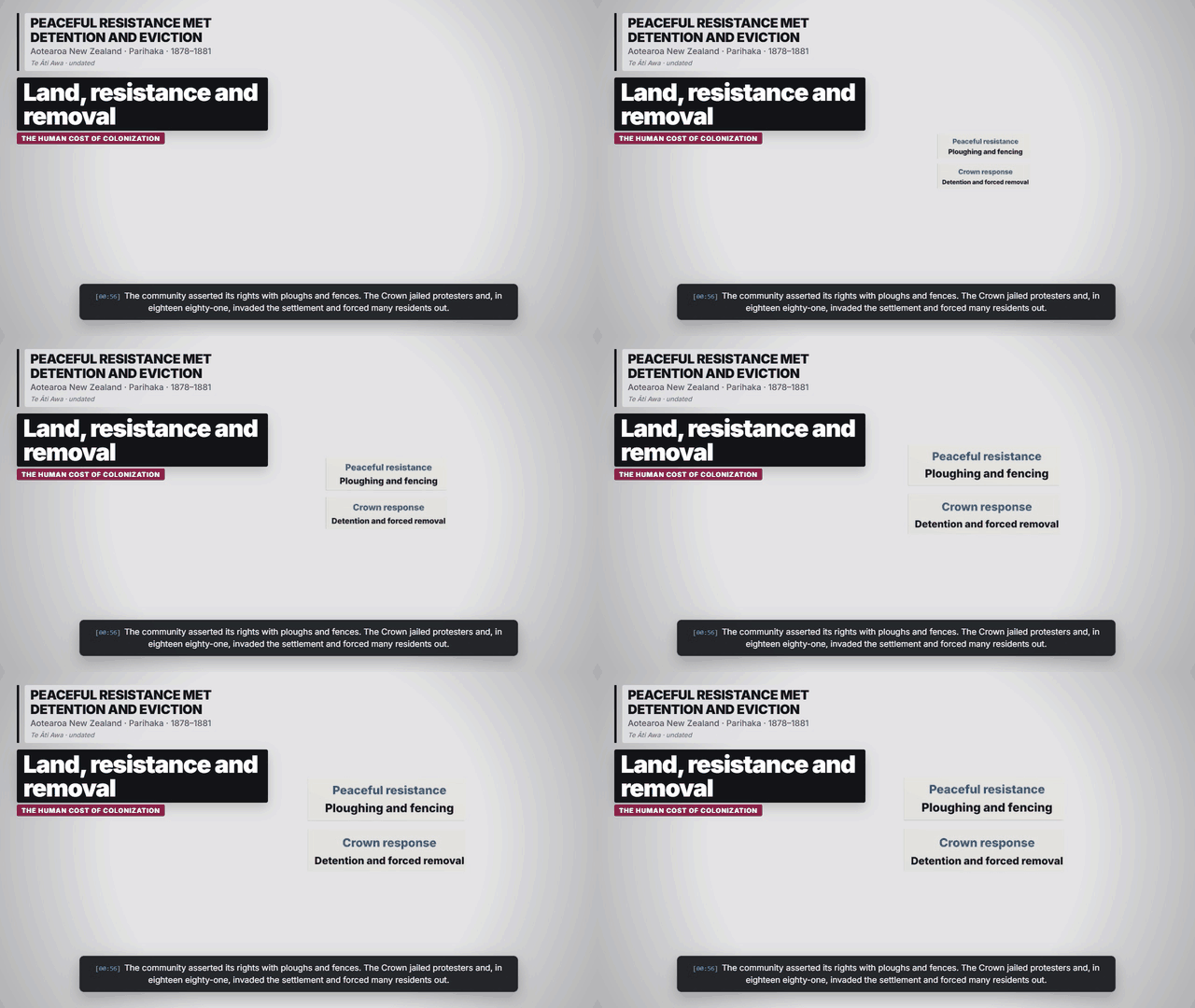
Ploughing and fencing
Followers of Te Whiti o Rongomai and Tohu Kākahi ploughed disputed land in eighteen seventy-nine. In eighteen eighty, residents put up fences where the Crown built a road. Source and context.
Families forced from Parihaka
Native Minister John Bryce led Crown forces into Parihaka. The Crown arrested Te Whiti and Tohu, forced many residents out, and destroyed homes and crops. Source and context.
Charts, maps and diagrams from the explainer
Frequently asked questions
Why did people plough and erect fences?
They used these actions to assert Māori rights to land and resist Crown occupation.
Who led the invasion?
Native Minister John Bryce led the Crown forces that entered Parihaka on 5 November 1881.
Sources and reporting scope
Te Āti Awa. undated. History of Parihaka.
Taranaki Iwi Claims Settlement Act. 2016. Historical account, section 8.
Manatū Taonga. 1881. Account of the invasion.
Crown apology. 2017. Parihaka reconciliation ceremony.
Te Ture Haeata ki Parihaka 2019. 2019. Settlement coordinates.
Natural Earth. v5.1.2. Present-day borders.
Parihaka is a Māori community in Taranaki. The locator uses modern boundaries, and the diagrams are schematic.