The Human Cost of Colonization
How Muscowequan Residential School separated children from their families
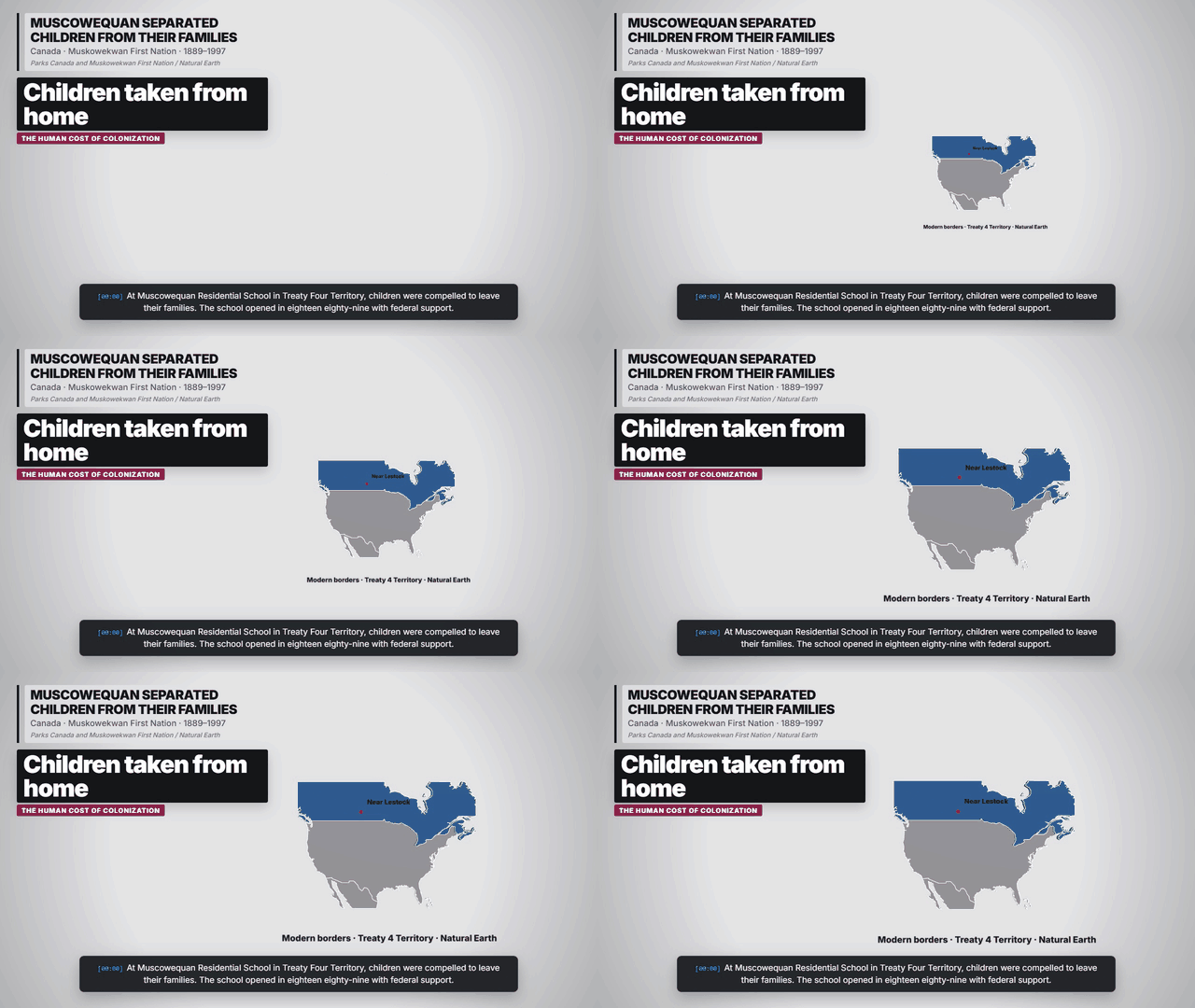
At Muscowequan Residential School in Treaty Four Territory, children were compelled to leave their families. The school opened in eighteen eighty-nine with federal support.
Explore the six-scene explainerKey takeaways
- At Muscowequan Residential School in Treaty Four Territory, children were compelled to leave their families. The school opened in eighteen eighty-nine with federal support.
- Andrew Hunter recalled thinking his parents had sent him away as punishment. He later learned that they had been forced to send him.
Timeline and evidence
| Period | Documented event | Source |
|---|---|---|
| 1889 | At Muscowequan Residential School in Treaty Four Territory, children were compelled to leave their families. The school opened in eighteen eighty-nine with federal support. | School records · 2012 |
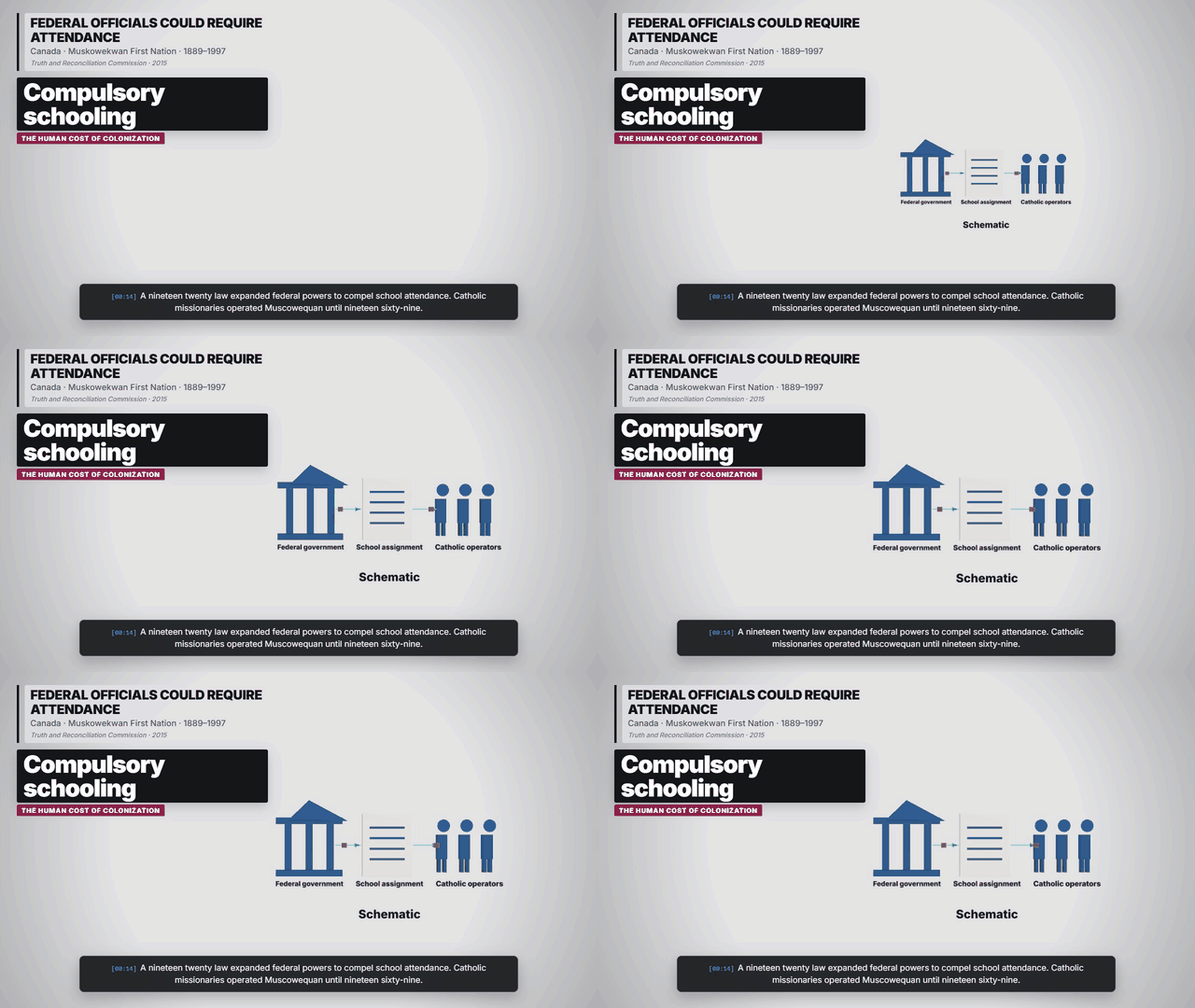
| 1920 | A nineteen twenty law expanded federal powers to compel school attendance. Catholic missionaries operated Muscowequan until nineteen sixty-nine. | Truth and Reconciliation Commission · 2015 |
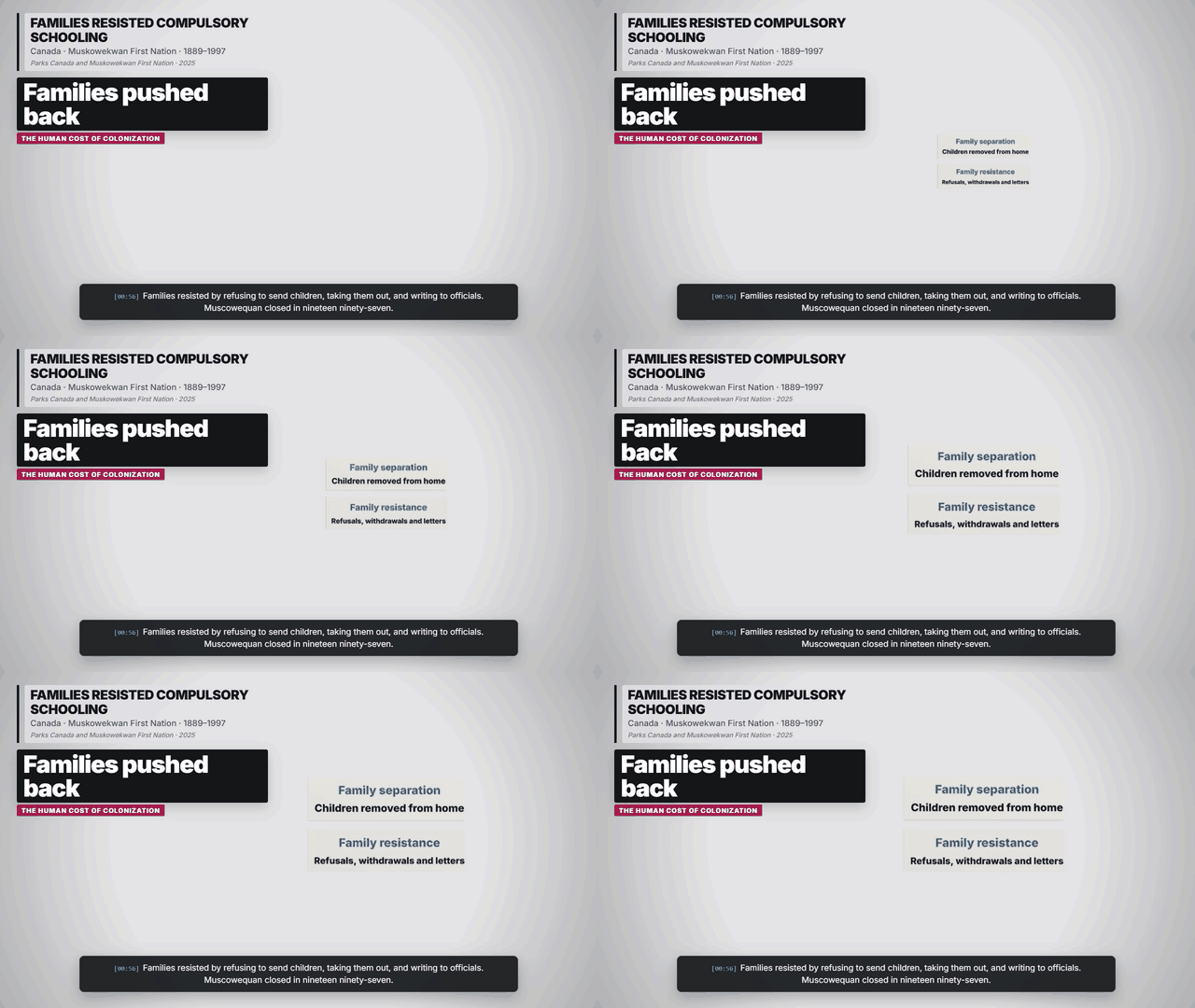
| 1997 | Families resisted by refusing to send children, taking them out, and writing to officials. Muscowequan closed in nineteen ninety-seven. | Parks Canada and Muskowekwan First Nation · 2025 |
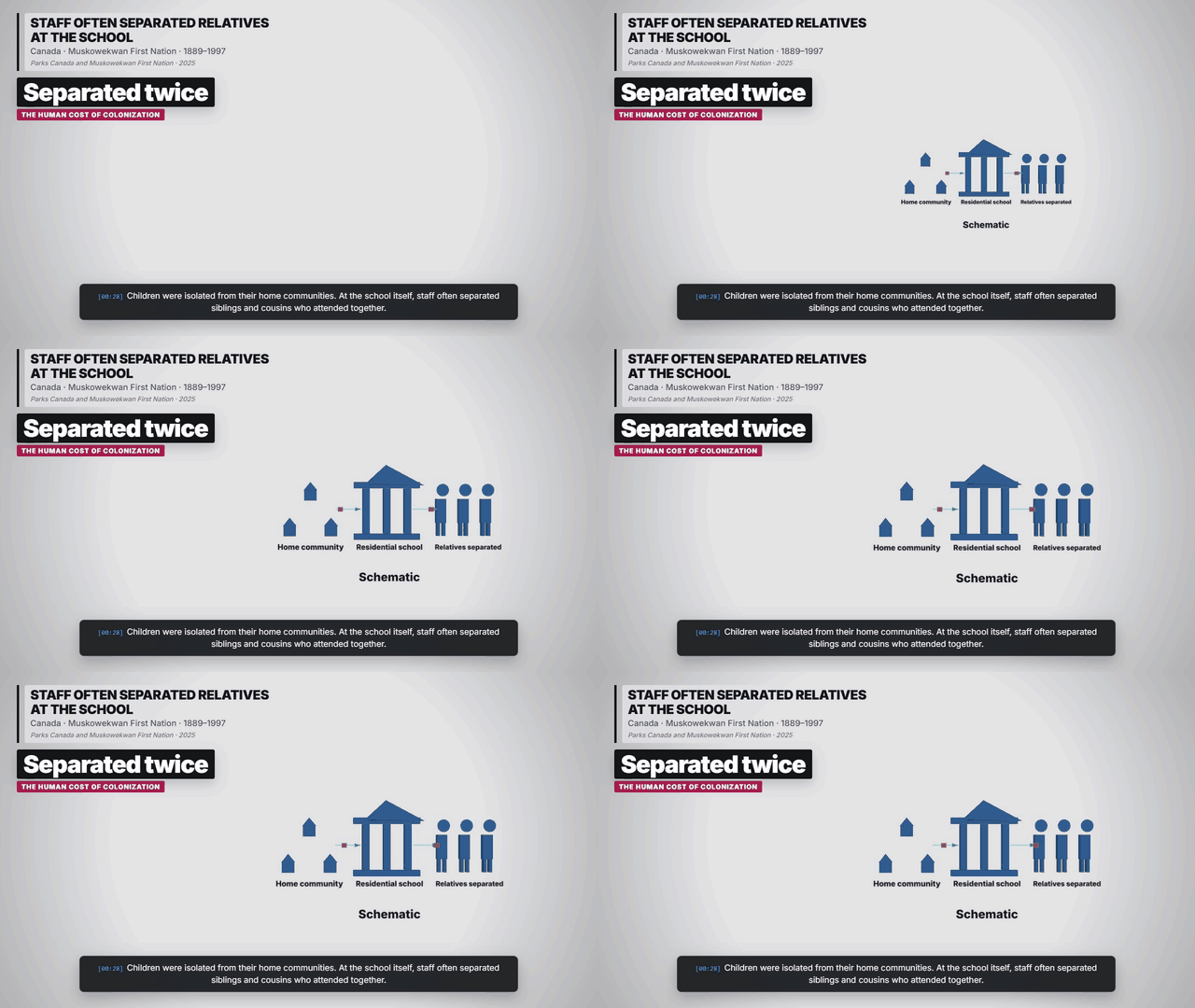
Separated twice
Children were isolated from their home communities. At the school itself, staff often separated siblings and cousins who attended together. Source and context.
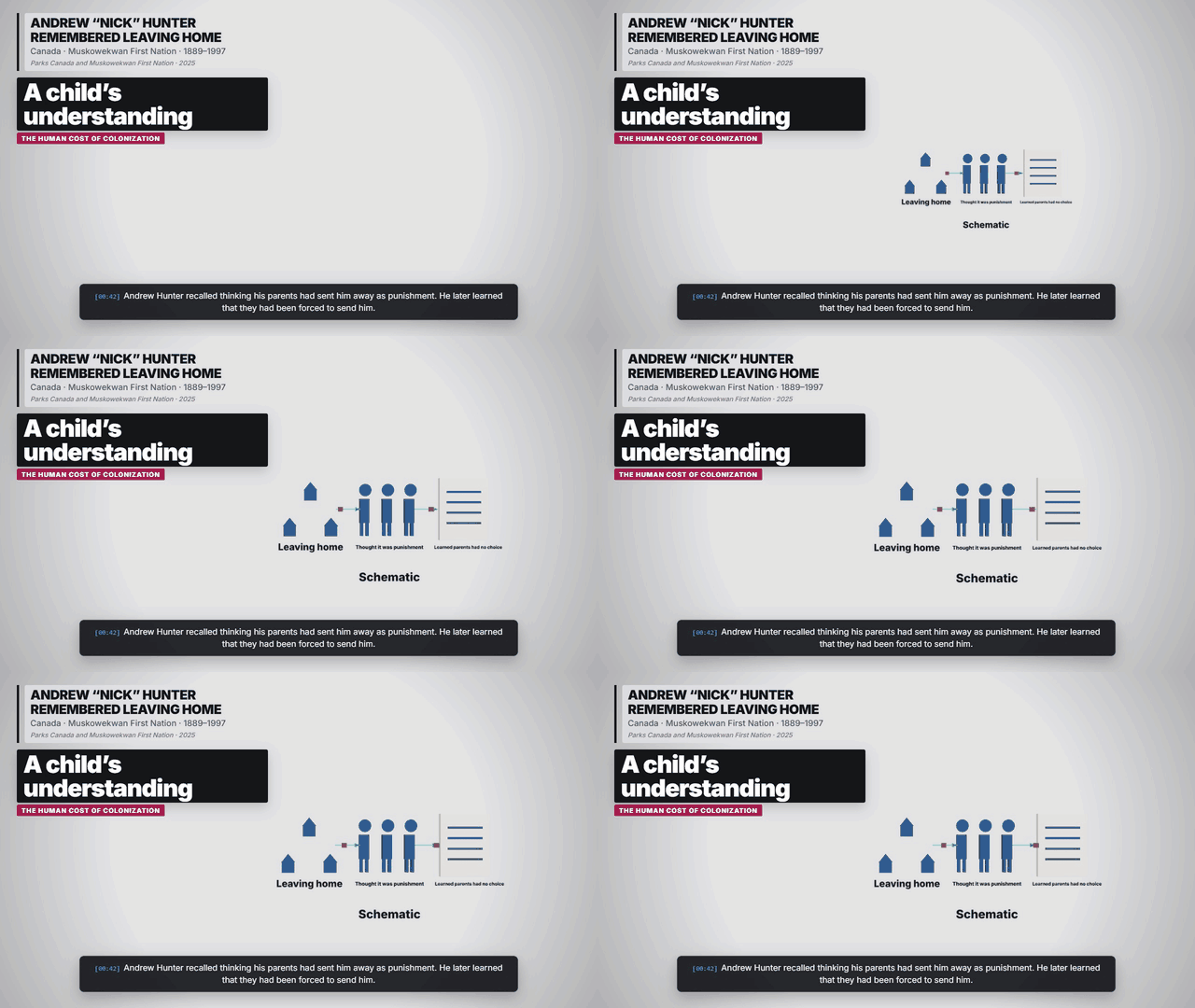
A child’s understanding
Andrew Hunter recalled thinking his parents had sent him away as punishment. He later learned that they had been forced to send him. Source and context.
Charts, maps and diagrams from the explainer
Frequently asked questions
Who ran the school?
The Missionary Oblates of Mary Immaculate operated it until 1969. The federal government supported the institution.
What does Hunter’s account establish?
It describes how one child understood his separation and what he later learned about his parents’ position.
Sources and reporting scope
Parks Canada and Muskowekwan First Nation. 2025. History and public testimony.
Truth and Reconciliation Commission. 2015. Volume 1, part 1, p. 278.
School records. 2012. Operating dates.
NCTR. 1889–1997. School and memorial record.
Parks Canada, 2025. 2025. Plaque unveiling.
Natural Earth. v5.1.2. Modern borders.
Muscowequan stood on Muskowekwan First Nation lands near Lestock. The school also received First Nations and Métis children from other communities.