The Human Cost of Colonization
How debt threatened Santal farming households before the Hul
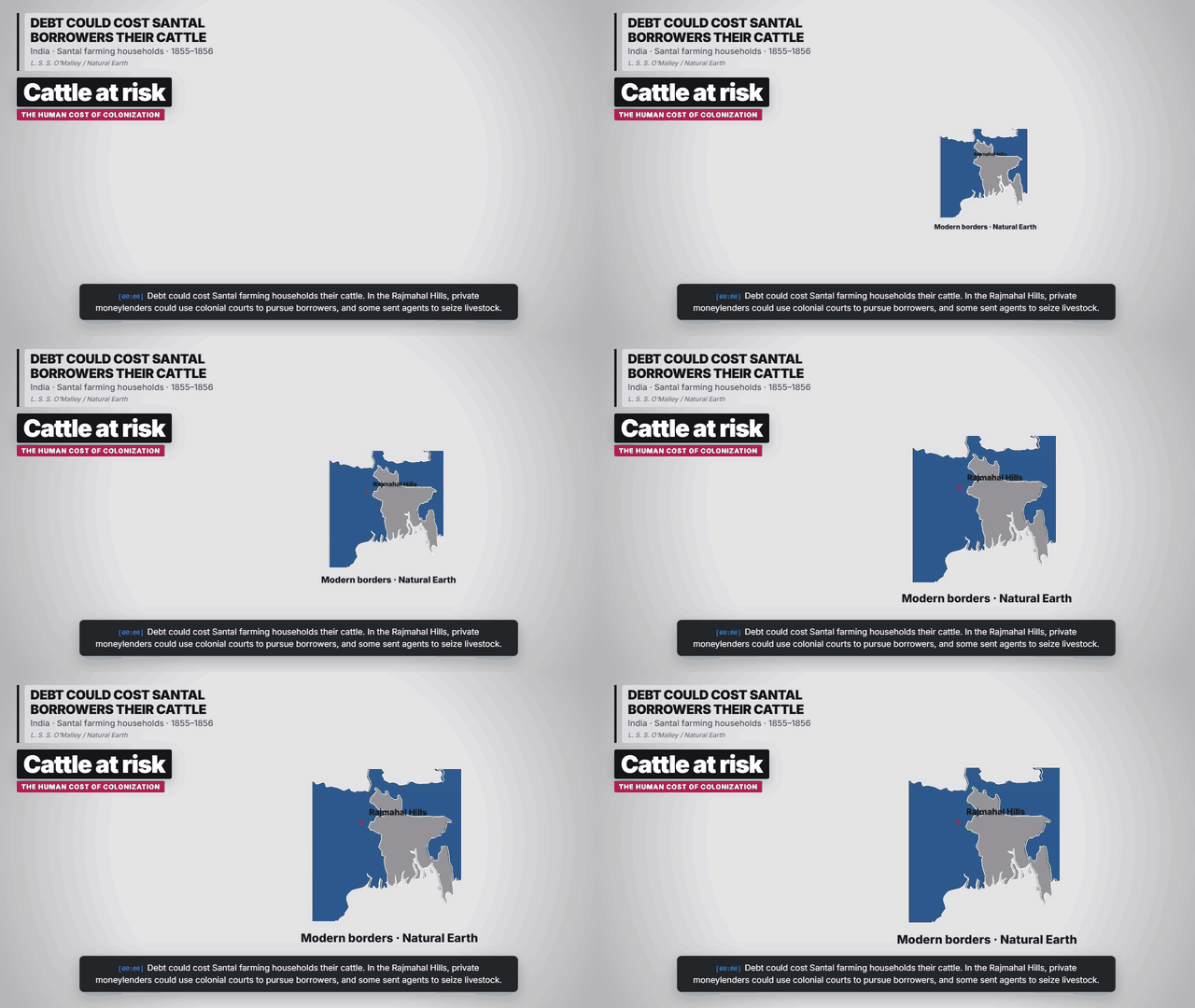
Debt could cost Santal farming households their cattle. In the Rajmahal Hills, private moneylenders could use colonial courts to pursue borrowers, and some sent agents to seize livestock.
Explore the six-scene explainerKey takeaways
- Debt could cost Santal farming households their cattle. In the Rajmahal Hills, private moneylenders could use colonial courts to pursue borrowers, and some sent agents to seize livestock.
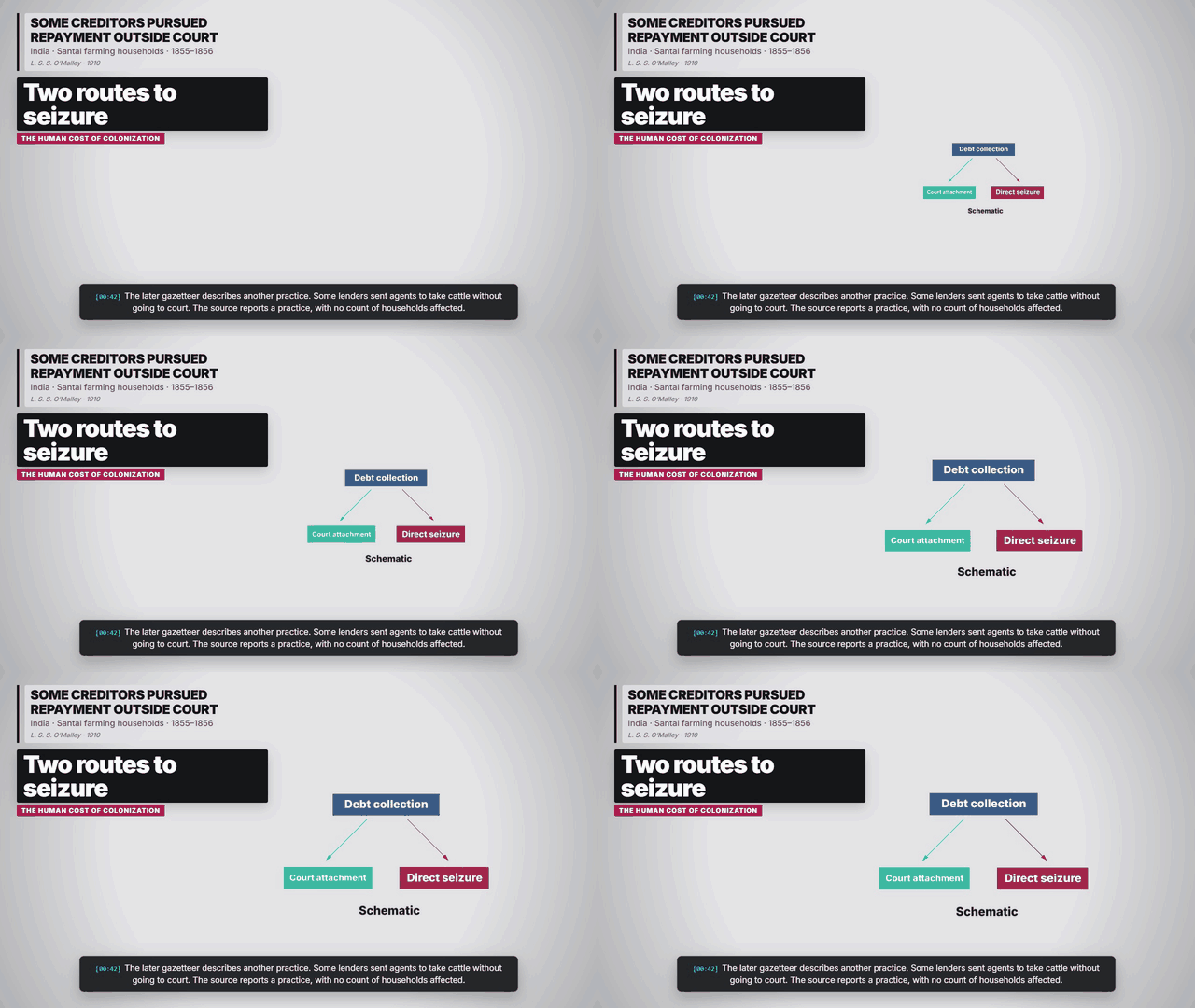
- The later gazetteer describes another practice. Some lenders sent agents to take cattle without going to court. The source reports a practice, with no count of households affected.
Timeline and evidence
| Period | Documented event | Source |
|---|---|---|
| 1854 | In eighteen fifty-four, colonial superintendent Pontet recorded Santal complaints about high interest. Borrowers dealt with private lenders, known as mahajans. | Pontet · 1854–1855 |
| 1854 | Pontet’s reports of 15 May and 5 July 1854 describe lenders getting court orders against cattle and some borrowers facing rulings in their absence. O’Malley’s 1910 account describes travel to courts at Deoghar or Bhagalpur and the written ledgers that creditors could present. | Pontet · 1854–1855 |
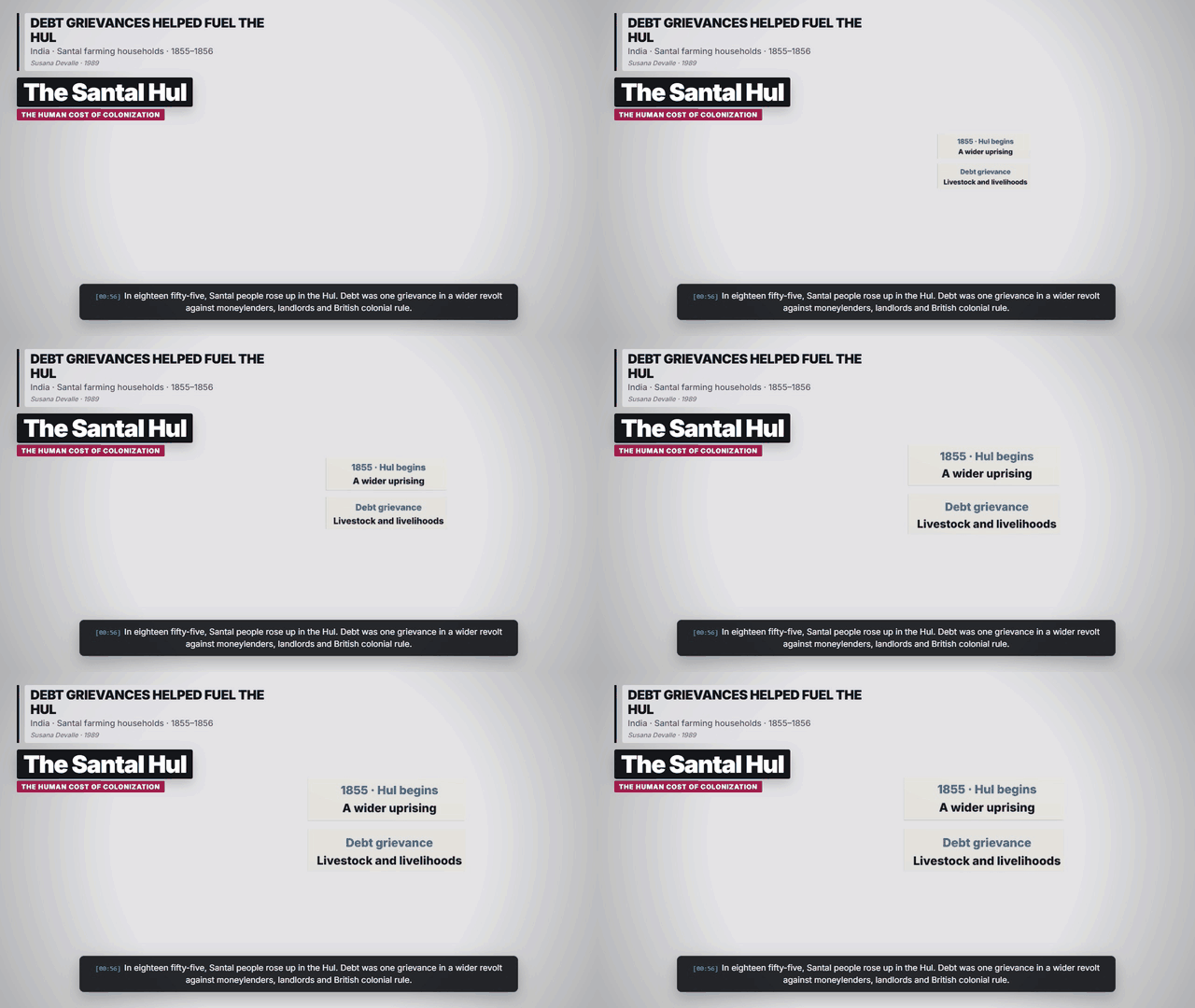
| 1855 | In eighteen fifty-five, Santal people rose up in the Hul. Debt was one grievance in a wider revolt against moneylenders, landlords and British colonial rule. | Susana Devalle · 1989 |
| 1910 | The 1910 gazetteer describes some creditors using agents to take cattle outside court. It speaks about Santal borrowers in prejudicial terms. Its account of seizure provides evidence of a reported practice, with no count of households. | L. S. S. O’Malley · 1910 |
The cost of borrowing
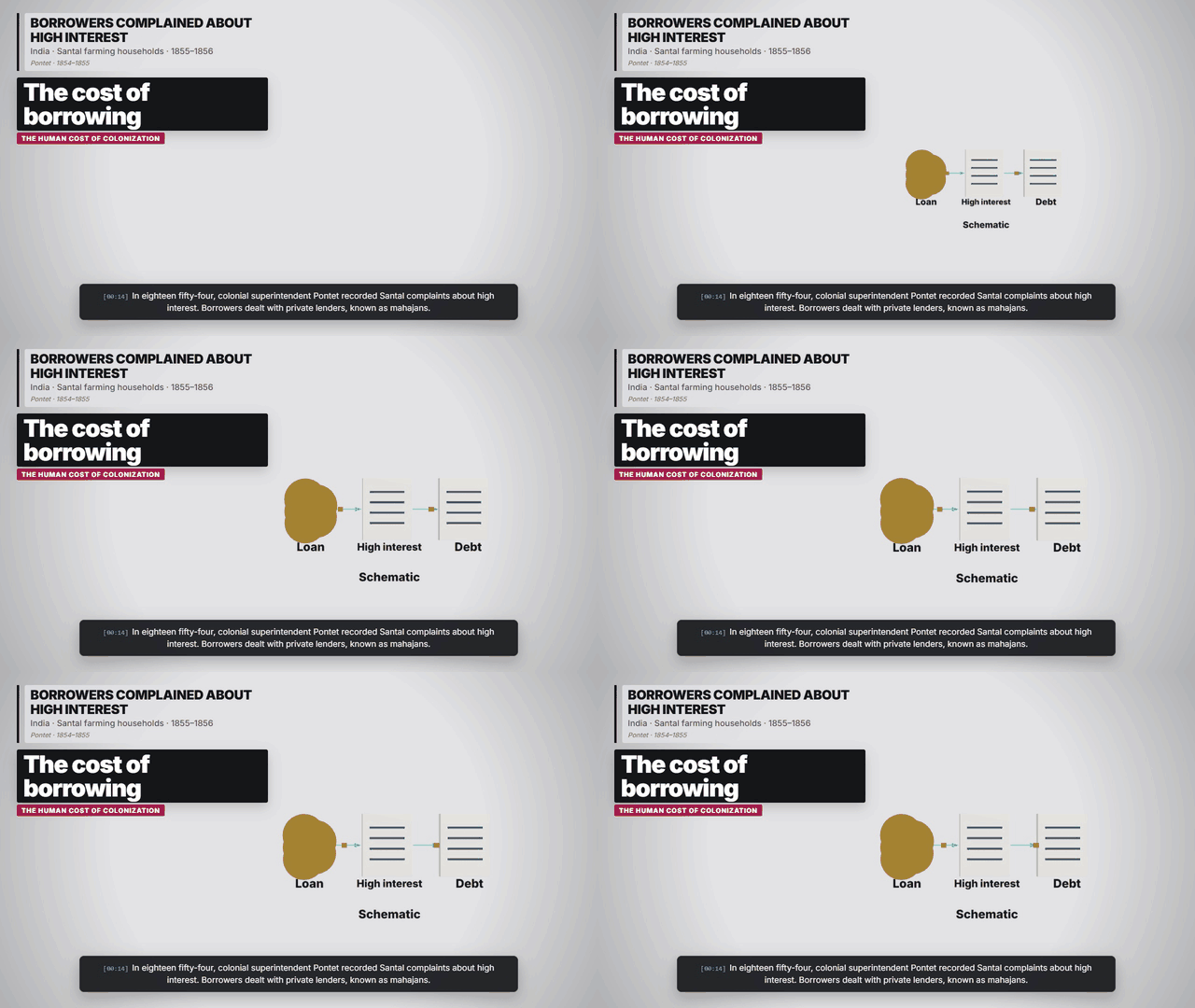
In eighteen fifty-four, colonial superintendent Pontet recorded Santal complaints about high interest. Borrowers dealt with private lenders, known as mahajans. Source and context.
Colonial courts
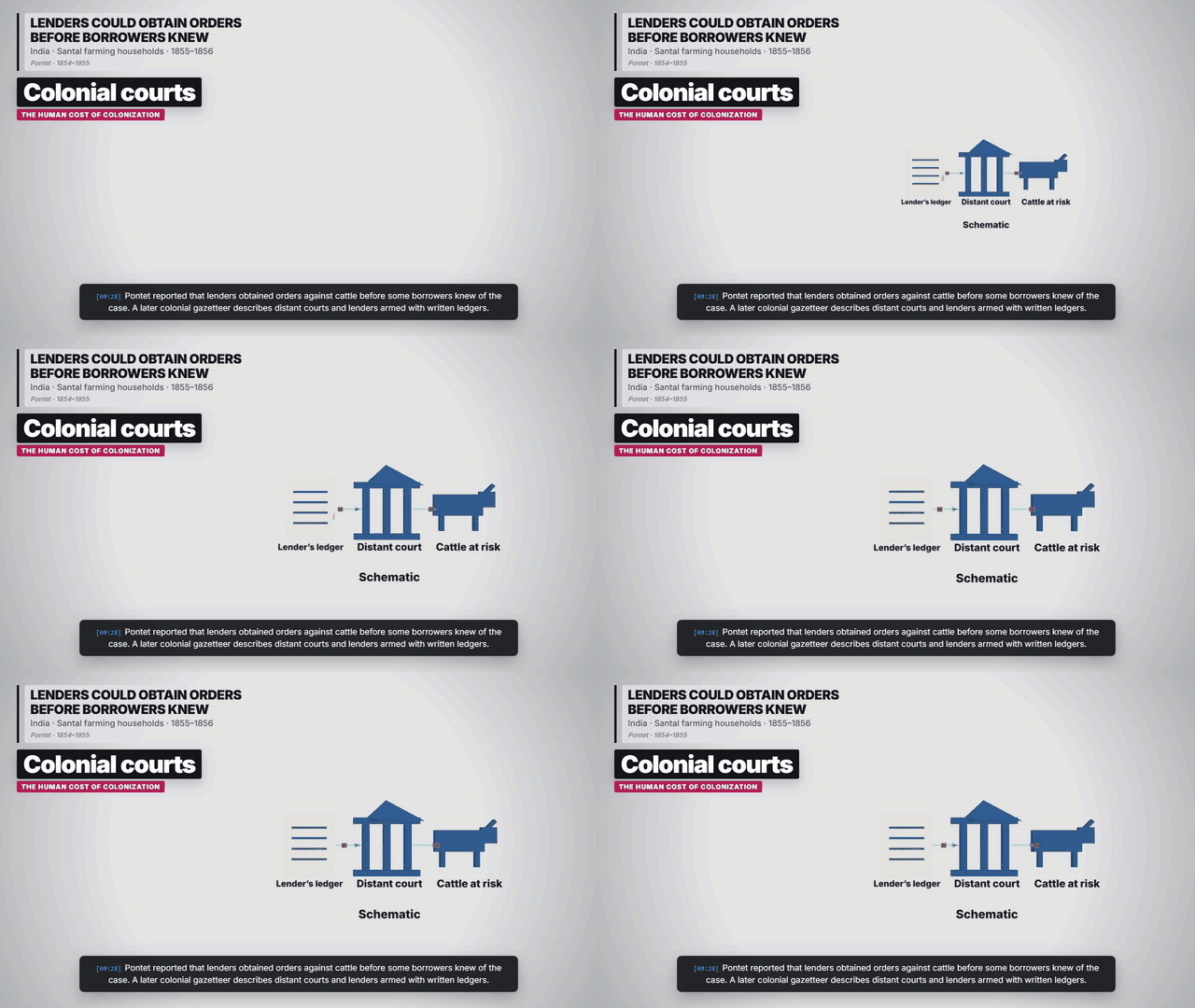
Pontet’s reports of 15 May and 5 July 1854 describe lenders getting court orders against cattle and some borrowers facing rulings in their absence. O’Malley’s 1910 account describes travel to courts at Deoghar or Bhagalpur and the written ledgers that creditors could present. Source and context.
Two routes to seizure
The 1910 gazetteer describes some creditors using agents to take cattle outside court. It speaks about Santal borrowers in prejudicial terms. Its account of seizure provides evidence of a reported practice, with no count of households. Source and context.
The Santal Hul
In eighteen fifty-five, Santal people rose up in the Hul. Debt was one grievance in a wider revolt against moneylenders, landlords and British colonial rule. Source and context.
Charts, maps and diagrams from the explainer
Frequently asked questions
Who were the mahajans?
In this episode, the term refers to private moneylenders. Colonial officials and courts exercised separate public authority.
Was debt the only grievance?
No. The Hul also challenged landlords and British colonial authority. This episode focuses on one documented grievance.
Sources and reporting scope
Pontet. 1854–1855. Reports excerpted in the archival collection, pp. 110–111.
L. S. S. O’Malley. 1910. Colonial gazetteer, pp. 46–47.
Susana Devalle. 1989. Historical and oral-history research.
Marine Carrin. 2022. Santal narratives about writing and the Hul.
Natural Earth. v5.1.2. Modern borders.
Damin-i-koh was a colonial tract in the Rajmahal Hills. The locator uses modern borders. The diagrams are schematic. The episode covers a grievance that preceded the Hul of 1855–1856.