The Human Cost of Colonization
What Wambugu wa Nyingi survived at Hola detention camp
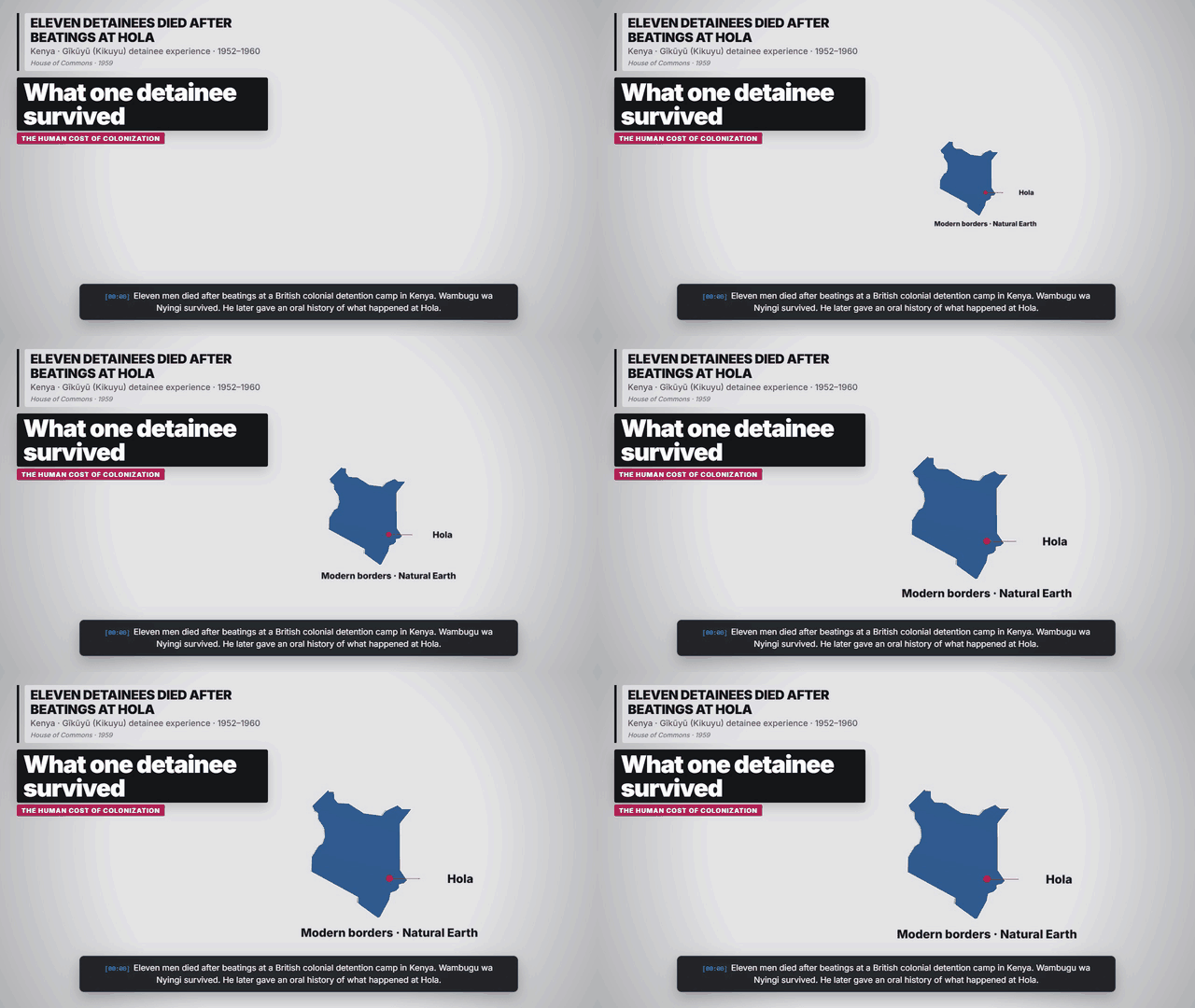
Eleven men died after beatings at a British colonial detention camp in Kenya. Wambugu wa Nyingi survived. He later gave an oral history of what happened at Hola.
Explore the six-scene explainerKey takeaways
- Eleven men died after beatings at a British colonial detention camp in Kenya. Wambugu wa Nyingi survived. He later gave an oral history of what happened at Hola.
- Nyingi recalled being beaten and losing consciousness. He said he later gave evidence about the beatings. The official inquiry recorded eleven deaths following the violence.
Timeline and evidence
| Period | Documented event | Source |
|---|---|---|
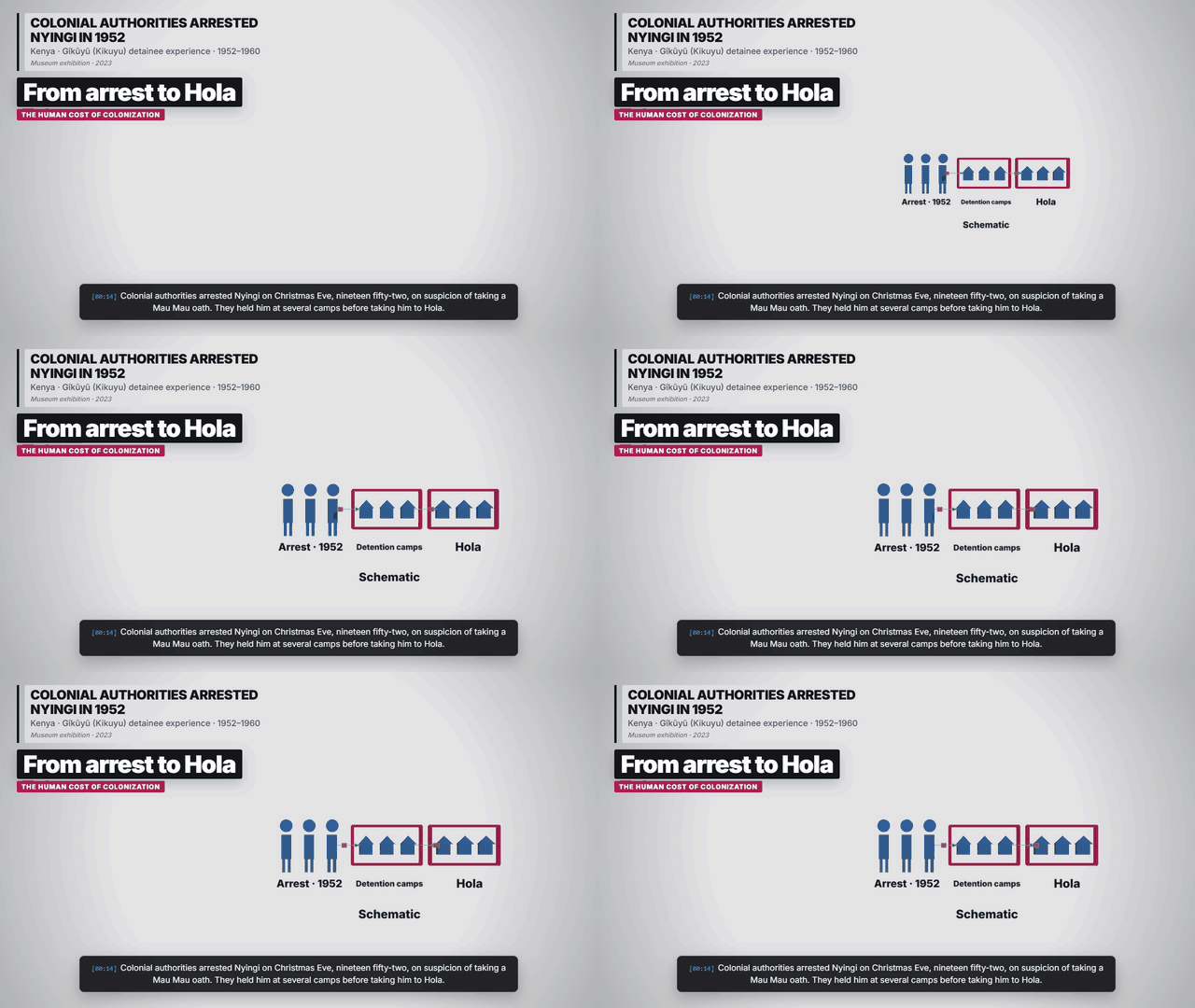
| 1952-12-24 | Colonial authorities arrested Nyingi on Christmas Eve, nineteen fifty-two, on suspicion of taking a Mau Mau oath. They held him at several camps before taking him to Hola. | Museum exhibition · 2023 |
| 1958 | Nyingi dated his arrival at Hola to 1958 in his oral history. The colonial administration had arrested him on 24 December 1952. | Nyingi’s oral history · 2023 |
| 1959-03-03 | Nyingi recalled being beaten and losing consciousness. He said he later gave evidence about the beatings. The official inquiry recorded eleven deaths following the violence. | House of Commons · 1959 |
| 1959-06-04 | In June 1959 Parliament heard that the colonial attorney-general found the evidence insufficient for prosecution. The parliamentary record also reported disciplinary charges against the camp officer in charge. | House of Commons · 1959 |
From arrest to Hola
Nyingi dated his arrival at Hola to 1958 in his oral history. The colonial administration had arrested him on 24 December 1952. Source and context.
Violence at Hola
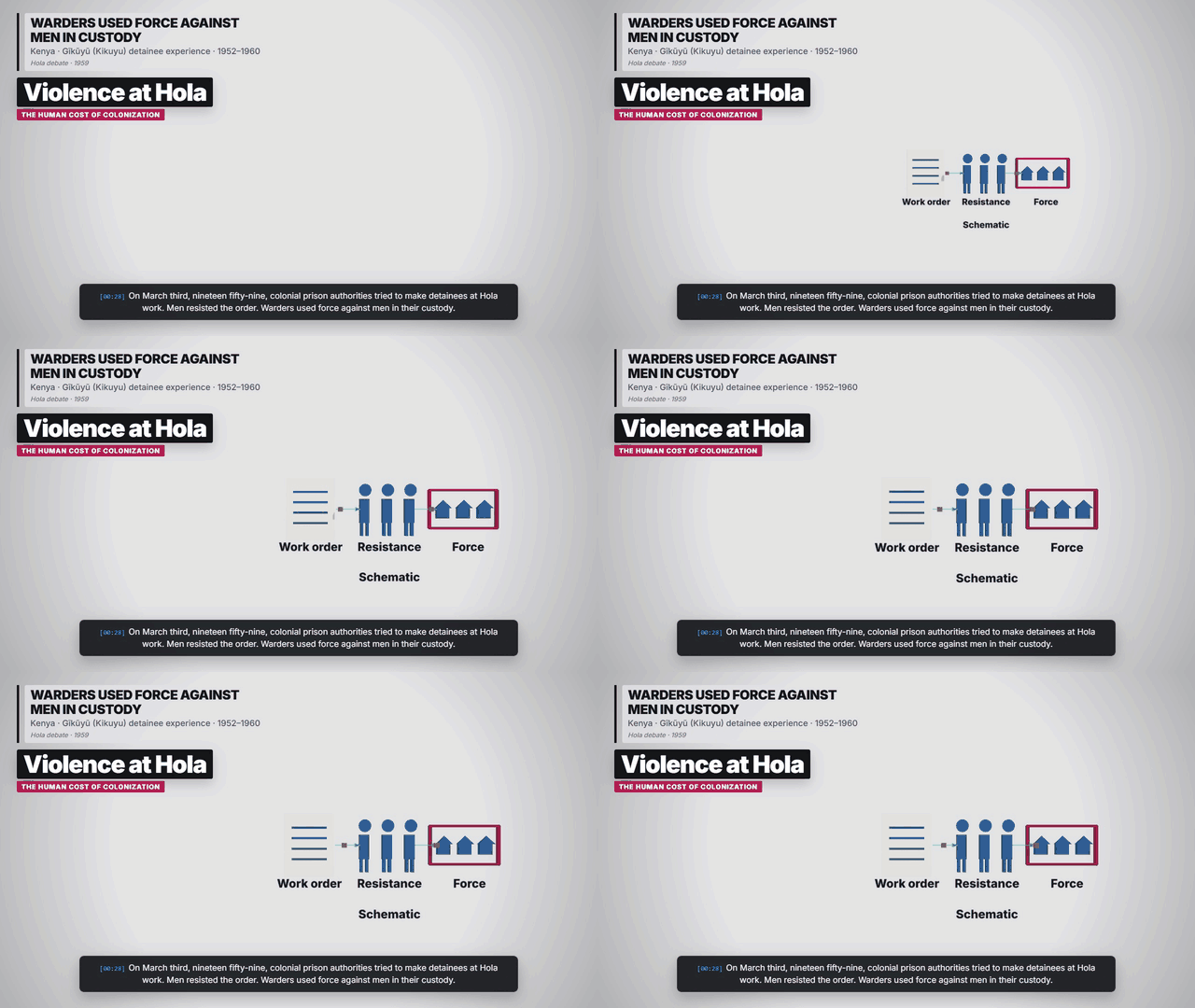
On March third, nineteen fifty-nine, colonial prison authorities tried to make detainees at Hola work. Men resisted the order. Warders used force against men in their custody. Source and context.
Eleven detainees died
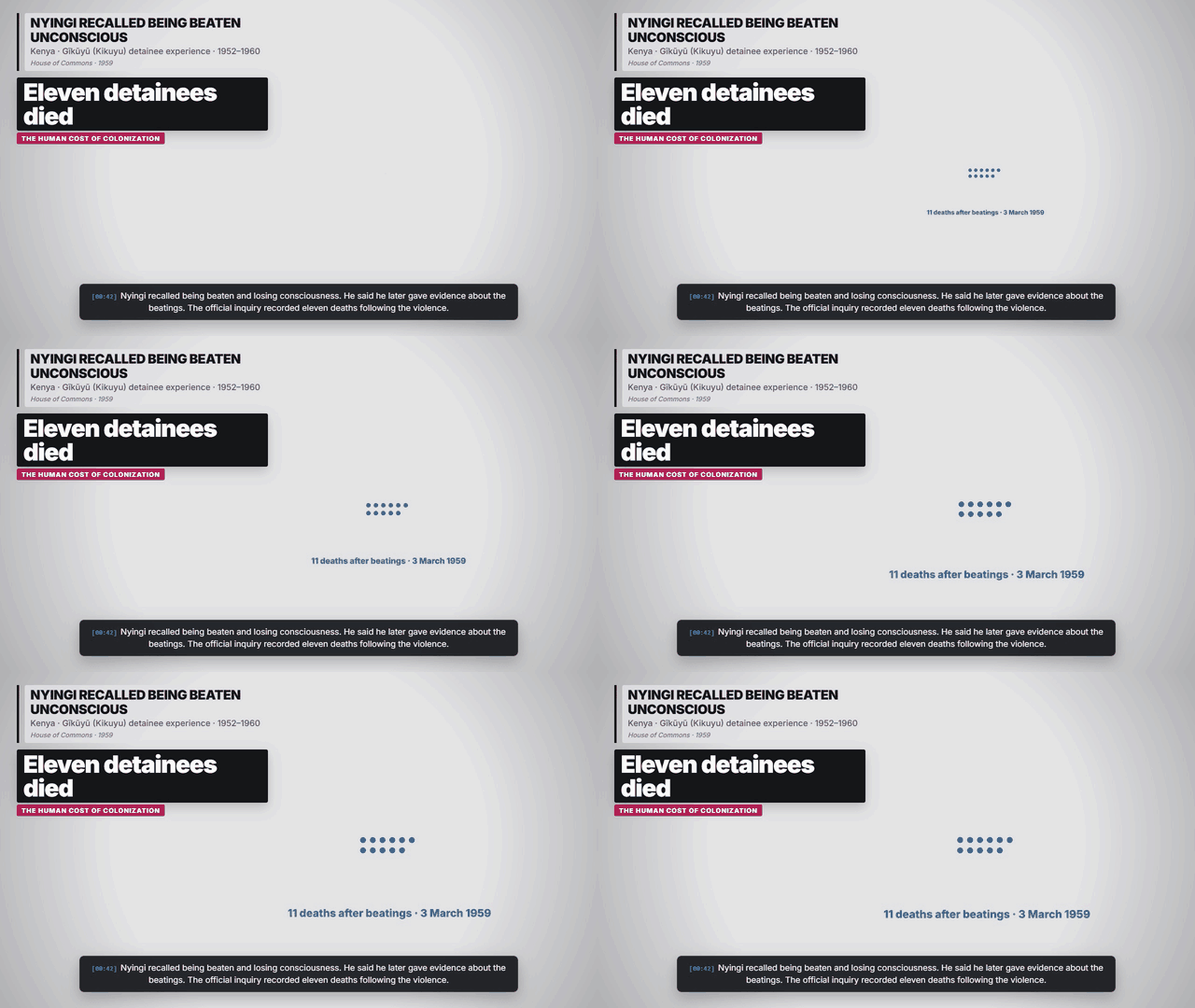
Nyingi recalled being beaten and losing consciousness. He said he later gave evidence about the beatings. The official inquiry recorded eleven deaths following the violence. Source and context.
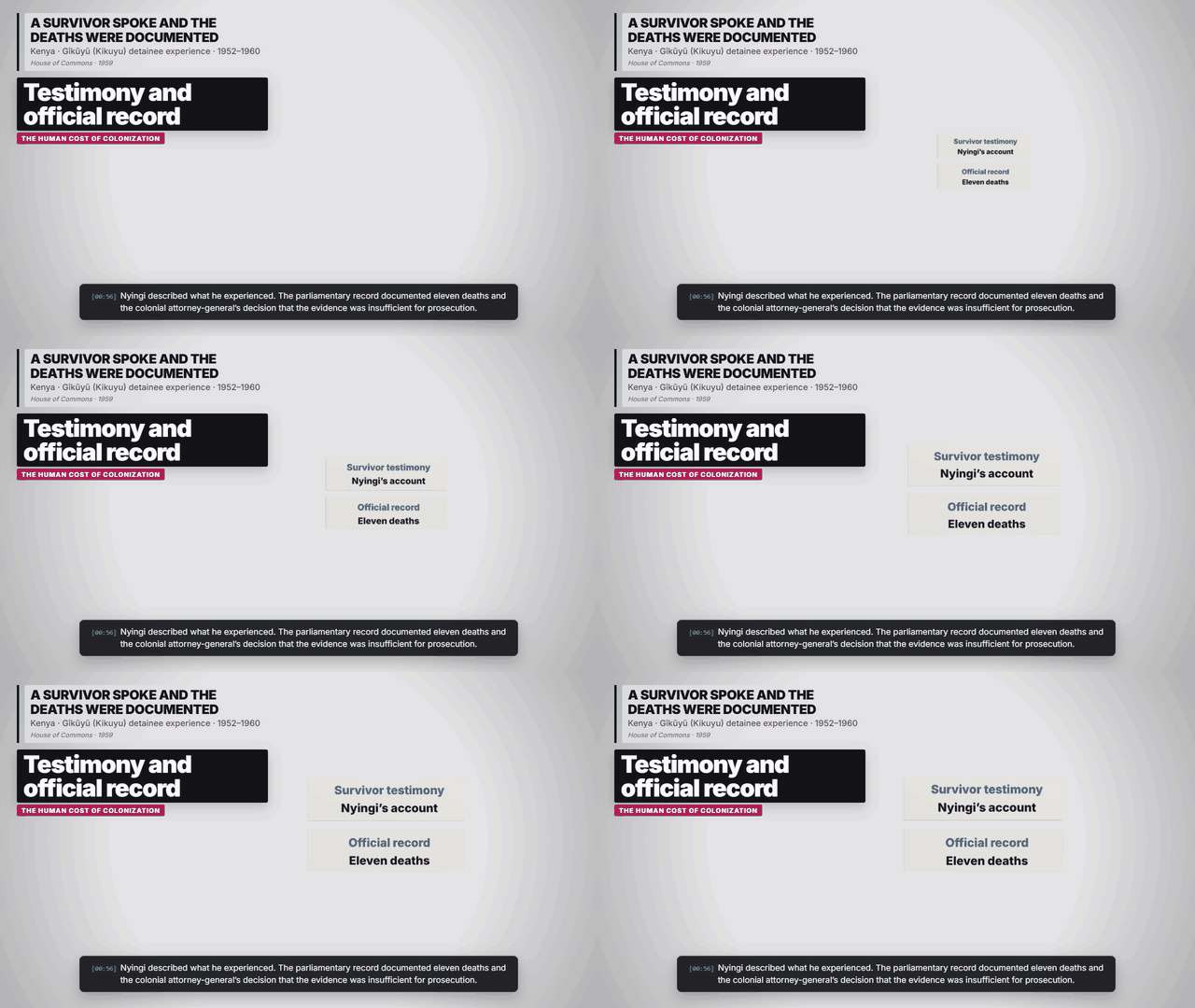
Testimony and official record
In June 1959 Parliament heard that the colonial attorney-general found the evidence insufficient for prosecution. The parliamentary record also reported disciplinary charges against the camp officer in charge. Source and context.
Charts, maps and diagrams from the explainer
Frequently asked questions
Who ran Hola?
Hola was a British colonial detention camp staffed by the colonial prison service.
What does eleven count?
It counts the detainees who died following the violence at Hola on 3 March 1959.
Sources and reporting scope
Nyingi’s oral history. 2023. Museum of British Colonialism, interview transcript.
House of Commons. 1959. 4 June, deaths and prosecution decision.
Hola debate. 1959. 27 July, work order and violence.
UK National Archives. 2012. Catalogue guide for the Hola inquest and prison records.
Museum exhibition. 2023. Arrest date and detention history.
Natural Earth. v5.1.2. Modern boundaries.
This episode follows one detainee’s account and the official record of the 3 March 1959 violence at Hola. The locator uses modern borders and the diagrams are schematic.