The Human Cost of Colonization
How British colonial rule forced Kikuyu families from their homes
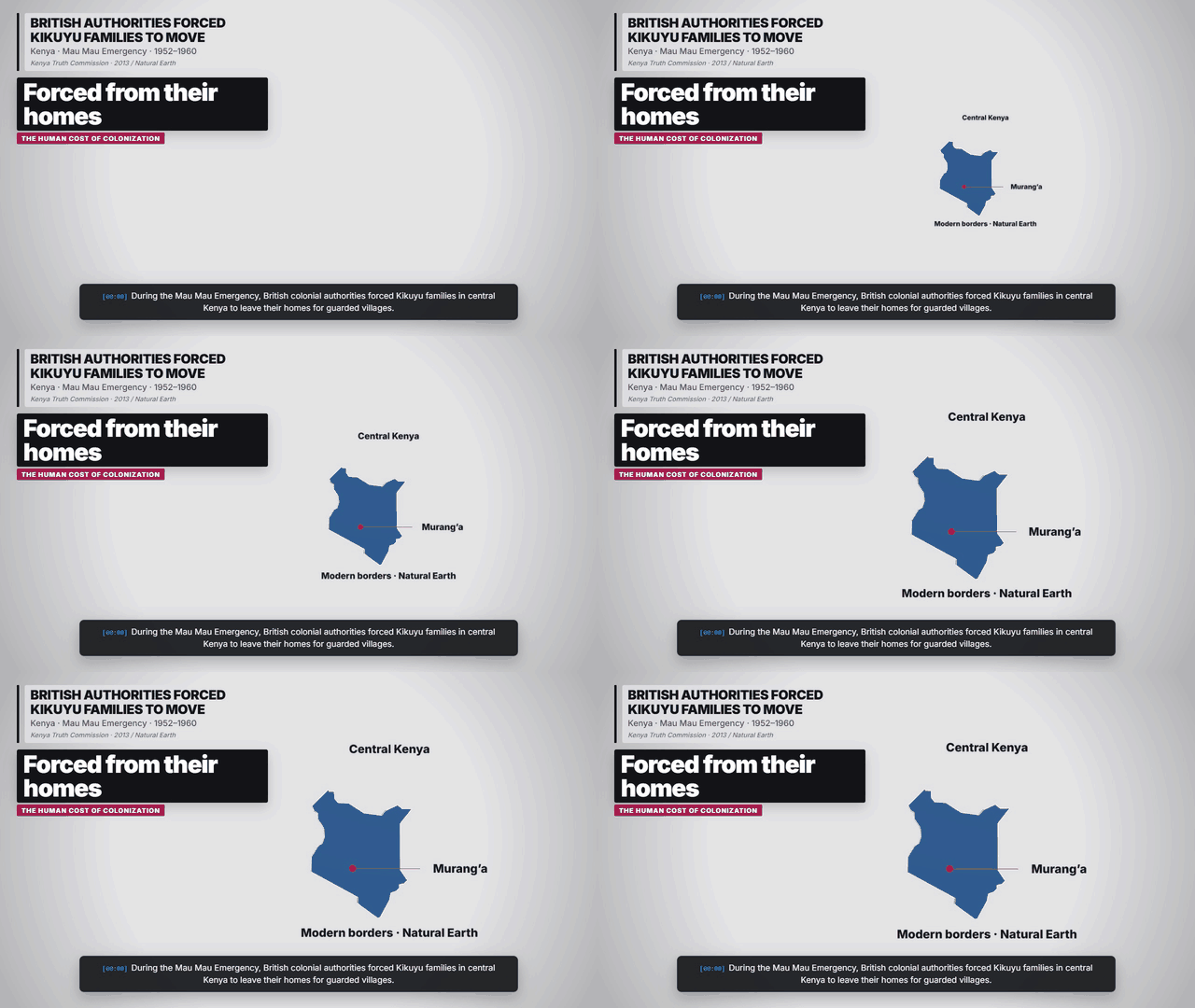
During Kenya’s Mau Mau Emergency, 1952–1960, British colonial authorities forced Gĩkũyũ families to leave dispersed homesteads for guarded villages. Explore how the moves disrupted access to land.
Explore the six-scene explainerKey takeaways
- During the Mau Mau Emergency, British colonial authorities forced Kikuyu families in central Kenya to leave their homes for guarded villages.
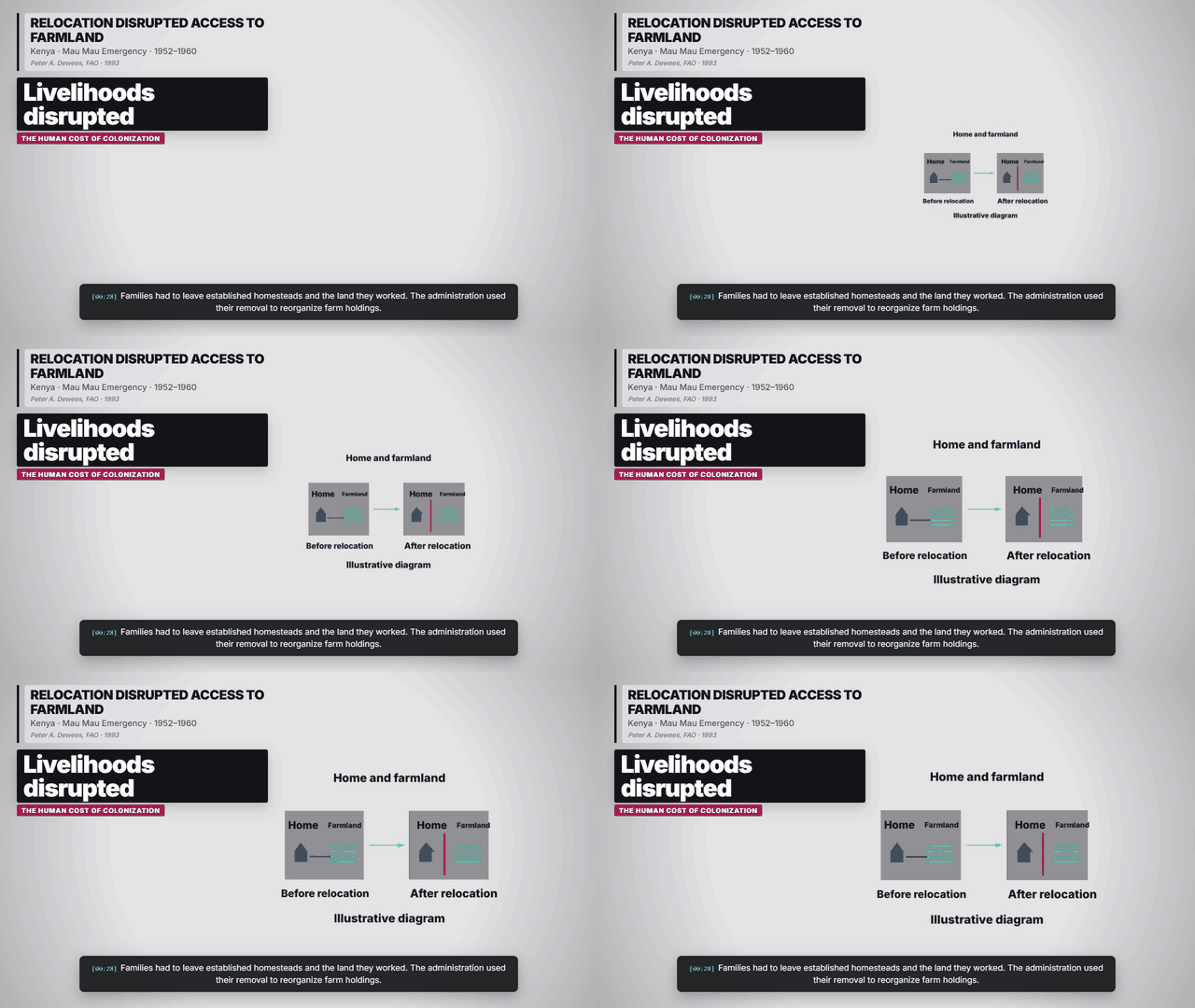
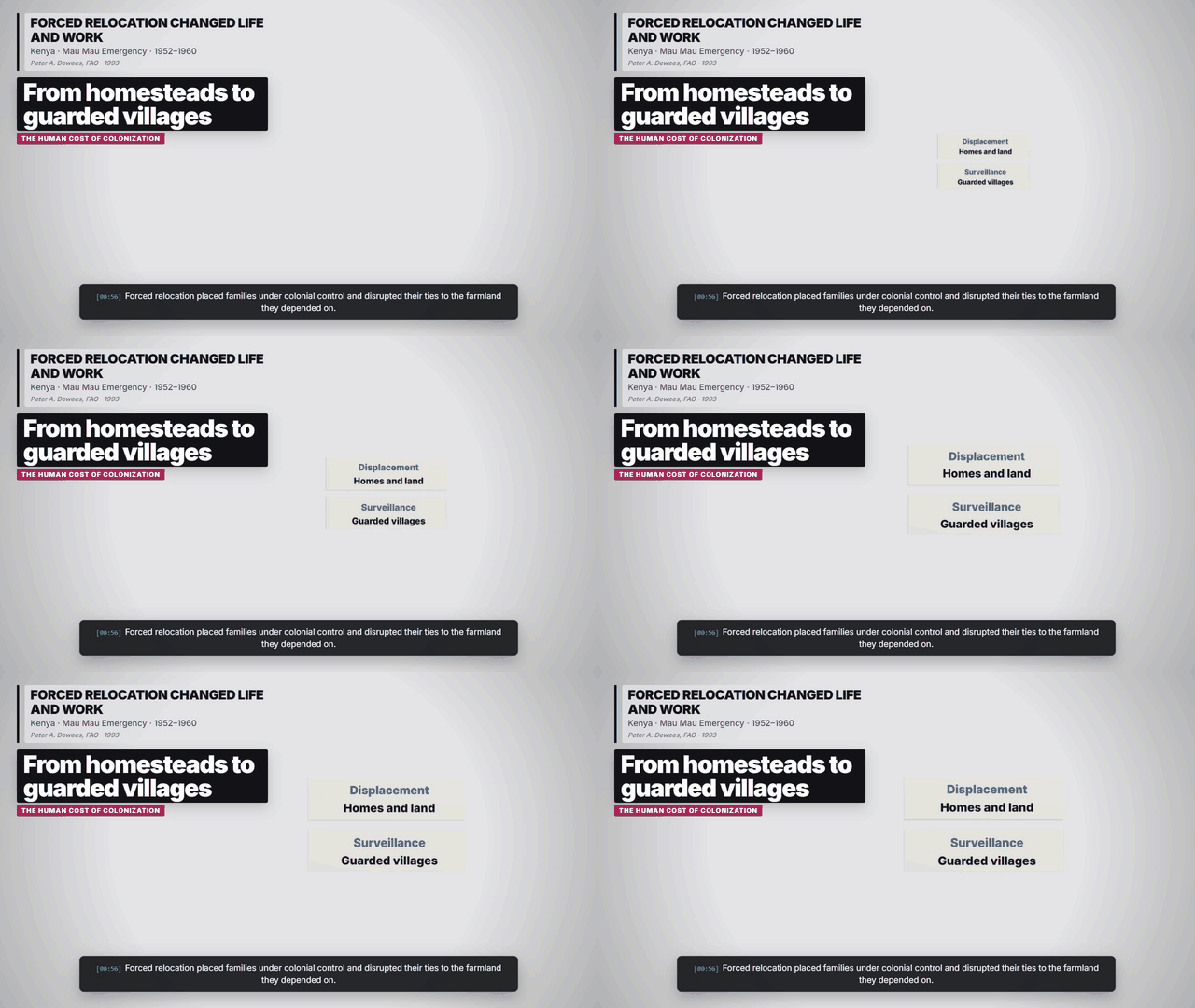
- Families had to leave established homesteads and the land they worked. The administration used their removal to reorganize farm holdings.
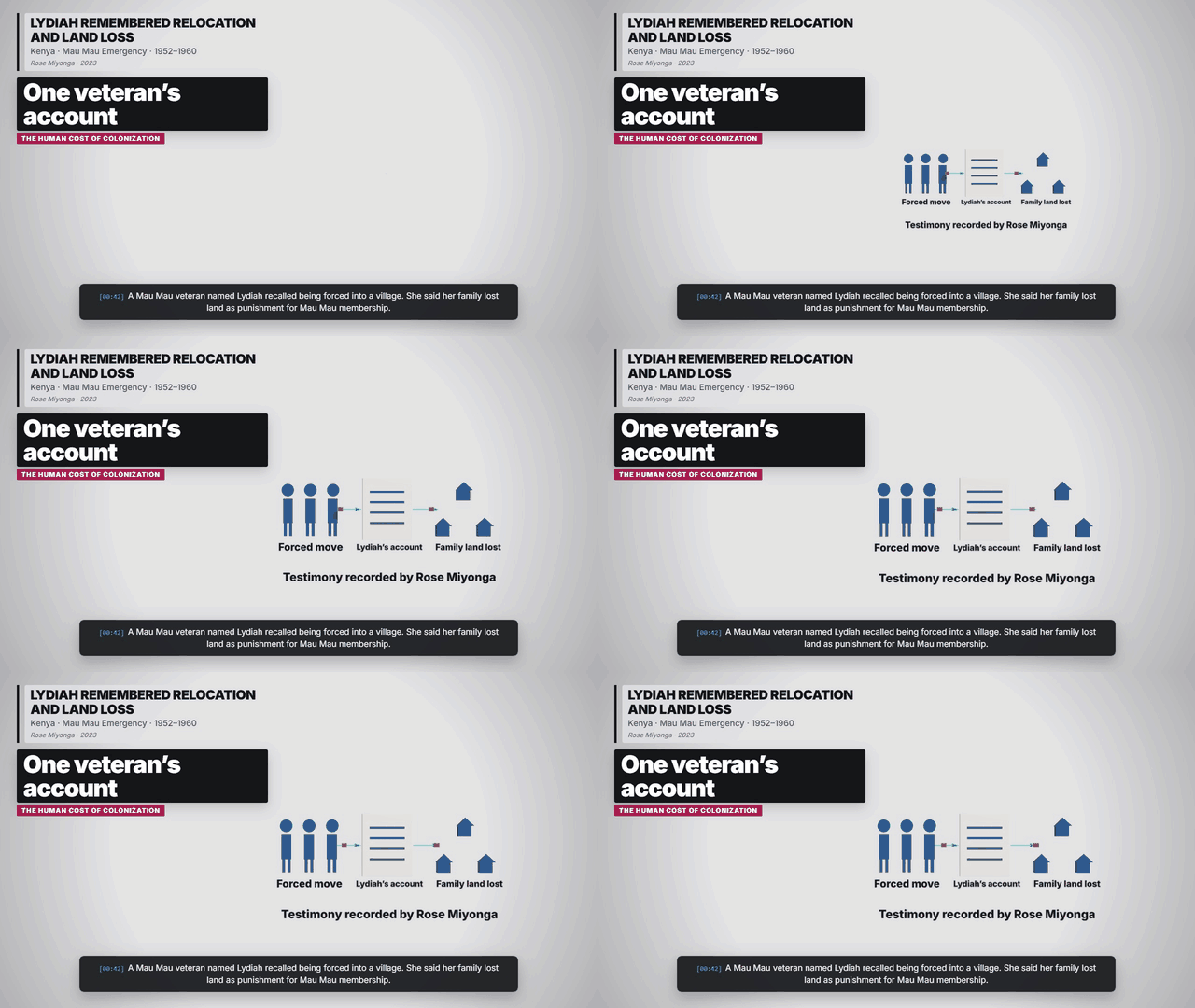
- A Mau Mau veteran named Lydiah recalled being forced into a village. She said her family lost land as punishment for Mau Mau membership.
Policy timeline and evidence
| Period | Figure or status | Source |
|---|---|---|
| 20 October 1952 | The British Colonial Office declared a state of emergency in Kenya. | Rose Miyonga · 2023 |
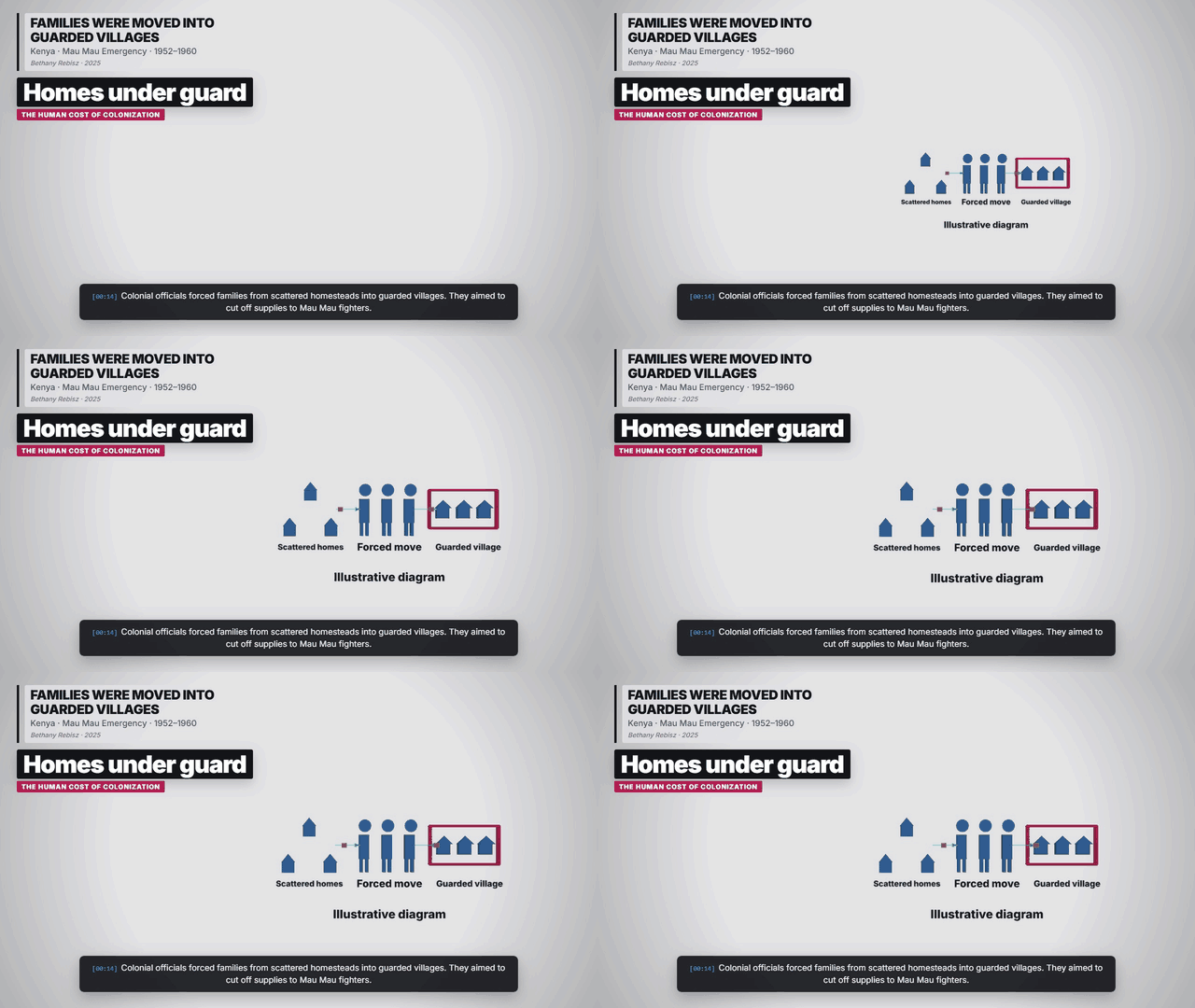
| During the Emergency | Colonial officials forced families into guarded villages. Cutting Mau Mau supply lines was one purpose of the policy. | Bethany Rebisz · 2025 |
| During the Emergency | The administration used the removal of families from established homesteads to begin consolidating farm holdings. | Peter A. Dewees, FAO · 1993 |
| 12 January 1960 | The formal state of emergency ended. | Kyle J. Melles · 2024 |
How the policy worked
Colonial officials concentrated households in villages and used fences and guards to control residents’ movements. The Kenya National Archives catalogue lists photographs of emergency villages, and Bethany Rebisz draws on policy records and survivor interviews to describe the settlements. Source and context.
What Lydiah remembered
Mau Mau veteran Lydiah W. told historian Rose Miyonga that she was forcibly moved into a village and that her family lost land as punishment for Mau Mau membership. Her interview took place in Othaya in November 2020. It describes one family’s experience. Source and context.
Charts, maps and diagrams from the explainer
Frequently asked questions
Who ordered the moves?
British colonial authorities imposed forced relocation during the Mau Mau Emergency. Colonial officials and the Home Guard controlled the villages.
What dates does the episode cover?
The formal Emergency ran from 20 October 1952 to 12 January 1960. The episode focuses on Gĩkũyũ households in central Kenya.
Sources and reporting scope
Kenya Truth Commission. 2013. Executive summary, including findings on British colonial abuses during the Emergency.
Bethany Rebisz. 2025. Archival research and interviews with survivors on how the guarded settlements were designed and experienced.
Peter A. Dewees, FAO. 1993. Chapter 3 documents forced moves from scattered homesteads and land consolidation during the Emergency.
Rose Miyonga. 2023. Oral-history research, including an interview with veteran Lydiah W. in Othaya in November 2020.
Kenya National Archives. 2023. Catalogue of holdings, including photographs of Kikuyu emergency villages. The date refers to the online copy.
Kyle J. Melles. 2024. Legal history documenting the formal end of the Emergency on 12 January 1960.
Natural Earth 1:50m. v5.1.2. Modern country outline, v5.1.2.
Murang’a. 2024. The municipal plan provides the coordinates for the locator pin.
Focus on Gĩkũyũ (Kikuyu) households in central Kenya during the formal Emergency. The map uses modern borders. The diagrams illustrate documented practices.