Microsoft 365 outage hits Outlook, Teams and Copilot in 74 countries
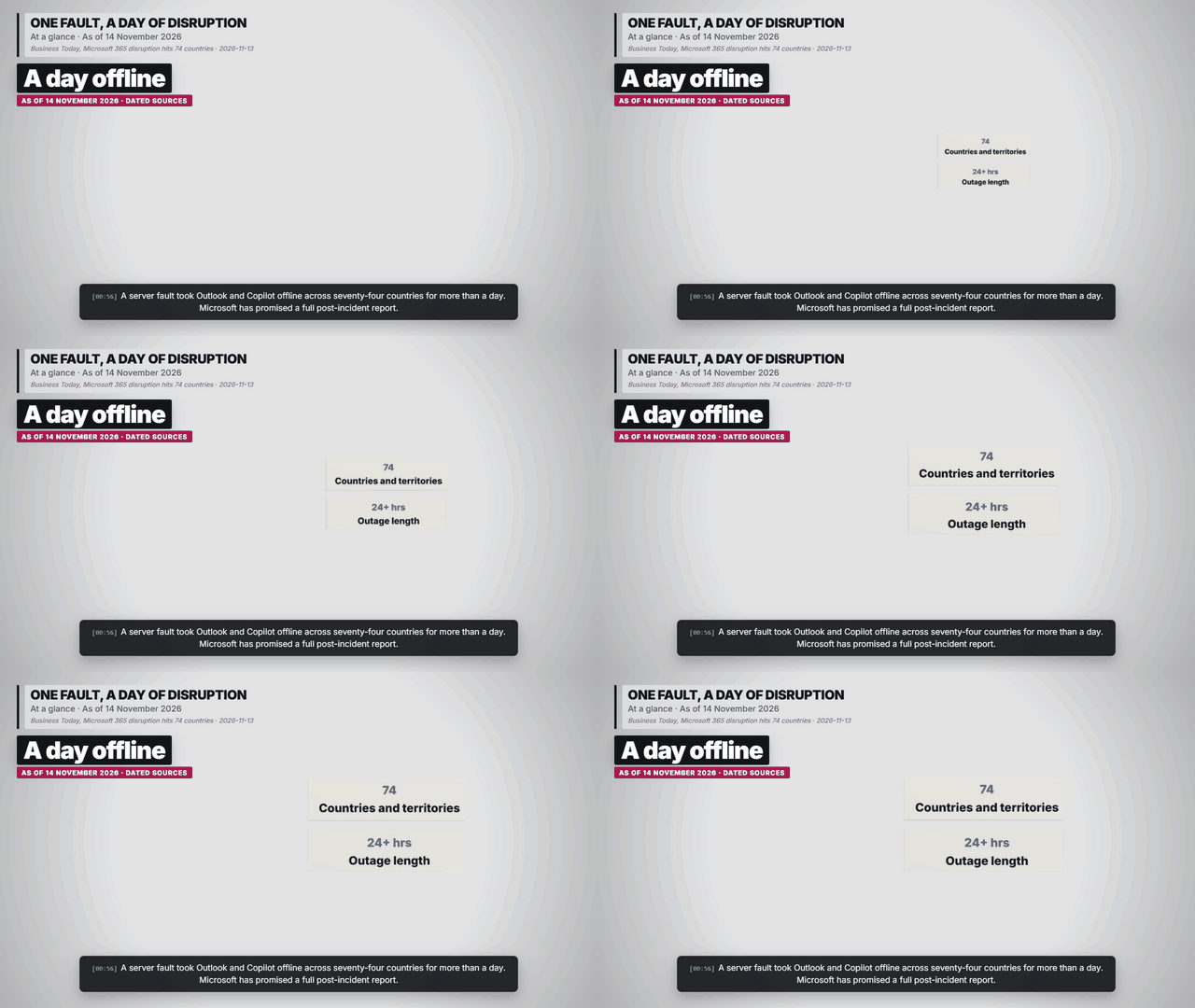
A Microsoft 365 outage that began on 12 November 2026 disrupted Outlook, parts of Teams and Copilot in 74 countries and territories. Microsoft said service was fully restored on 14 November.
Explore the six-scene explainerKey takeaways
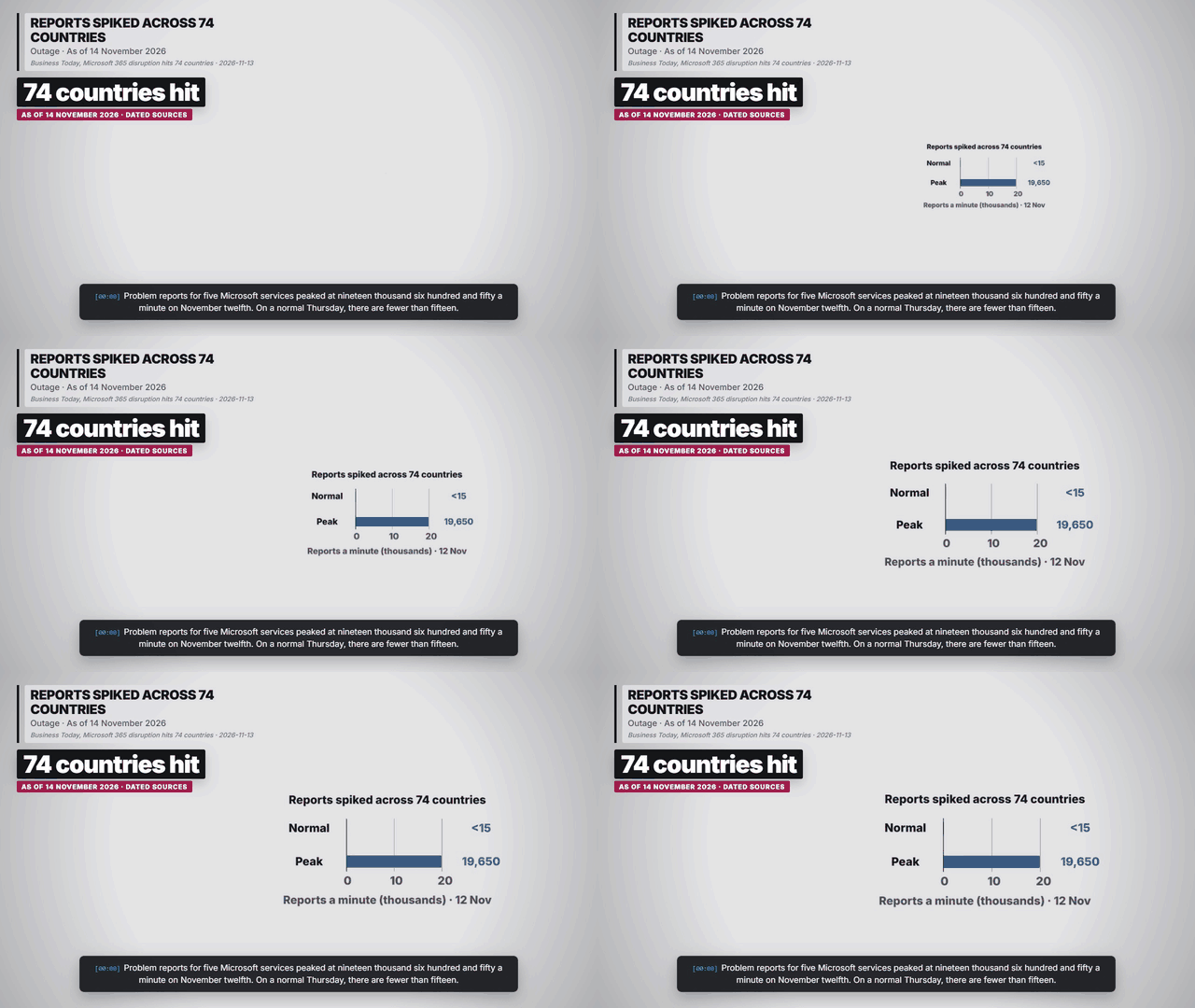
- Downdetector problem reports for five Microsoft services peaked at 19,650 a minute at 18:25 UTC on 12 November, against fewer than 15 on an average Thursday; spikes were recorded in 74 countries and territories.
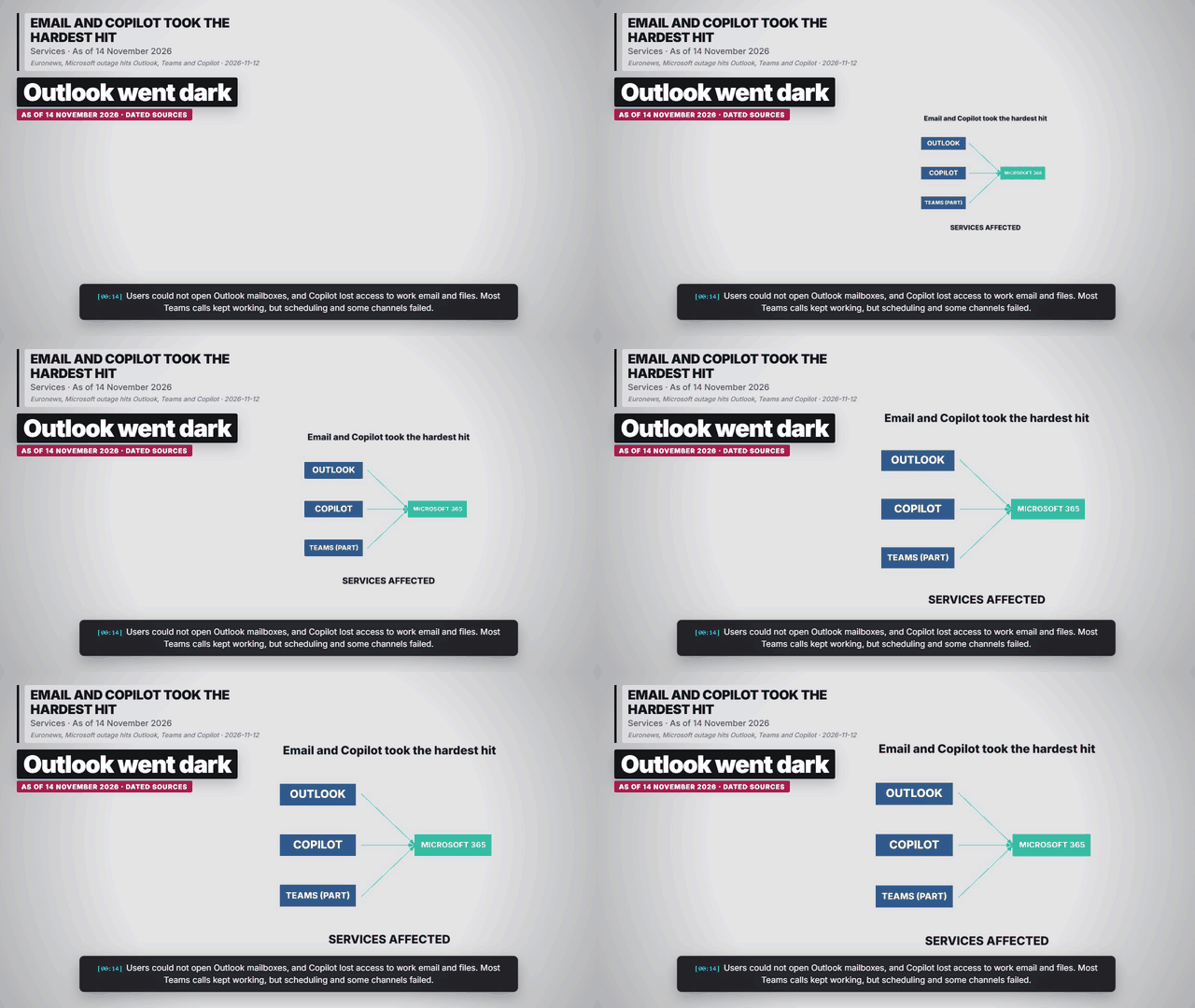
- Outlook mailbox access, Copilot Chat and its access to work data, Microsoft To Do and Planner were affected. Most core Teams calls and chats kept working, but scheduling and some channel actions failed.
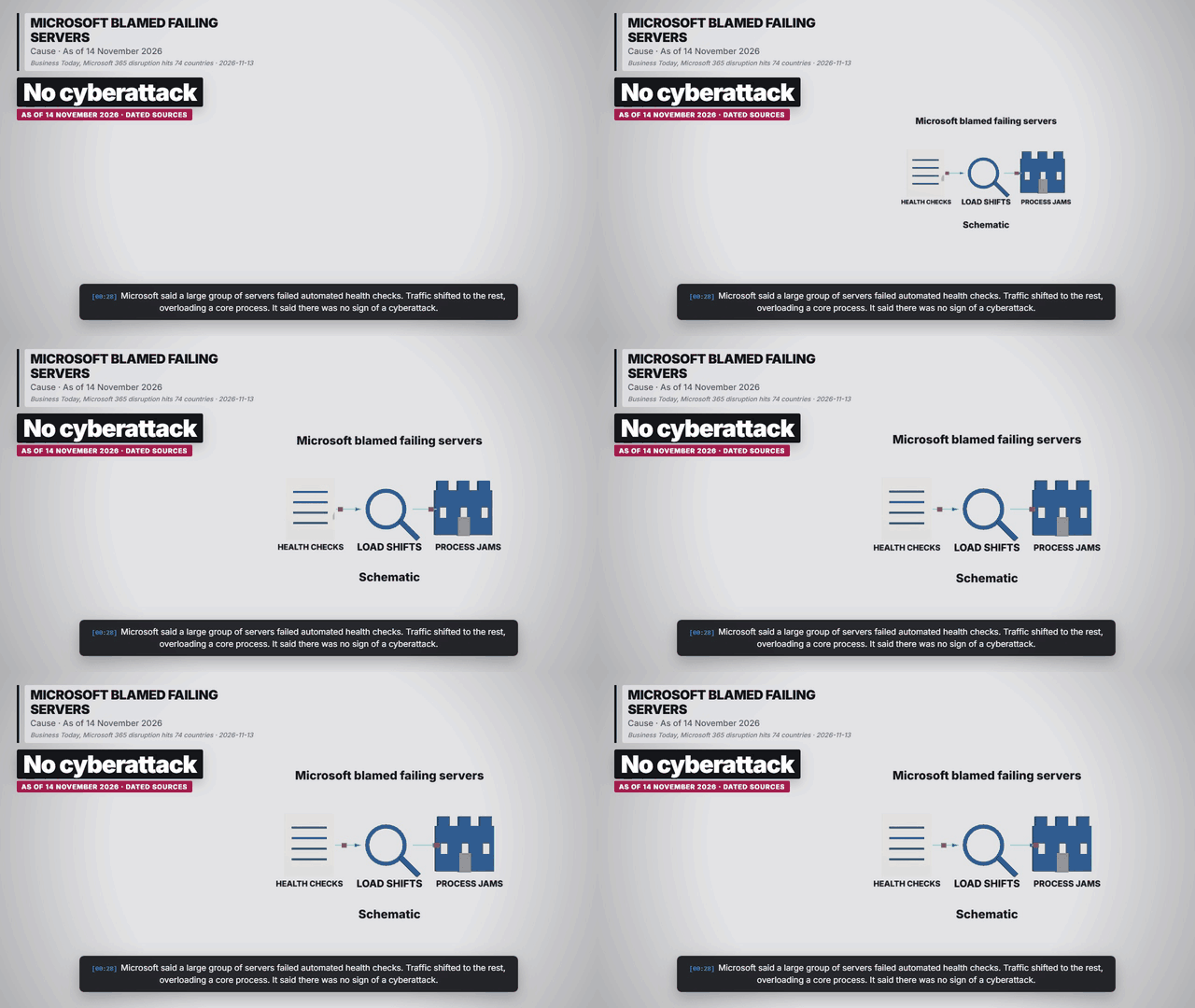
- Microsoft said a large pool of servers failed automated health checks and a core process was overwhelmed as traffic moved to the remaining servers. It said there was no indication of malicious or cyber activity.
Sourced figures and status
| Period | Figure or status | Source |
|---|---|---|
| Outage | Downdetector problem reports for five Microsoft services peaked at 19,650 a minute at 18:25 UTC on 12 November, against fewer than 15 on an average Thursday; spikes were recorded in 74 countries and territories. | Business Today, Microsoft 365 disruption hits 74 countries · 2026-11-13 |
| Services | Outlook mailbox access, Copilot Chat and its access to work data, Microsoft To Do and Planner were affected. Most core Teams calls and chats kept working, but scheduling and some channel actions failed. | Euronews, Microsoft outage hits Outlook, Teams and Copilot · 2026-11-12 |
| Cause | Microsoft said a large pool of servers failed automated health checks and a core process was overwhelmed as traffic moved to the remaining servers. It said there was no indication of malicious or cyber activity. | Business Today, Microsoft 365 disruption hits 74 countries · 2026-11-13 |
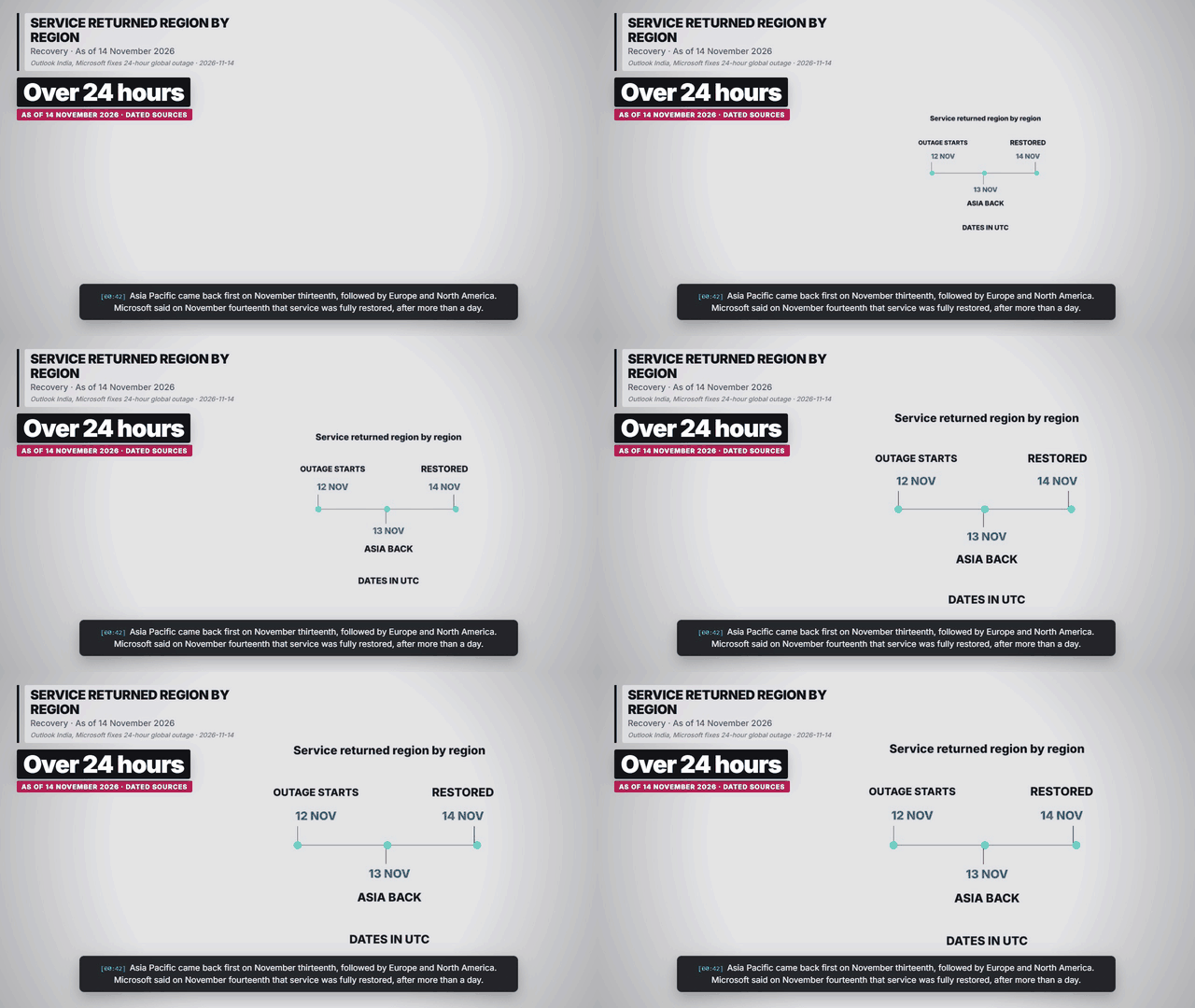
| Recovery | The Exchange Online incident began at 16:17 UTC on 12 November. Asia Pacific recovered first on 13 November, and Microsoft said on 14 November that service was restored to all remaining customers, after more than 24 hours. | Outlook India, Microsoft fixes 24-hour global outage · 2026-11-14 |
Who was affected
Reported disruptions reached UK hospitals and courts, government systems in Singapore and Japan, airline email support in India and Microsoft 365 connectors used by AI assistants. Microsoft has not said how many users were affected. Source and context.
What is still unknown
Microsoft said the outage was not a cyberattack and promised a post-incident report. Reports differ on the trigger: one cites a network capacity upgrade, while others say Microsoft had not yet named a root cause. Source and context.
Charts, maps and diagrams from the explainer
Frequently asked questions
How big was the Microsoft 365 outage?
Downdetector problem reports for five Microsoft services peaked at 19,650 a minute at 18:25 UTC on 12 November, against fewer than 15 on an average Thursday; spikes were recorded in 74 countries and territories.
How long did the outage last?
The Exchange Online incident began at 16:17 UTC on 12 November. Asia Pacific recovered first on 13 November, and Microsoft said on 14 November that service was restored to all remaining customers, after more than 24 hours.
Sources and reporting scope
Business Today, Microsoft 365 disruption hits 74 countries. 2026-11-13. Downdetector report rates, Microsoft’s start time, incident numbers and its account of the server failures. In English.
Euronews, Microsoft outage hits Outlook, Teams and Copilot. 2026-11-12. List of affected services and Microsoft’s restoration updates, last updated 14 November. In English.
Outlook India, Microsoft fixes 24-hour global outage. 2026-11-14. Microsoft’s final restoration post, the staged regional recovery and examples of disrupted hospitals, courts and airlines. In English.
Al Jazeera. 2026-11-13. Explains what failed, who was affected and what Microsoft had said by 13 November.
As of 14 November 2026. Country counts and report rates come from Downdetector user reports, not Microsoft data. Microsoft has not published a root cause.