The Human Cost of Colonization
How French military rule disrupted life in two Kabyle villages
In Aït Bouadda and Moknéa, French military control disrupted public meetings and travel during Algeria’s war of independence. One resident recalled being denied a pass to return to his factory job.
Explore the six-scene explainerKey takeaways
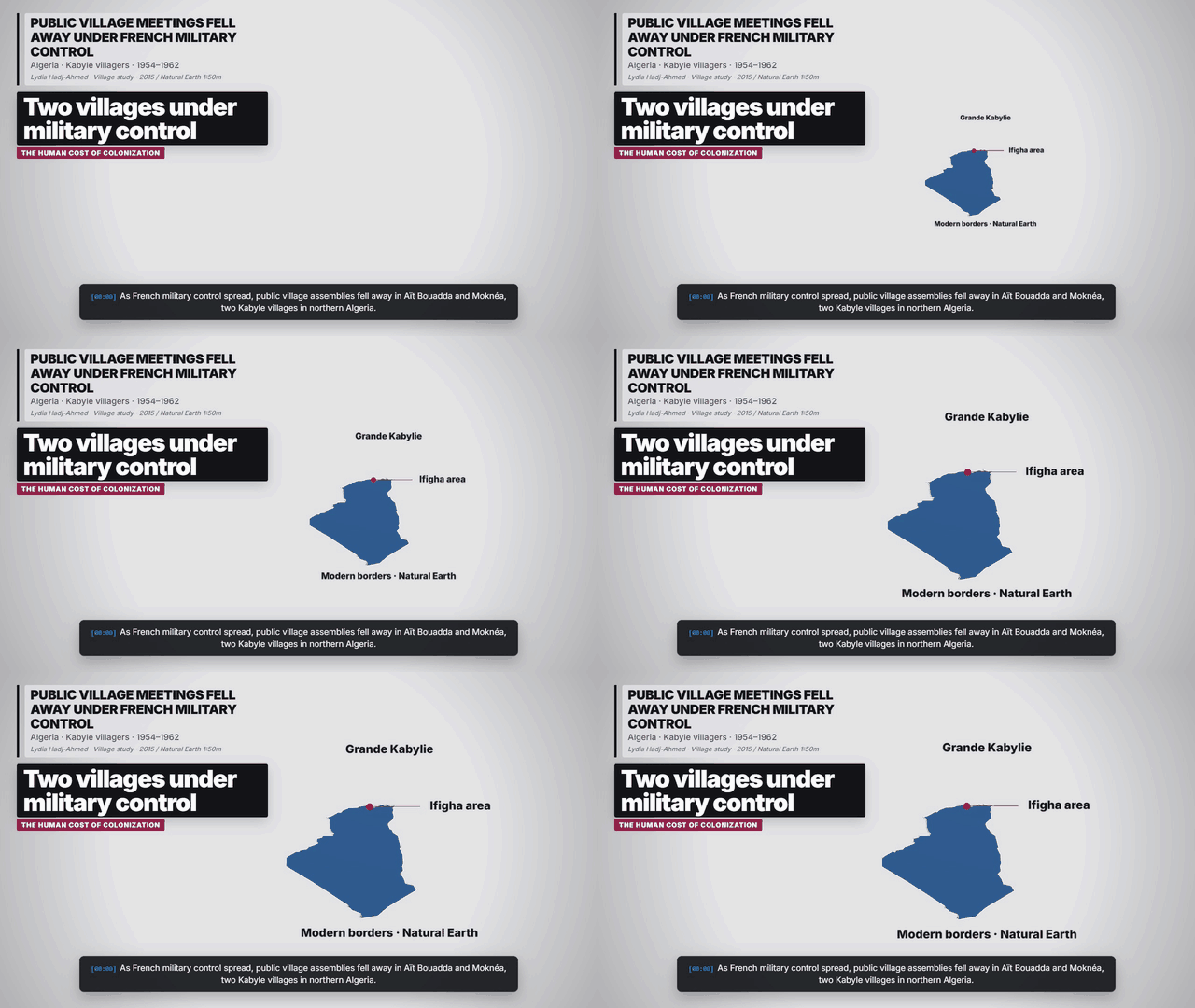
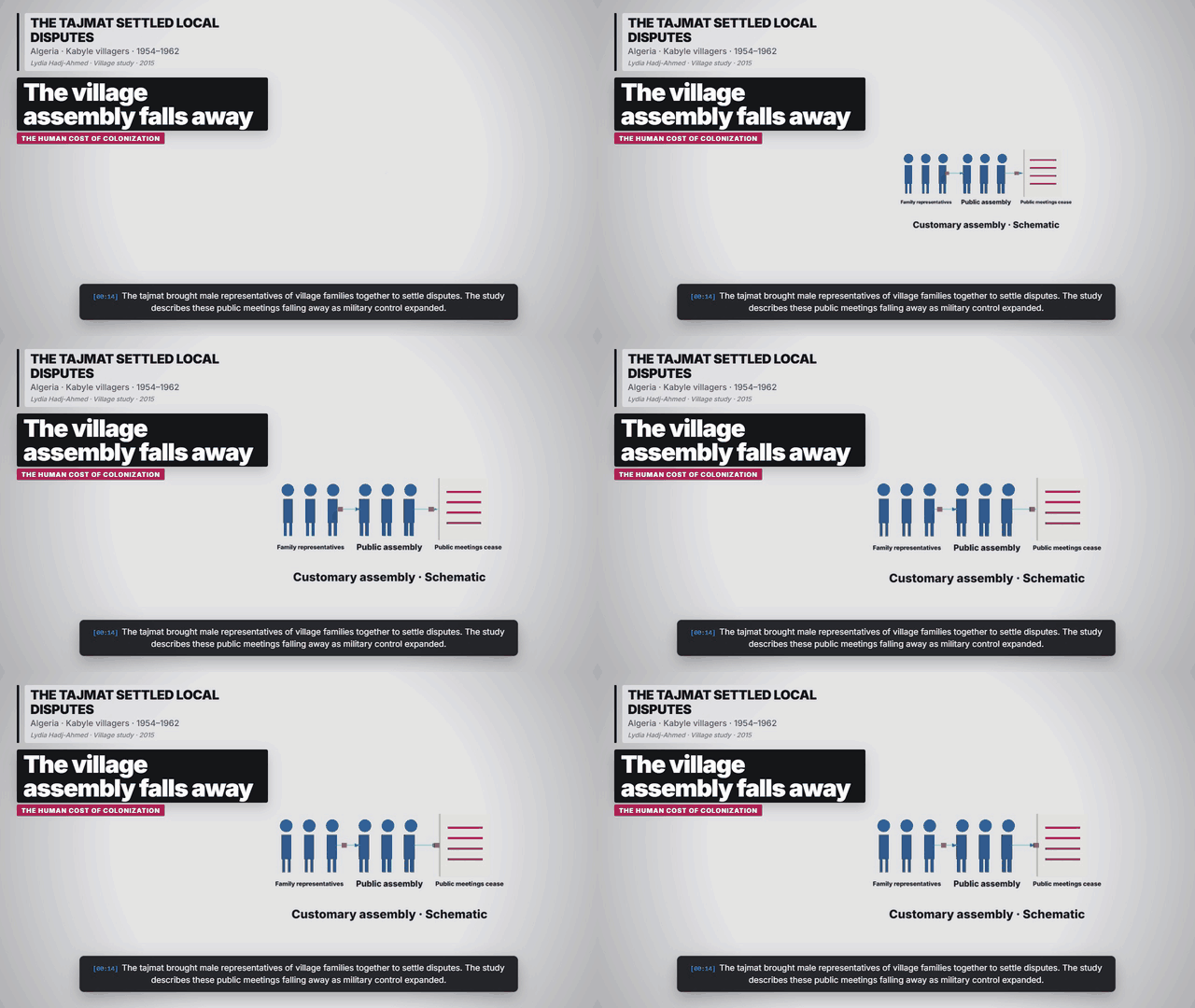
- As French military control spread, public village assemblies fell away in Aït Bouadda and Moknéa, two Kabyle villages in northern Algeria.
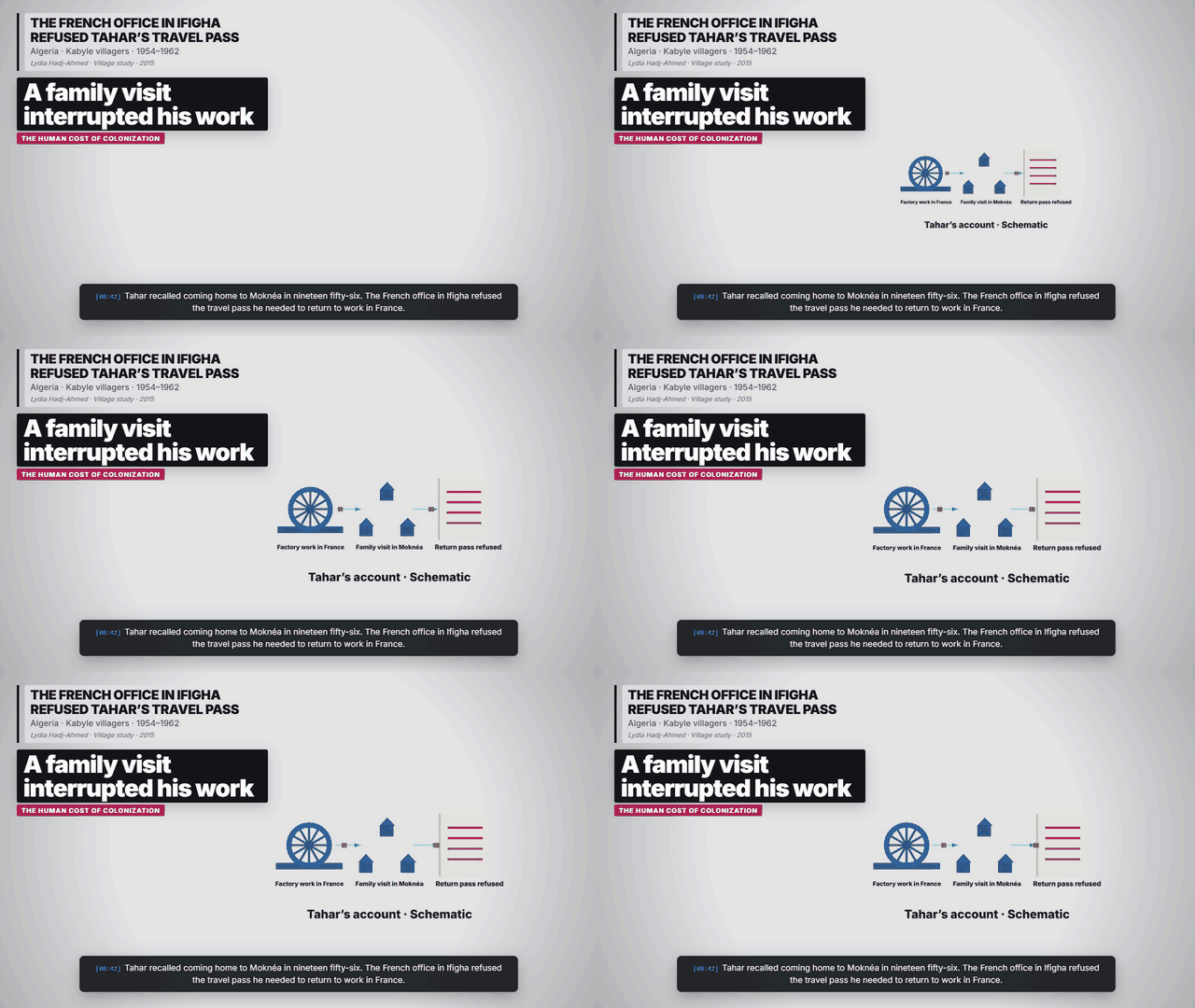
- Tahar recalled coming home to Moknéa in nineteen fifty-six. The French office in Ifigha refused the travel pass he needed to return to work in France.
Timeline and evidence
| Period | Documented event | Source |
|---|---|---|
| 1 November 1954 | Algeria’s war of independence began. | Chemins de mémoire · War chronology · |
| 1954 | Tahar went to France to work in a factory with his brother. | Lydia Hadj-Ahmed · Village study · 2015 |
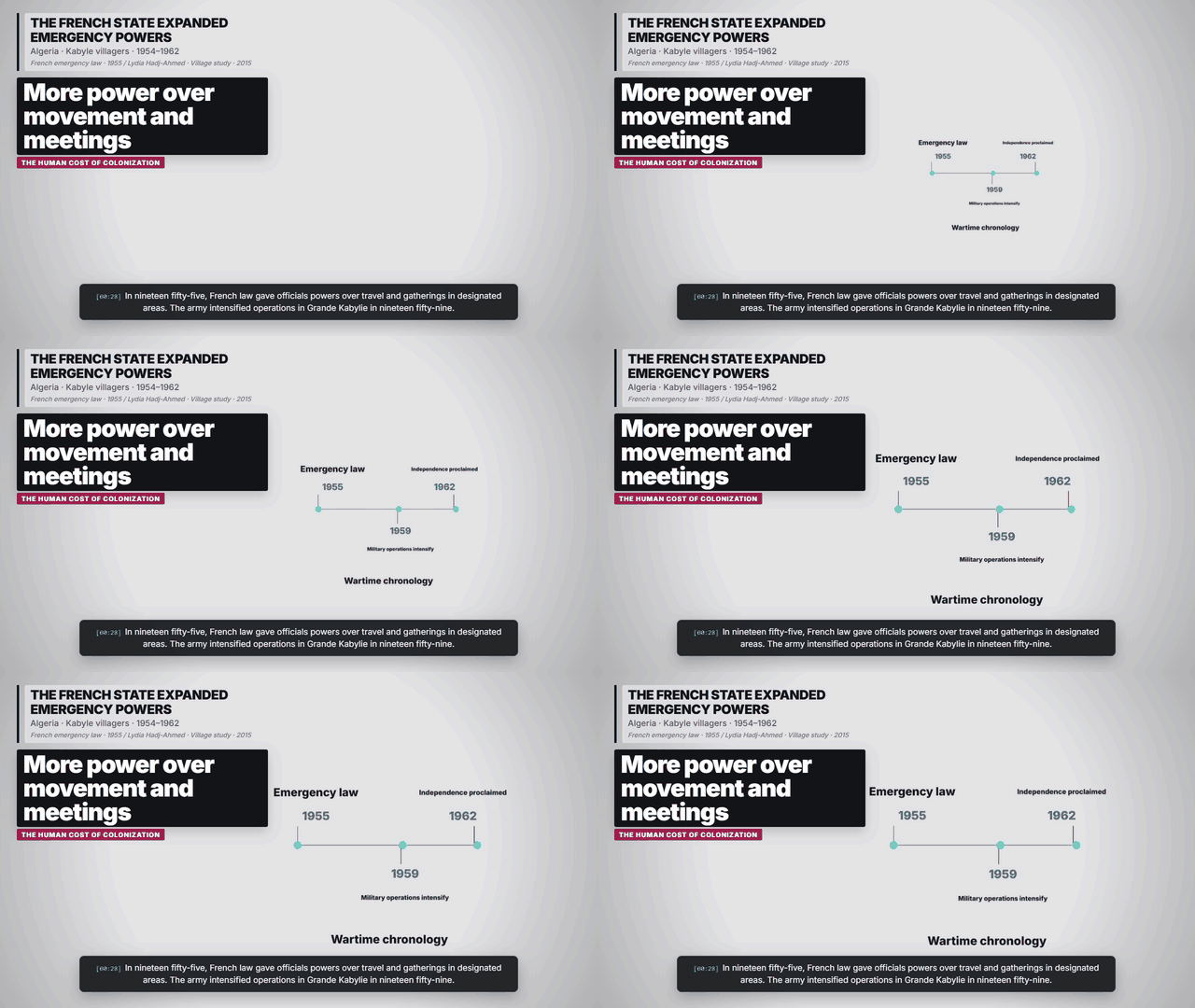
| 3 April 1955 | The French emergency law gave officials in designated areas powers over movement and certain gatherings. | French emergency law · 1955-04-03 |
| 1956 | Tahar recalled that the French office in Ifigha refused him a pass to return to France after a visit to Moknéa. | Lydia Hadj-Ahmed · Village study · 2015 |
| July 1959 | The French army intensified operations in Grande Kabylie and sought to isolate villagers from independence networks. | Lydia Hadj-Ahmed · Village study · 2015 |
| 5 July 1962 | Algeria proclaimed its independence. | Chemins de mémoire · War chronology · |
When village meetings fell away
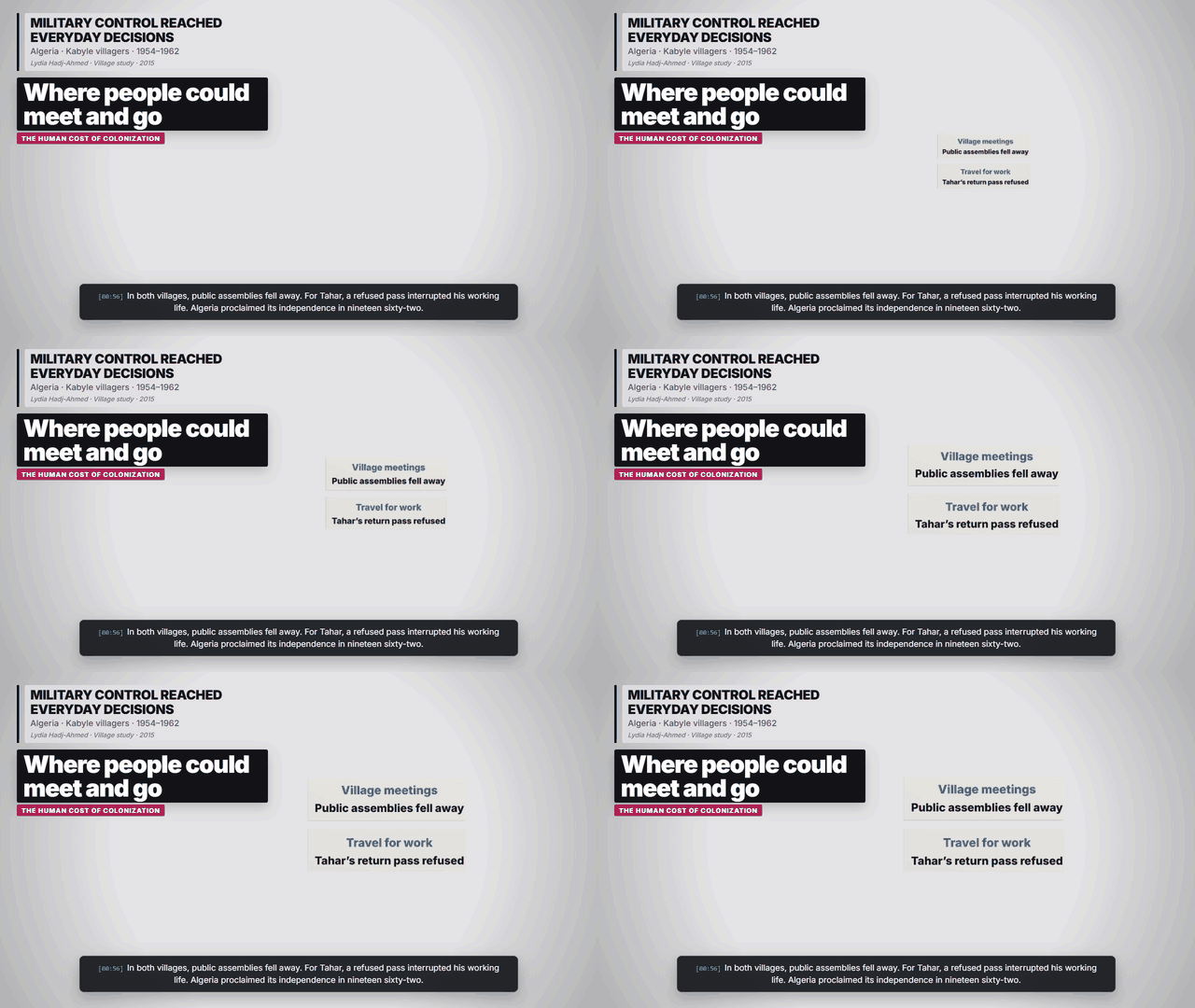
The tajmat was a customary assembly. Male representatives of local family lineages met to settle disputes, sometimes imposing fines. Historian Lydia Hadj-Ahmed describes this assembly falling away in both villages as military control expanded. The official municipal councils discussed in the colonial records were distinct institutions. Source and context.
What French officials could do
The 1955 emergency law let prefects restrict movement in designated places and at set hours. It also gave officials powers to close meeting venues and ban certain gatherings. These provisions show what French authorities could do. Hadj-Ahmed draws on local interviews and records to establish what changed in these villages. Source and context.
Tahar’s trip home
Tahar went to France in 1954 to work in a factory with his brother. In 1956 he visited his parents in Moknéa. In an interview on 5 November 2014, he recalled that the French Special Administrative Section in Ifigha refused the pass he needed to go back to France. The visit he had intended to be temporary became permanent. Source and context.
Charts, maps and diagrams from the explainer
Frequently asked questions
What was the tajmat?
It was the customary village assembly that settled local disputes.
What was the SAS?
The Special Administrative Sections were local French offices led by military officers during the war.
What does Tahar’s account establish?
It describes how one travel decision by the Ifigha office affected his work and family life.
Sources and reporting scope
Lydia Hadj-Ahmed · Village study. 2015. Pages 37–38 cover the village assemblies. Pages 40–41 document Tahar’s interview, cited at note 86.
French emergency law. 1955-04-03. The 1955 text, especially Articles 5 and 8.
French overseas archives. . Guide to French Special Administrative Section records.
Chemins de mémoire · War chronology. . Chronology of the war and Algeria’s independence.
Natural Earth 1:50m. v5.1.2. Modern country outline.
University of Tizi Ouzou · Ifigha locator. 2012. The study cites the municipal authority for the reference location.
This episode follows Aït Bouadda and Moknéa in Grande Kabylie. The locator marks the Ifigha area within modern borders. The travel diagram represents one resident’s account.