The Human Cost of Colonization
How Potosí’s mining draft burdened the Visisa
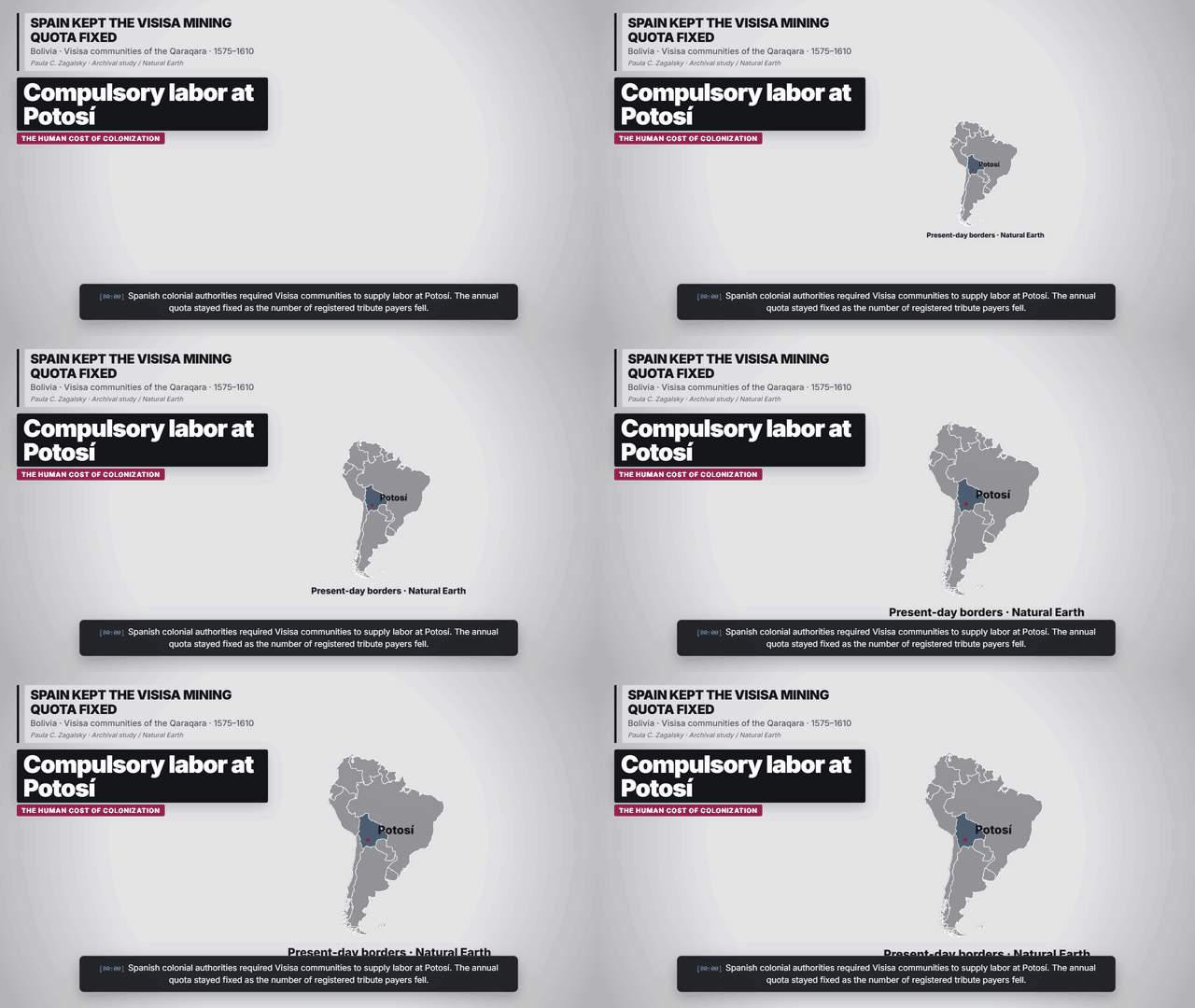
Spanish colonial authorities required Visisa communities to supply labor at Potosí. The annual quota stayed fixed as the number of registered tribute payers fell.
Explore the six-scene explainerKey takeaways
- Spanish colonial authorities required Visisa communities to supply labor at Potosí. The annual quota stayed fixed as the number of registered tribute payers fell.
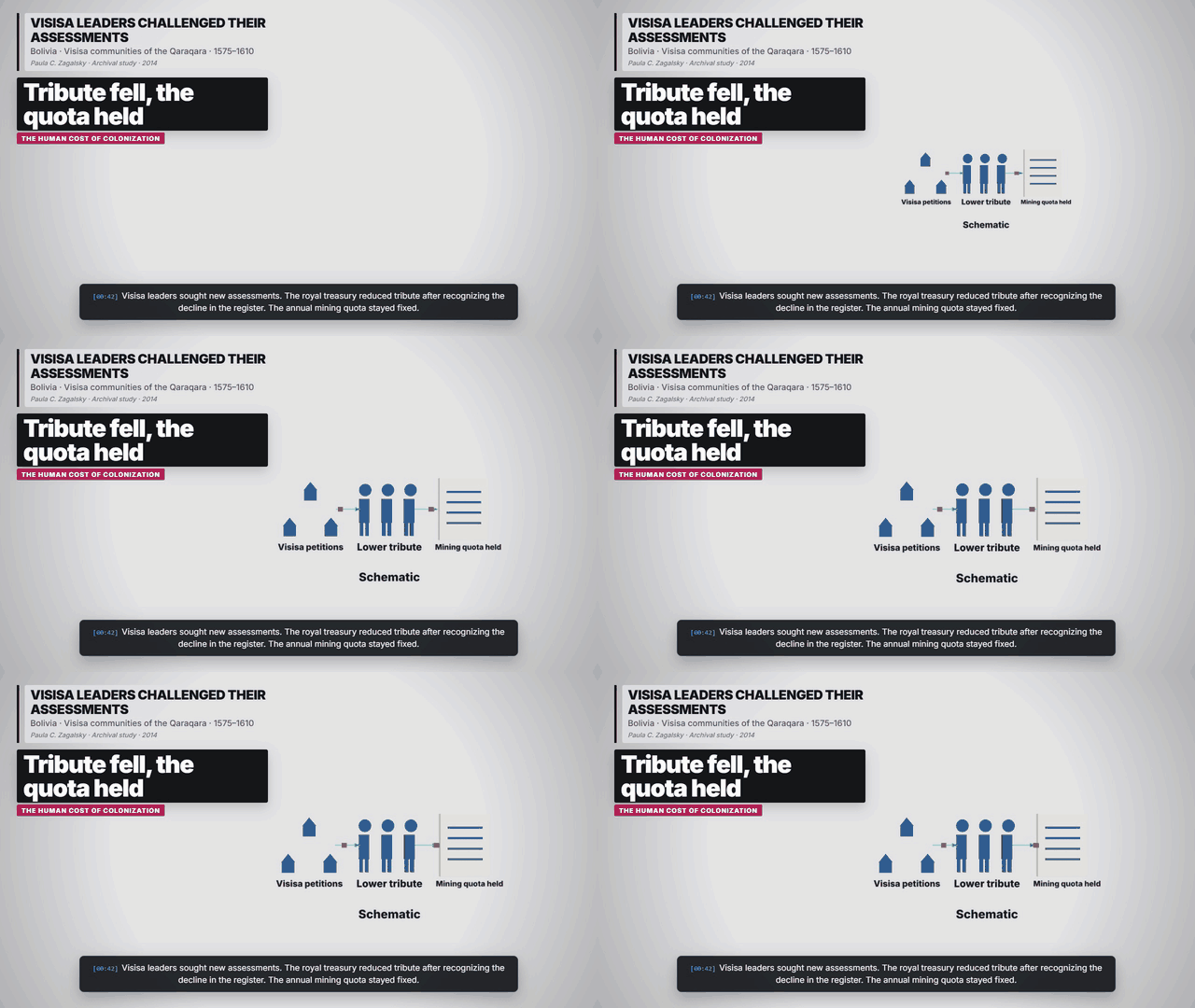
- Visisa leaders sought new assessments. The royal treasury reduced tribute after recognizing the decline in the register. The annual mining quota stayed fixed.
Timeline and evidence
| Period | Documented finding | Source |
|---|---|---|
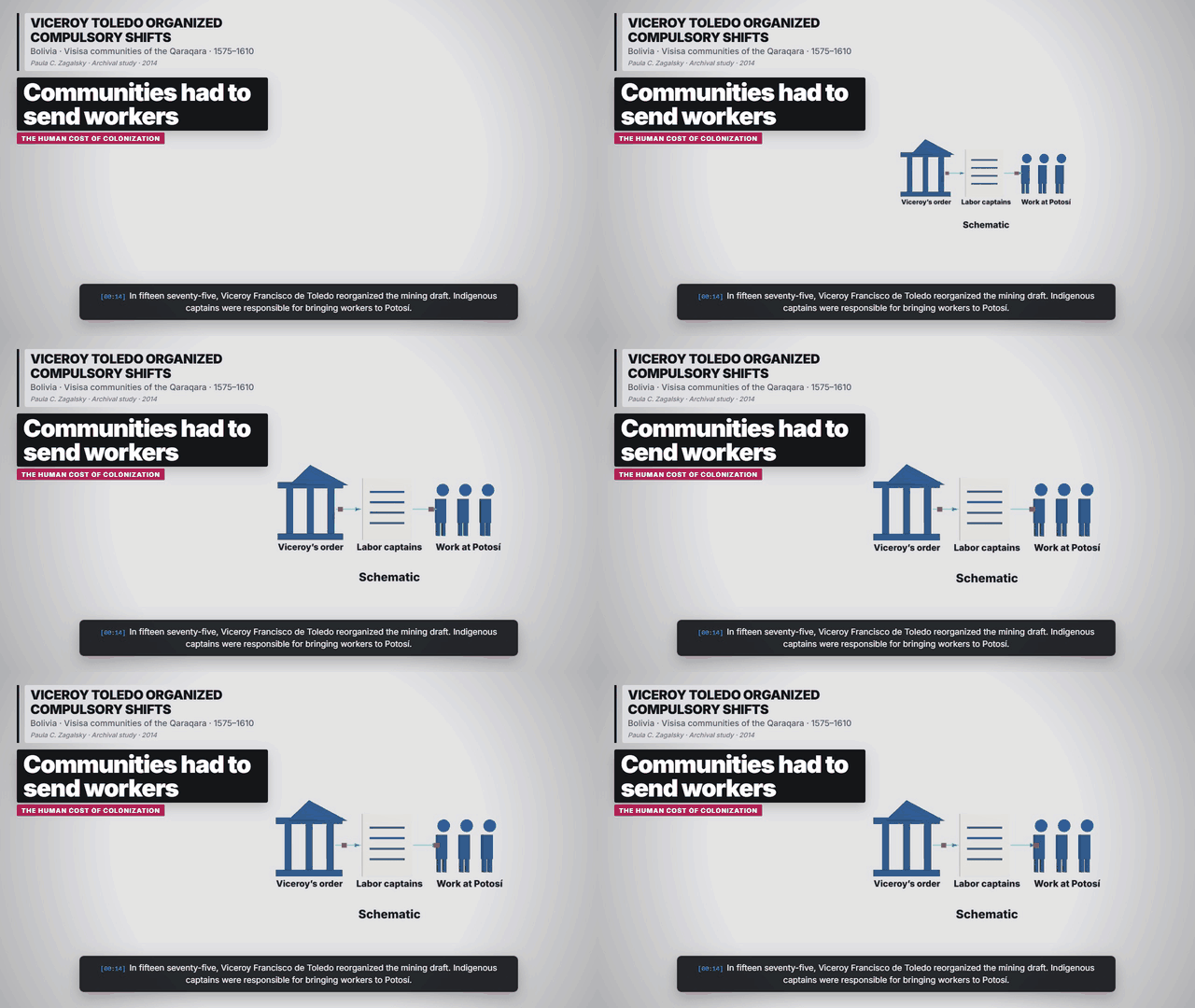
| 1575 | In fifteen seventy-five, Viceroy Francisco de Toledo reorganized the mining draft. Indigenous captains were responsible for bringing workers to Potosí. | Paula C. Zagalsky · Archival study · 2014 |
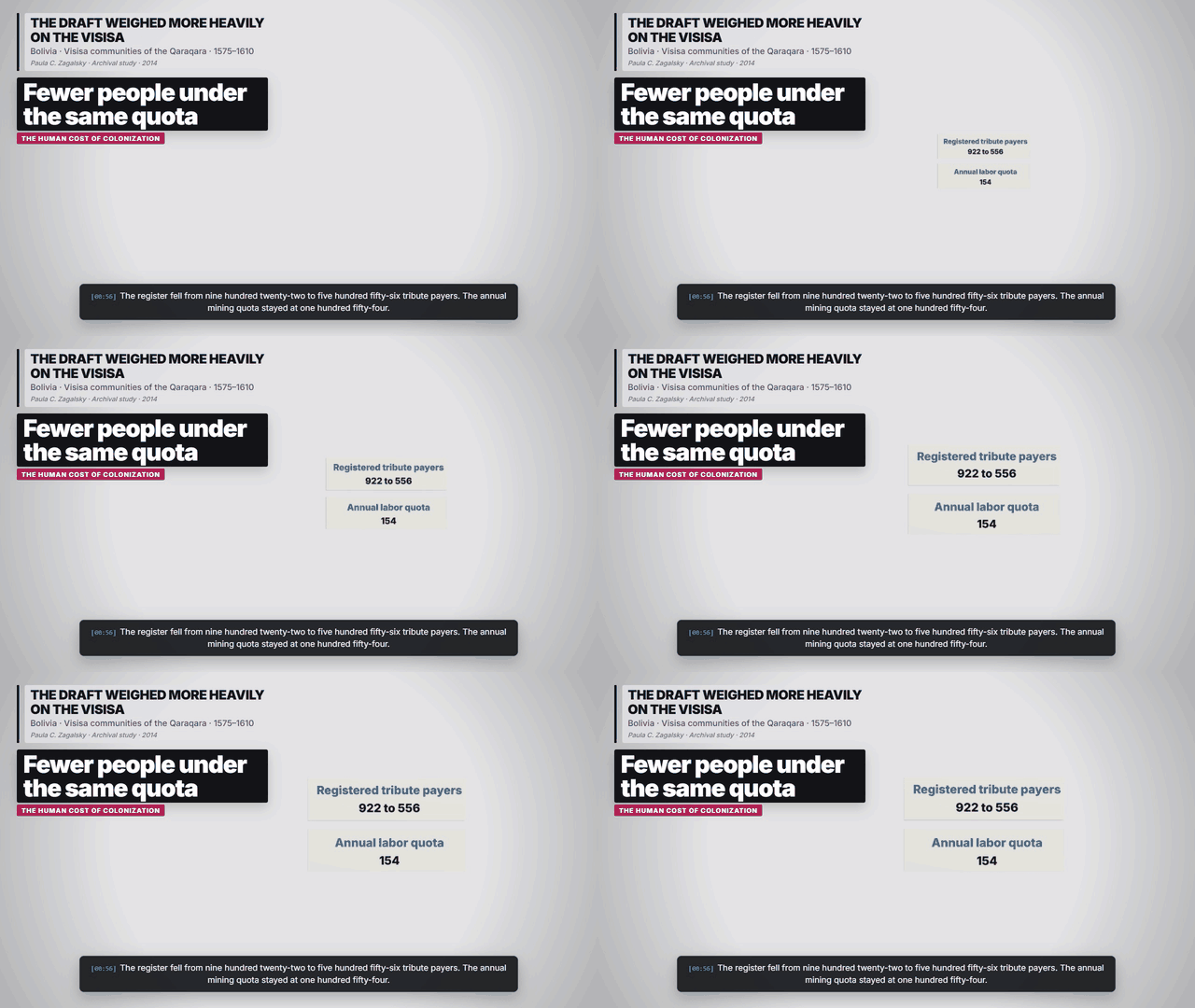
| 1575–1610 | The register fell from nine hundred twenty-two to five hundred fifty-six tribute payers. The annual mining quota stayed at one hundred fifty-four. | Paula C. Zagalsky · Archival study · 2014 |
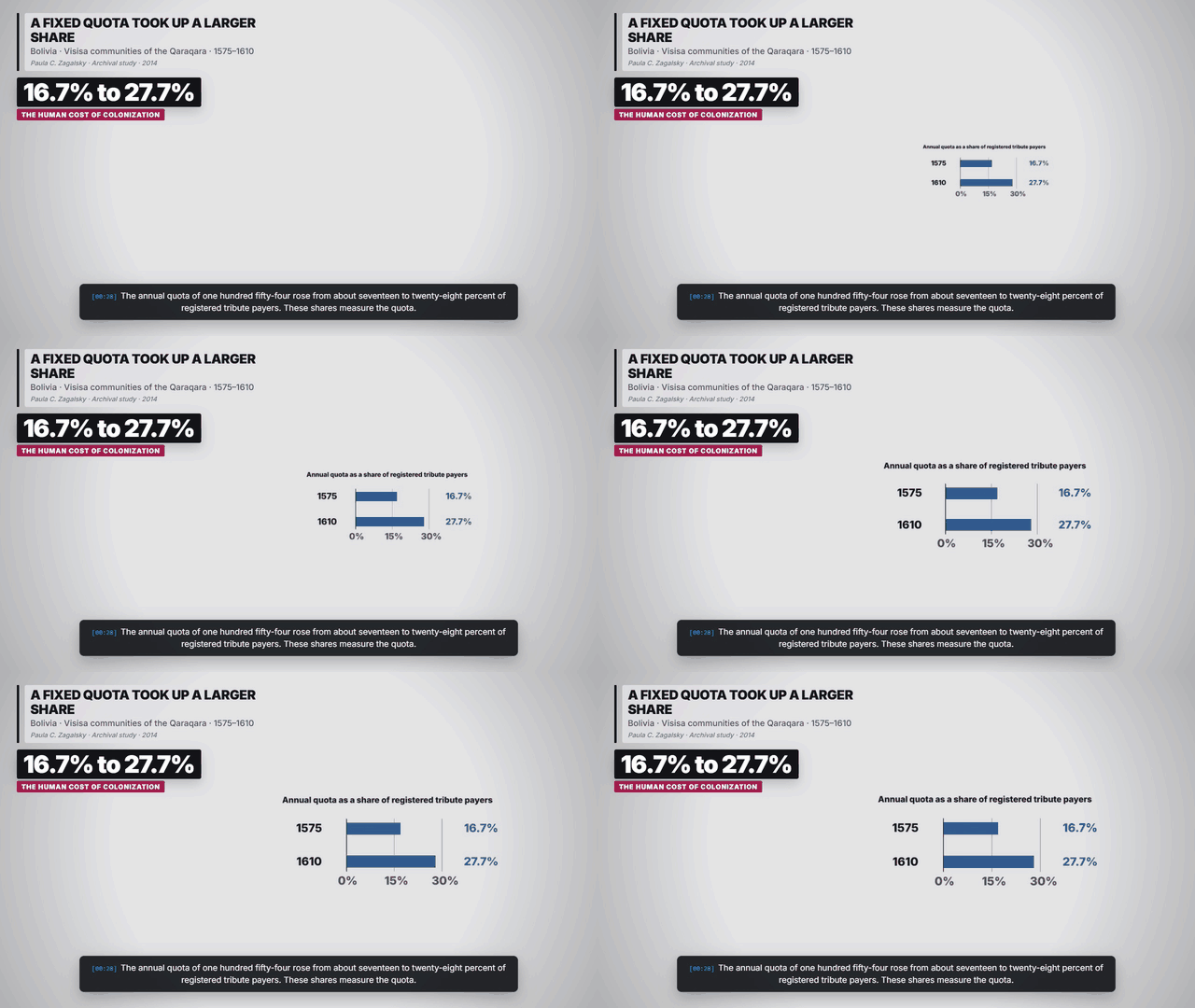
| 1575–1610 | Annual quota as a share of registered tribute payers · 1575: 16.7% · 1610: 27.7% | Paula C. Zagalsky · Archival study · 2014 |
| 1592–1610 | Visisa leaders sought new assessments. The royal treasury reduced tribute after recognizing the decline in the register. The annual mining quota stayed fixed. | Paula C. Zagalsky · Archival study · 2014 |
16.7% to 27.7%
The annual quota of one hundred fifty-four rose from about seventeen to twenty-eight percent of registered tribute payers. These shares measure the quota. Source and context.
Tribute fell, the quota held
Visisa leaders sought new assessments. The royal treasury reduced tribute after recognizing the decline in the register. The annual mining quota stayed fixed. Source and context.
Charts, maps and diagrams from the explainer
Frequently asked questions
What was the mita?
The Spanish colonial mining draft required designated communities to supply workers to Potosí.
What do the percentages measure?
They compare the annual quota of 154 with the number of registered tribute payers in each year.
Sources and reporting scope
Paula C. Zagalsky · Archival study. 2014. Tables 1 and 2.
Obedecer, negociar y resistir. 2023. Visisa strategies.
Natural Earth. v5.1.2. Present-day borders.
Potosí was in colonial Charcas, in present-day Bolivia. The figures are from colonial registers and measure the labor obligation relative to recorded tribute payers.