Fed survey: 87% of market contacts now see AI as a financial stability risk
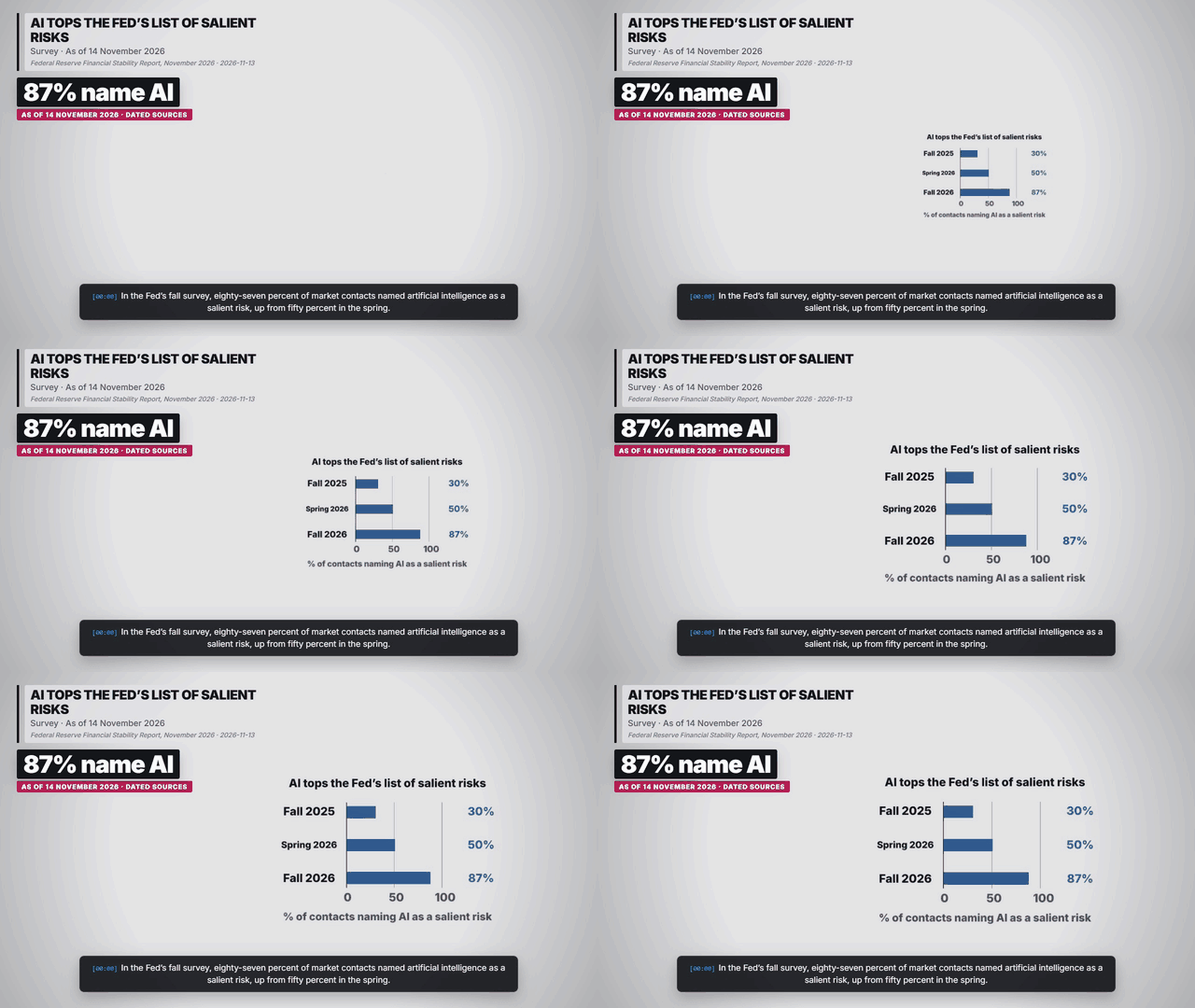
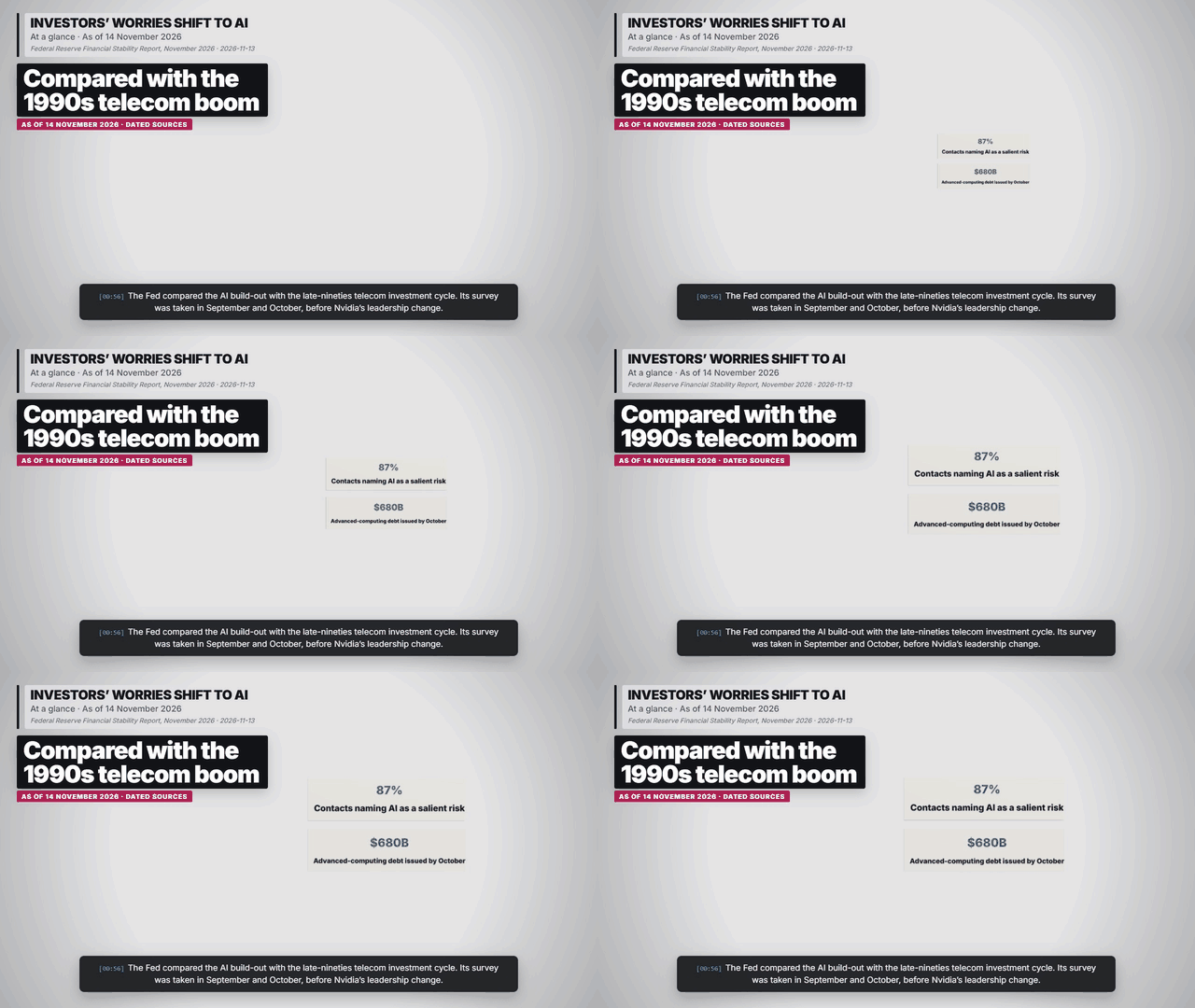
The Federal Reserve’s November 2026 Financial Stability Report says 87% of surveyed market contacts named AI as a salient risk, up from 50% in spring, as AI-related debt issuance reached about $680 billion.
Explore the six-scene explainerKey takeaways
- 87% of the 23 market contacts surveyed named AI as a salient risk, up from 50% in spring 2026 and 30% in fall 2025.
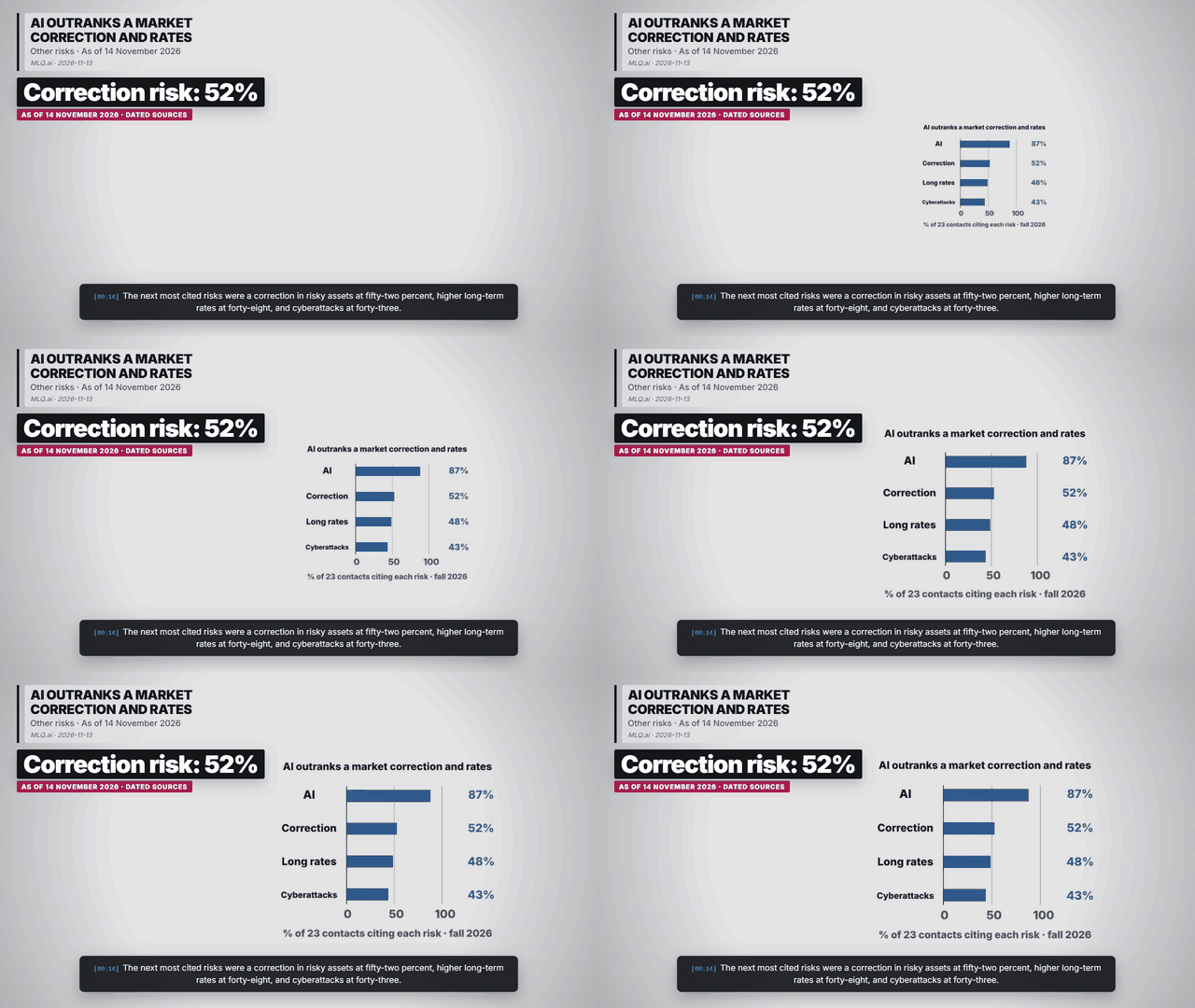
- A correction in risky assets was cited by 52%, higher long-term rates by 48% and cyberattacks by 43%.
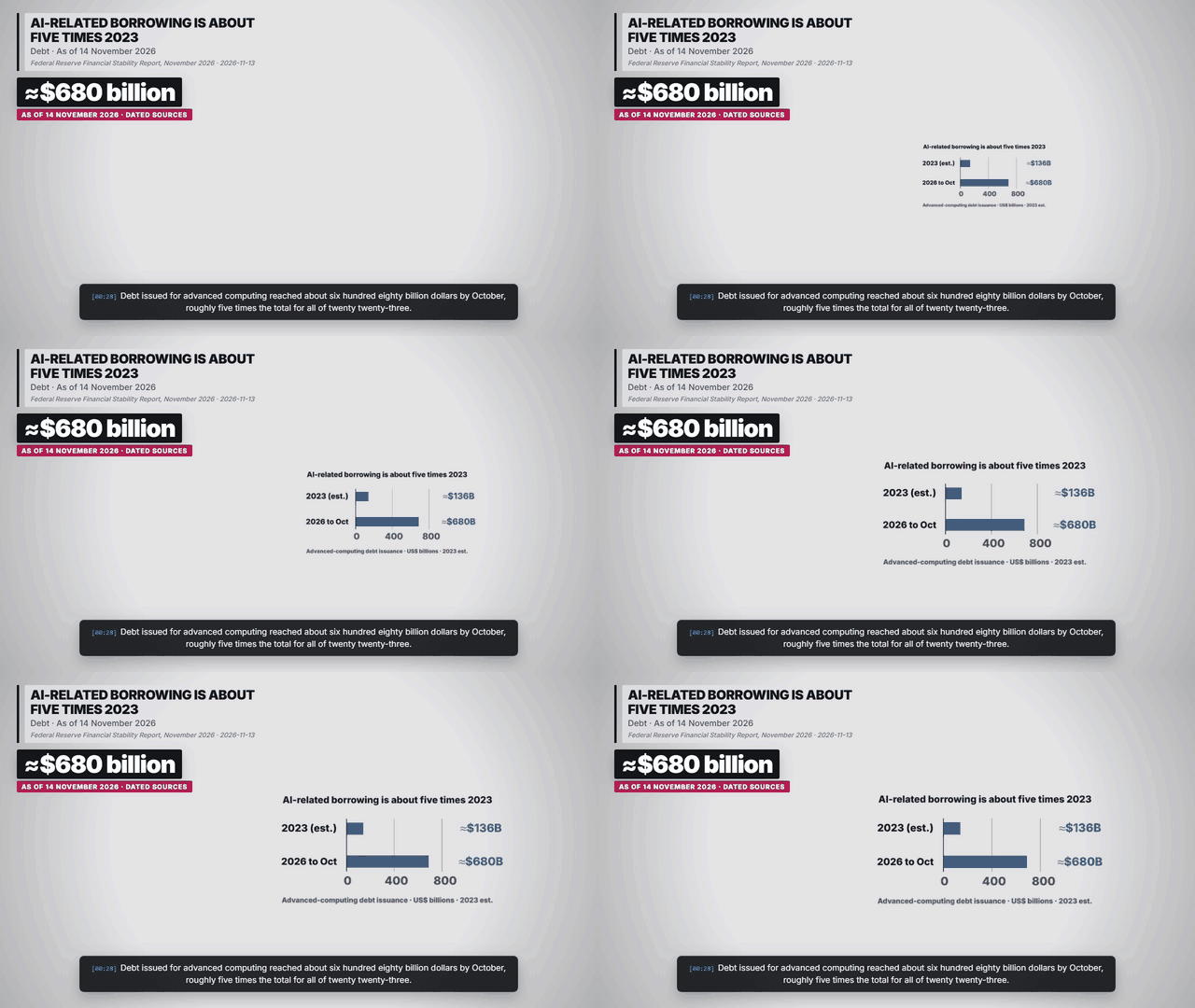
- Advanced-computing debt issuance reached about $680 billion by October 2026, roughly five times the total for all of 2023.
Sourced figures and status
| Period | Figure or status | Source |
|---|---|---|
| Survey | 87% of the 23 market contacts surveyed named AI as a salient risk, up from 50% in spring 2026 and 30% in fall 2025. | Federal Reserve Financial Stability Report, November 2026 · 2026-11-13 |
| Other risks | A correction in risky assets was cited by 52%, higher long-term rates by 48% and cyberattacks by 43%. | MLQ.ai · 2026-11-13 |
| Debt | Advanced-computing debt issuance reached about $680 billion by October 2026, roughly five times the total for all of 2023. | Federal Reserve Financial Stability Report, November 2026 · 2026-11-13 |
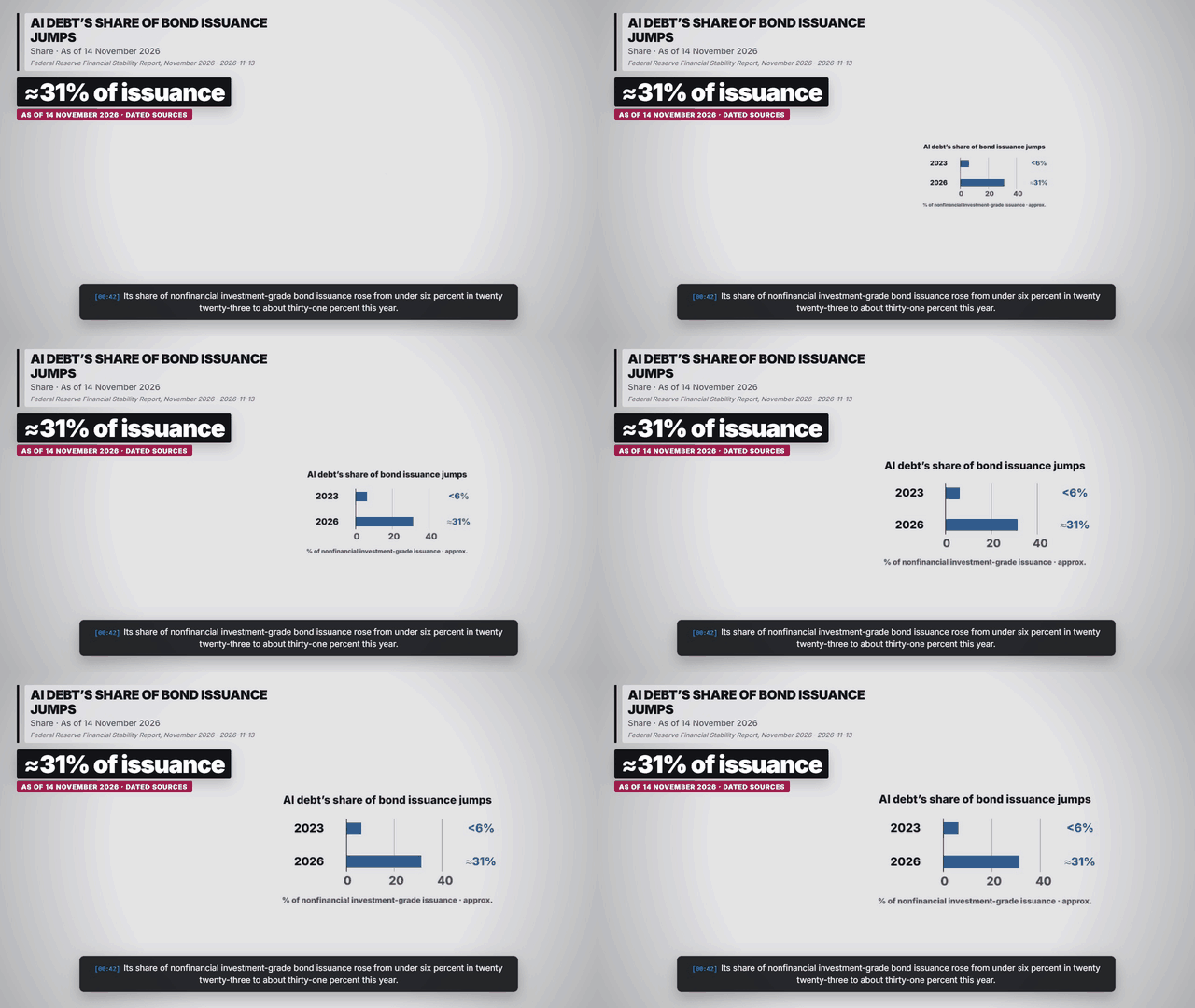
| Share | Its share of nonfinancial investment-grade issuance rose from under 6% in 2023 to about 31% in 2026. | Federal Reserve Financial Stability Report, November 2026 · 2026-11-13 |
Why the Fed is watching AI debt
Data centers and chips are increasingly funded with bonds and private credit. The Fed said valuations remain elevated, partly on enthusiasm for AI, and compared the build-out with the late-1990s telecom cycle. Source and context.
What the survey does and does not show
The survey records what 23 market contacts consider salient risks; it is not a forecast. It was taken in September and October, before the latest market turbulence around Nvidia. Source and context.
Charts, maps and diagrams from the explainer
Frequently asked questions
What did the Fed’s survey find about AI?
87% of the 23 market contacts surveyed named AI as a salient risk, up from 50% in spring 2026 and 30% in fall 2025.
How much AI-related debt has been issued?
Advanced-computing debt issuance reached about $680 billion by October 2026, roughly five times the total for all of 2023.
Sources and reporting scope
Federal Reserve Financial Stability Report, November 2026. 2026-11-13. Survey of salient risks, advanced-computing debt issuance and the telecom-cycle comparison.
CNBC. 2026-11-13. Reports the 87% survey result and the earlier 50% reading.
MLQ.ai. 2026-11-13. Summarizes the other most-cited risks in the survey.
As of 14 November 2026. The report, published 13 November, generally reflects information through late October; the survey of 23 market contacts was taken in September and October. Debt figures are Fed estimates; the 2023 bar is derived from the reported fivefold comparison and is approximate, as is the issuance share.