The Human Cost of Colonization
Why Bengali farmers refused to grow indigo
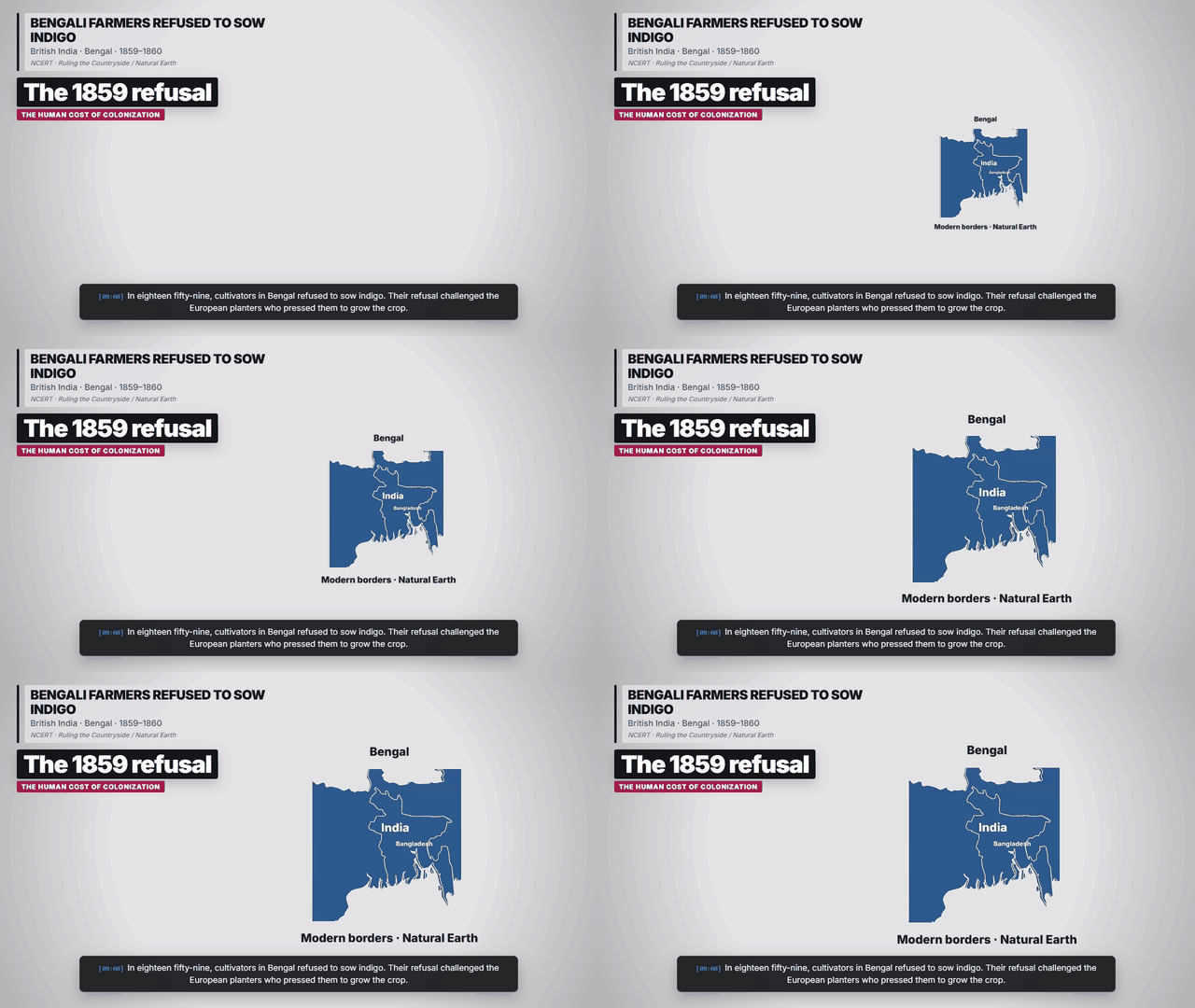
In eighteen fifty-nine, cultivators in Bengal refused to sow indigo. Their refusal challenged the European planters who pressed them to grow the crop.
Explore the six-scene explainerKey takeaways
- In eighteen fifty-nine, cultivators in Bengal refused to sow indigo. Their refusal challenged the European planters who pressed them to grow the crop.
- On June fifth, eighteen sixty, Hadji Mulla told the commission he was unwilling to sow indigo, even when asked about a higher price.
Timeline and evidence
| Period | Documented event | Source |
|---|---|---|
| 1859 | In eighteen fifty-nine, cultivators in Bengal refused to sow indigo. Their refusal challenged the European planters who pressed them to grow the crop. | NCERT · Ruling the Countryside · 2024–2025 edition |
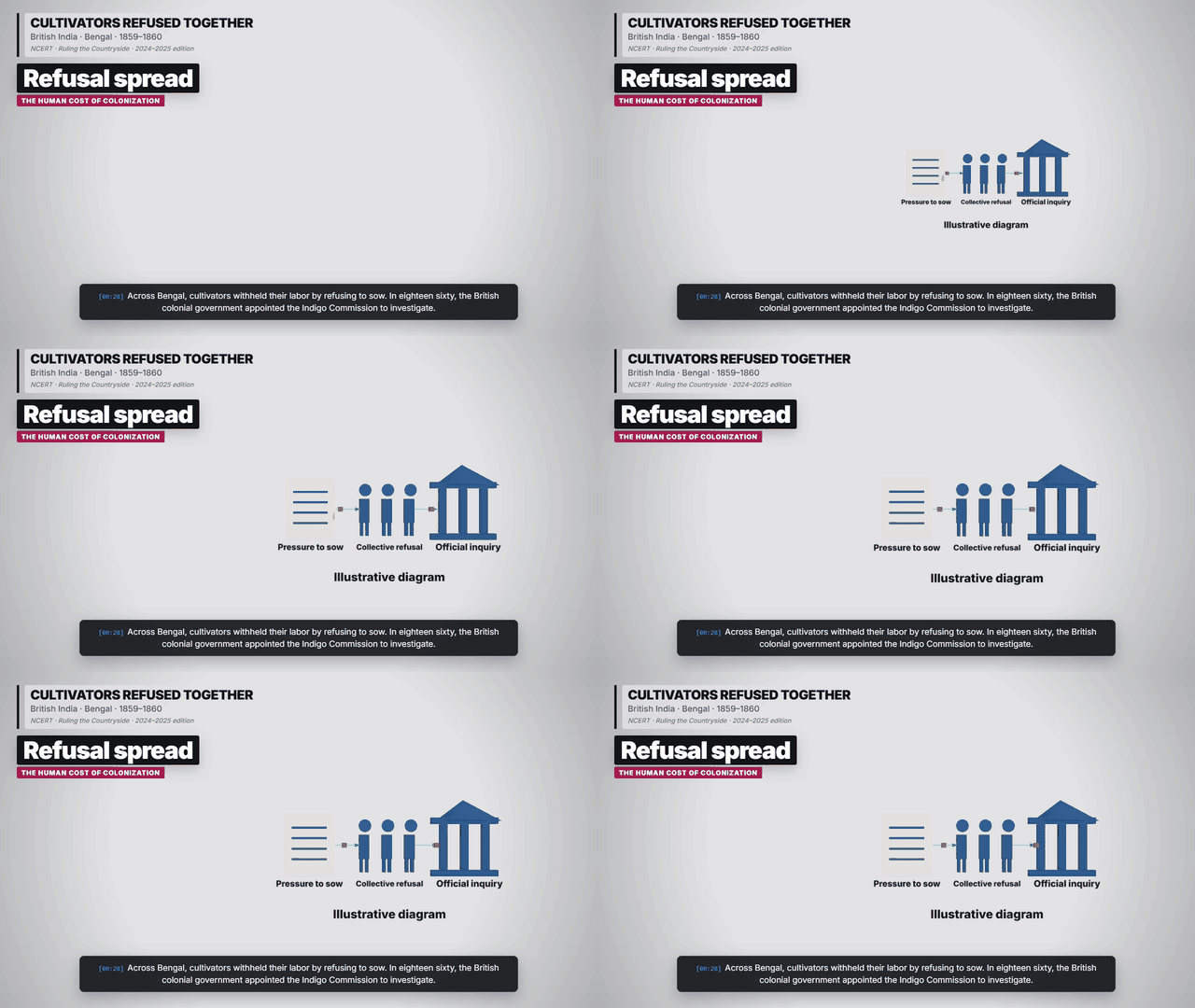
| 1860 | Across Bengal, cultivators withheld their labor by refusing to sow. In eighteen sixty, the British colonial government appointed the Indigo Commission to investigate. | NCERT · Ruling the Countryside · 2024–2025 edition |
| 1860-06-05 | On June fifth, eighteen sixty, Hadji Mulla told the commission he was unwilling to sow indigo, even when asked about a higher price. | NCERT · Ruling the Countryside · 2024–2025 edition |
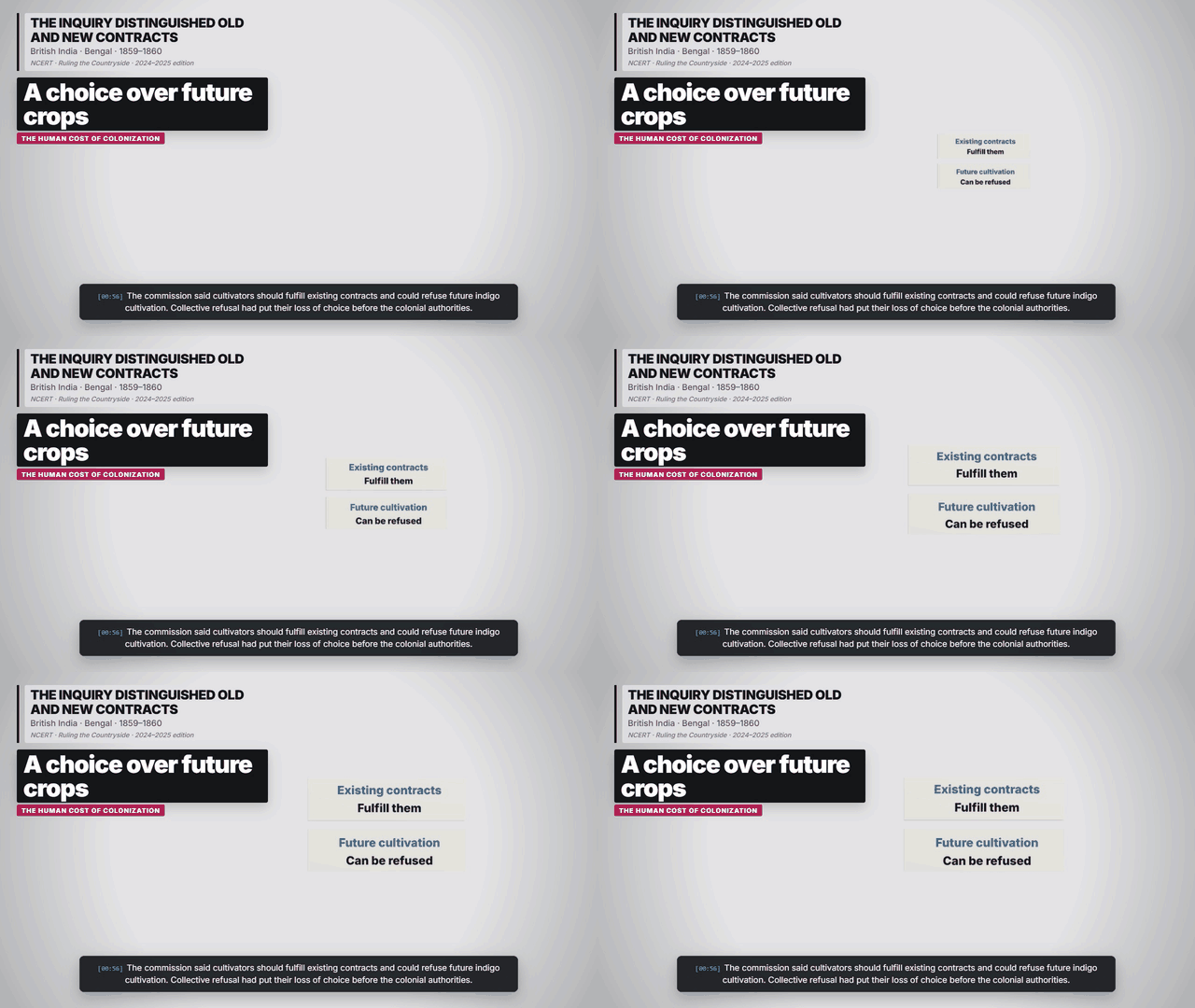
| 1860 | The commission said cultivators should fulfill existing contracts and could refuse future indigo cultivation. Collective refusal had put their loss of choice before the colonial authorities. | NCERT · Ruling the Countryside · 2024–2025 edition |
A cycle of debt
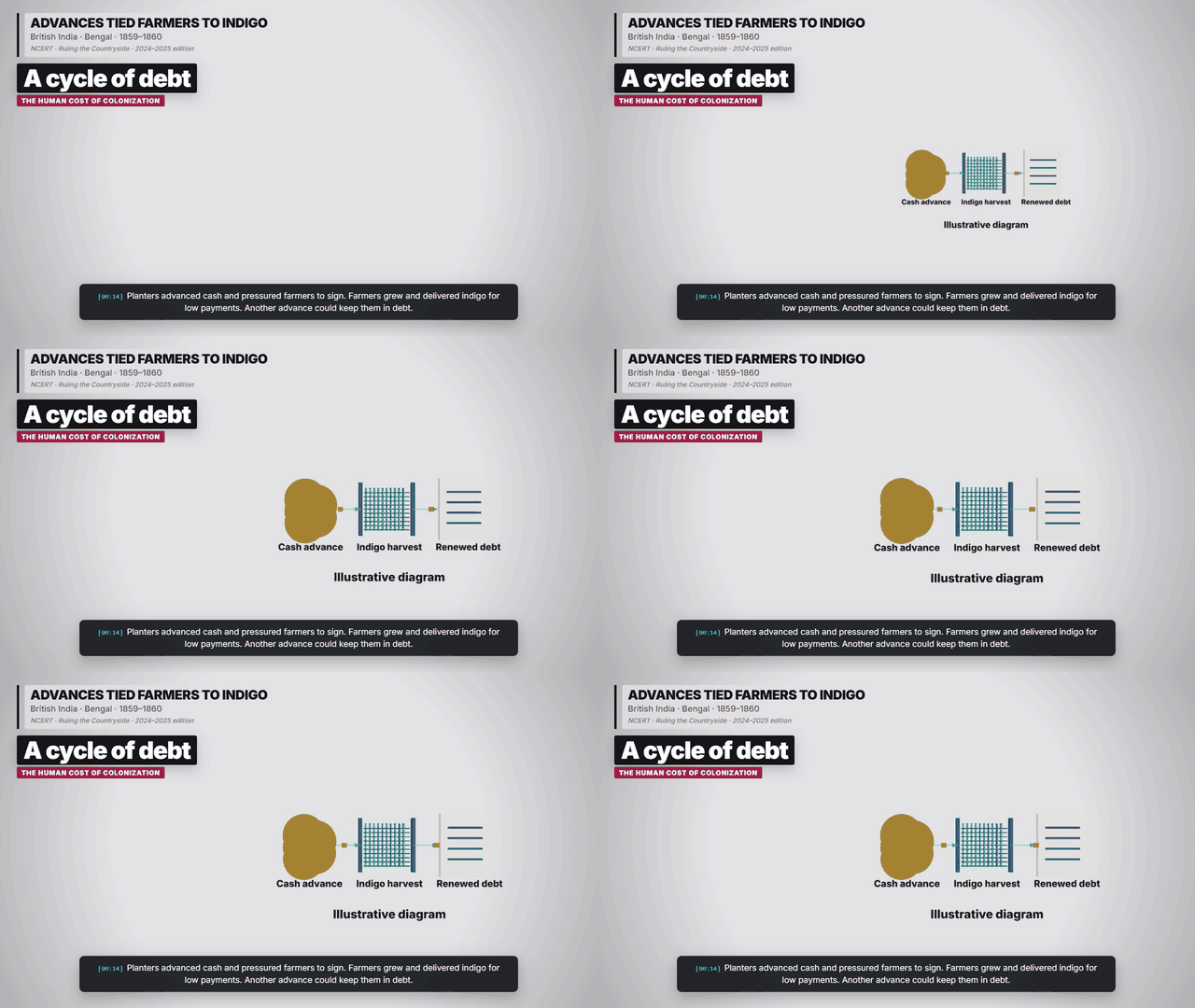
Planters advanced cash and pressured farmers to sign. Farmers grew and delivered indigo for low payments. Another advance could keep them in debt. Source and context.
One cultivator speaks
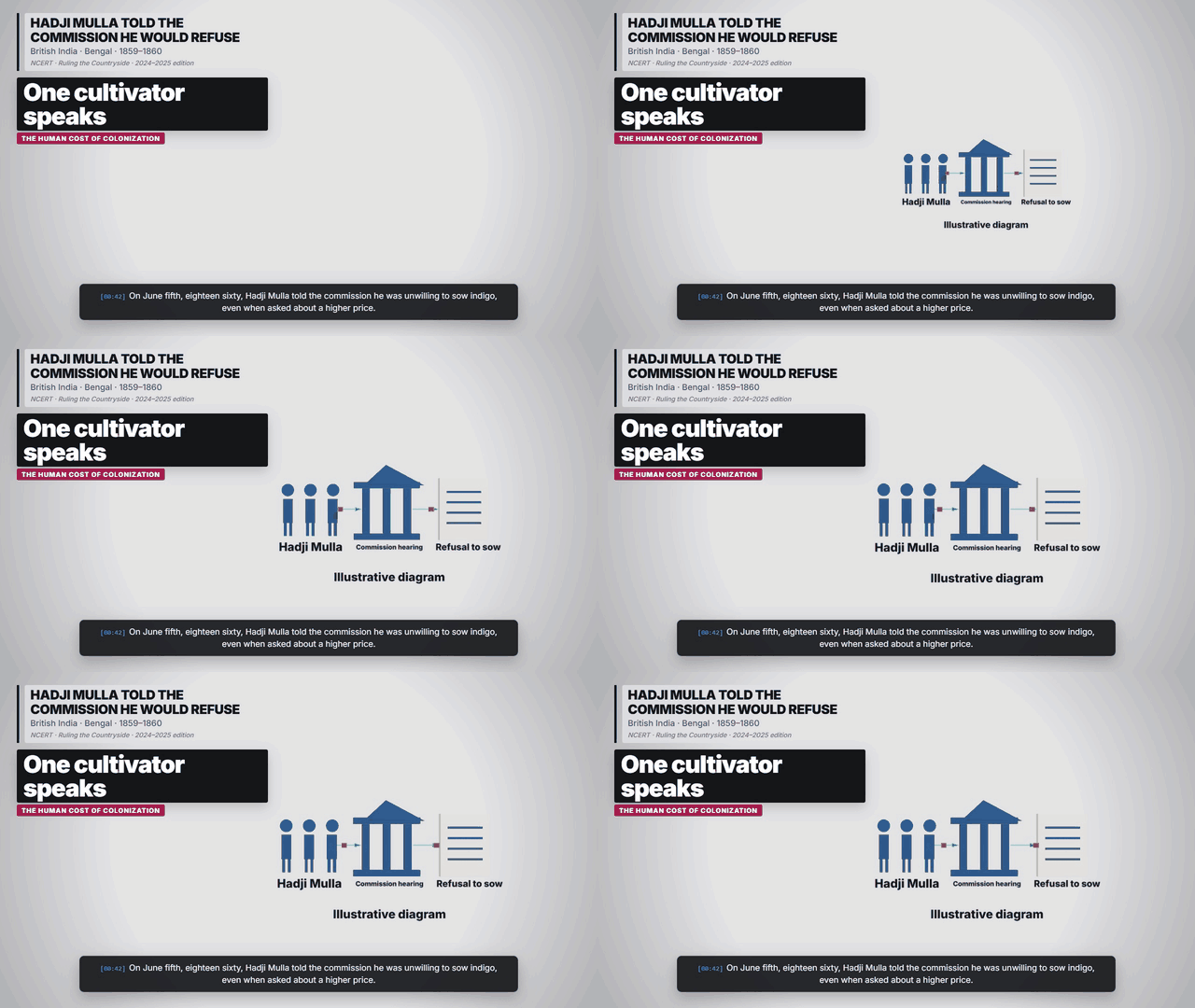
On June fifth, eighteen sixty, Hadji Mulla told the commission he was unwilling to sow indigo, even when asked about a higher price. Source and context.
Charts, maps and diagrams from the explainer
Frequently asked questions
What was the ryoti system?
Planters paid advances to cultivators who grew indigo on their own holdings.
What does Hadji Mulla’s testimony show?
It records one cultivator’s refusal, even when the commission asked about better terms.
Sources and reporting scope
Bengal government correspondence. 1860. 1859–1860
NCERT · Ruling the Countryside. 2024–2025 edition. Ryoti, resistance and testimony, pp. 33–36.
Indigo Commission · catalogue. 1860. Minutes of evidence, vol. II, p. 67, excerpted by NCERT.
Census of India. 2011. District history.
Blair B. Kling. 1966. Historical study of the revolt.
Natural Earth. v5.1.2. Modern borders.
The revolt took place in historical Bengal under British rule. The map shows areas of present-day India and Bangladesh. The testimony is attributed to the commission record reproduced by NCERT.