Full transcript
The narration below matches the explainer. Its original reporting dates and qualifications still apply.
Bengali farmers refused to sow indigo
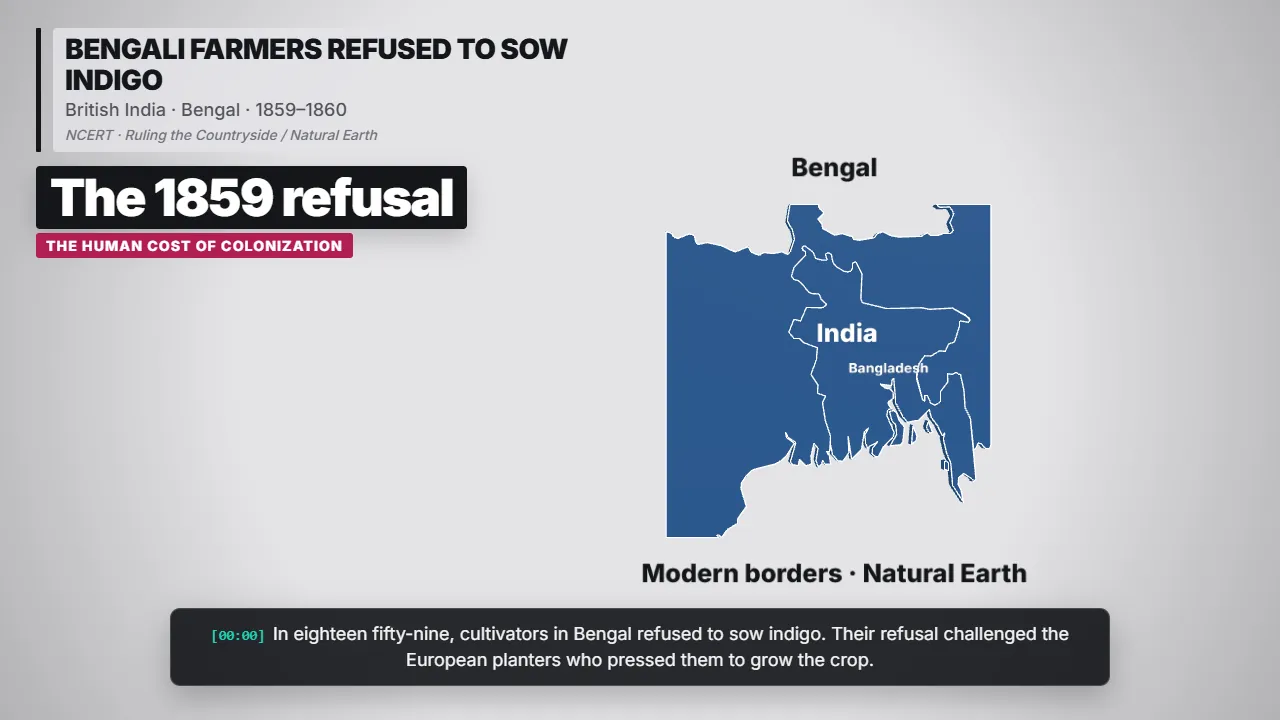
In eighteen fifty-nine, cultivators in Bengal refused to sow indigo. Their refusal challenged the European planters who pressed them to grow the crop.
NCERT · Ruling the Countryside / Natural Earth
Advances tied farmers to indigo
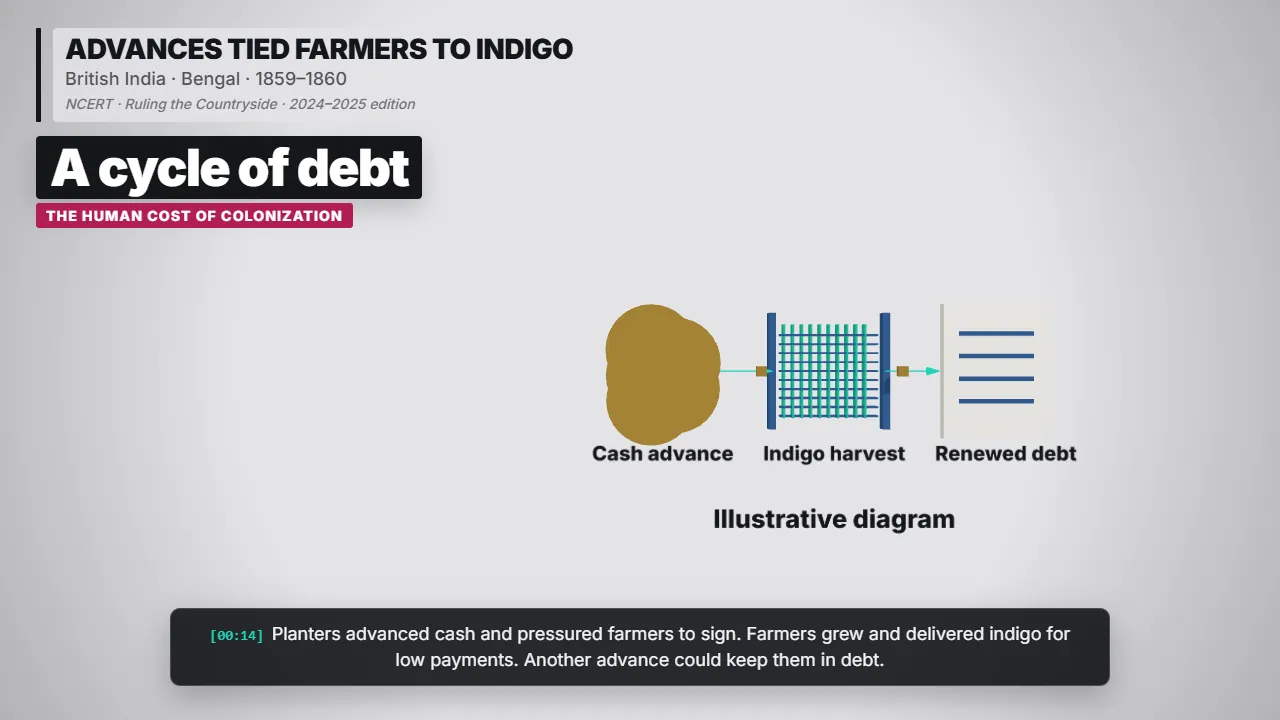
Planters advanced cash and pressured farmers to sign. Farmers grew and delivered indigo for low payments. Another advance could keep them in debt.
NCERT · Ruling the Countryside · 2024–2025 edition
Cultivators refused together
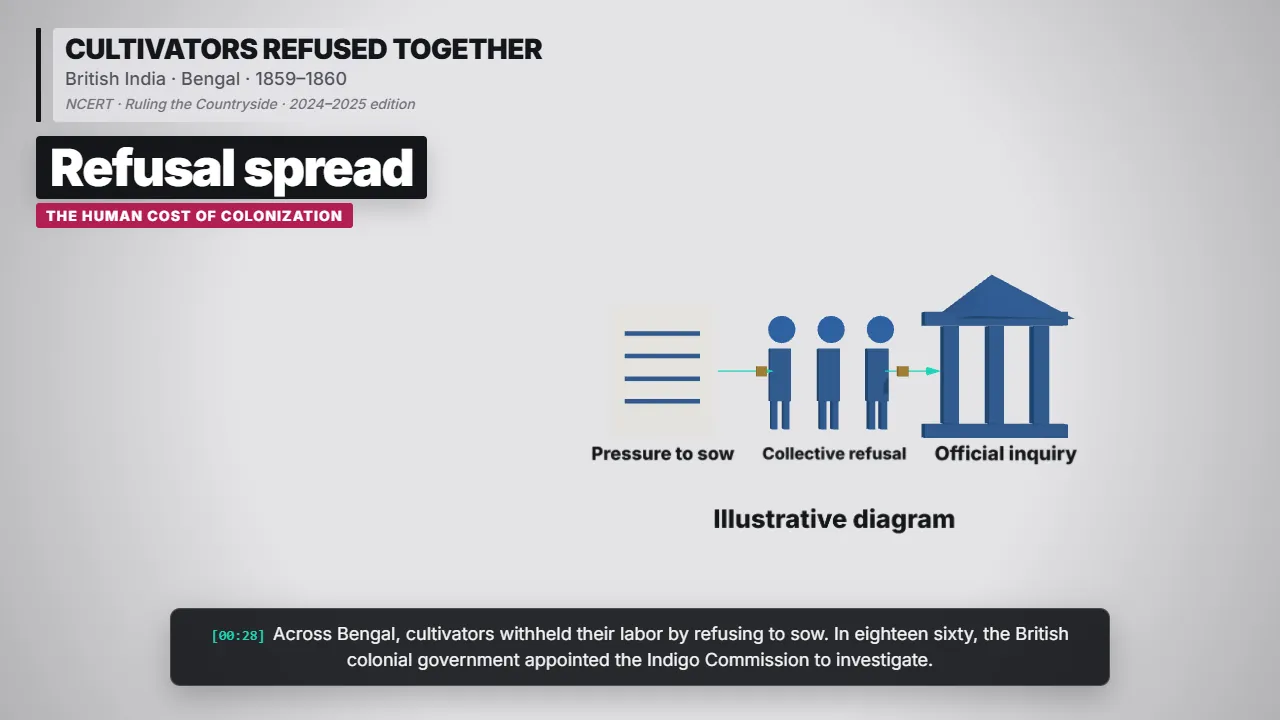
Across Bengal, cultivators withheld their labor by refusing to sow. In eighteen sixty, the British colonial government appointed the Indigo Commission to investigate.
NCERT · Ruling the Countryside · 2024–2025 edition
Hadji Mulla told the commission he would refuse
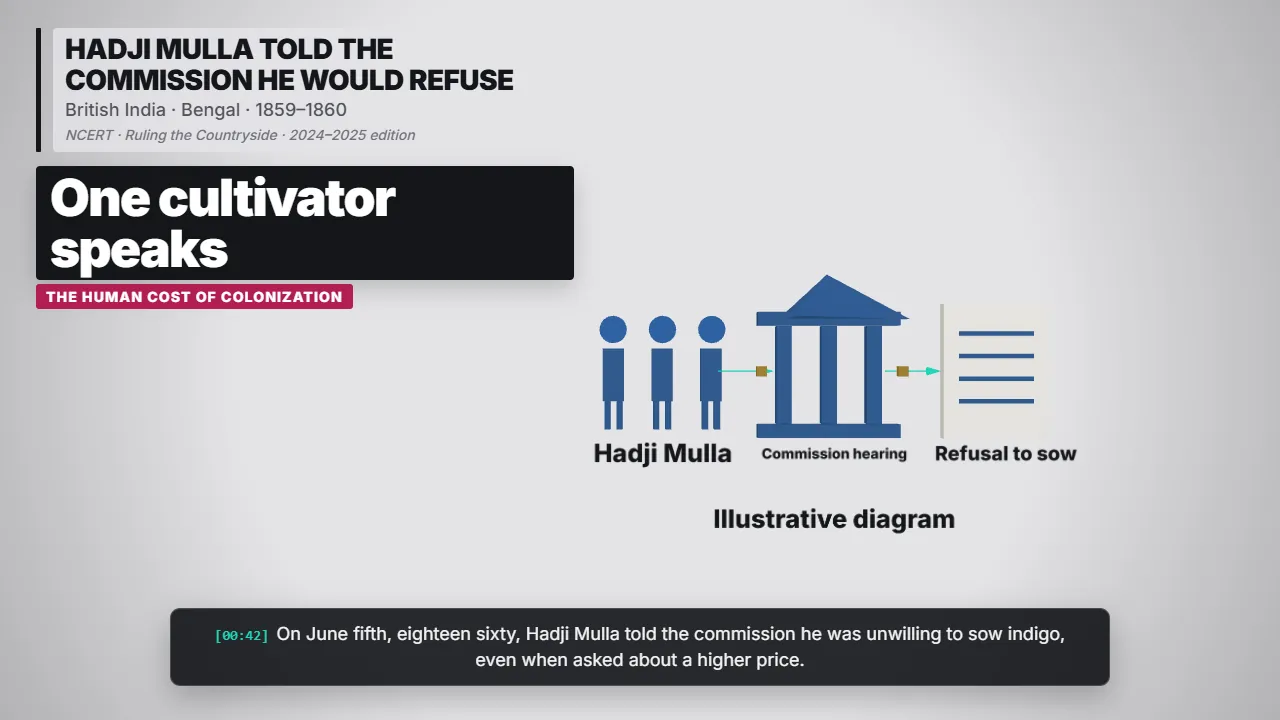
On June fifth, eighteen sixty, Hadji Mulla told the commission he was unwilling to sow indigo, even when asked about a higher price.
NCERT · Ruling the Countryside · 2024–2025 edition
The inquiry distinguished old and new contracts
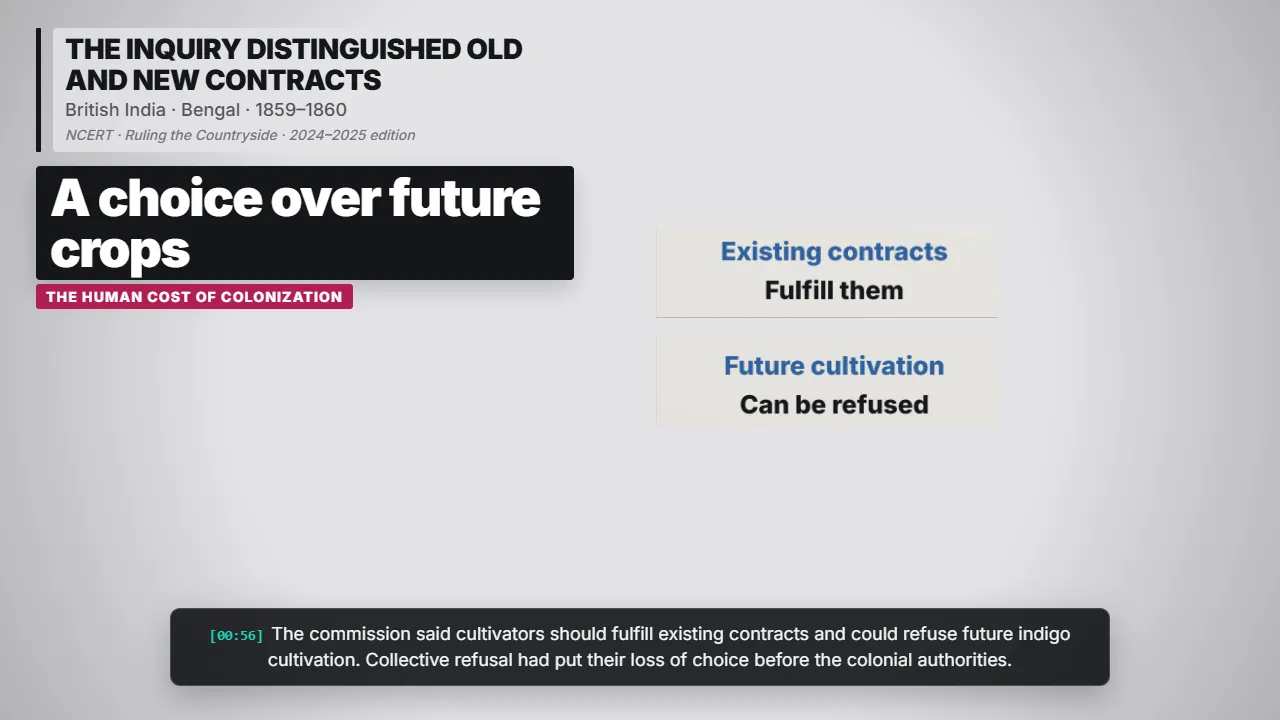
The commission said cultivators should fulfill existing contracts and could refuse future indigo cultivation. Collective refusal had put their loss of choice before the colonial authorities.
NCERT · Ruling the Countryside · 2024–2025 edition
Sources and notes
The Bengal correspondence records disputes over coercion. India's national textbook reproduces Hadji Mulla’s testimony from the commission’s minutes.
Bengal government correspondence · 1860
Source links
- https://upload.wikimedia.org/wikipedia/commons/c/c9/East_India_Indigo_Commission_%28IA_in.ernet.dli.2015.195656%29.pdf
- https://www.ncert.nic.in/textbook/pdf/hess203.pdf
- https://books.google.com/books?id=r8m1AAAAIAAJ
- https://censusindia.gov.in/nada/index.php/catalog/1349/download/4410/DH_2011_1911_PART_B_DCHB_NORTH_TWENTY_FOUR_PARGANAS.pdf
- https://www.jstor.org/stable/j.ctv513101
- https://www.naturalearthdata.com/downloads/50m-cultural-vectors/50m-admin-0-countries/