The Human Cost of Colonization
The genocide of the Ovaherero under German colonial rule
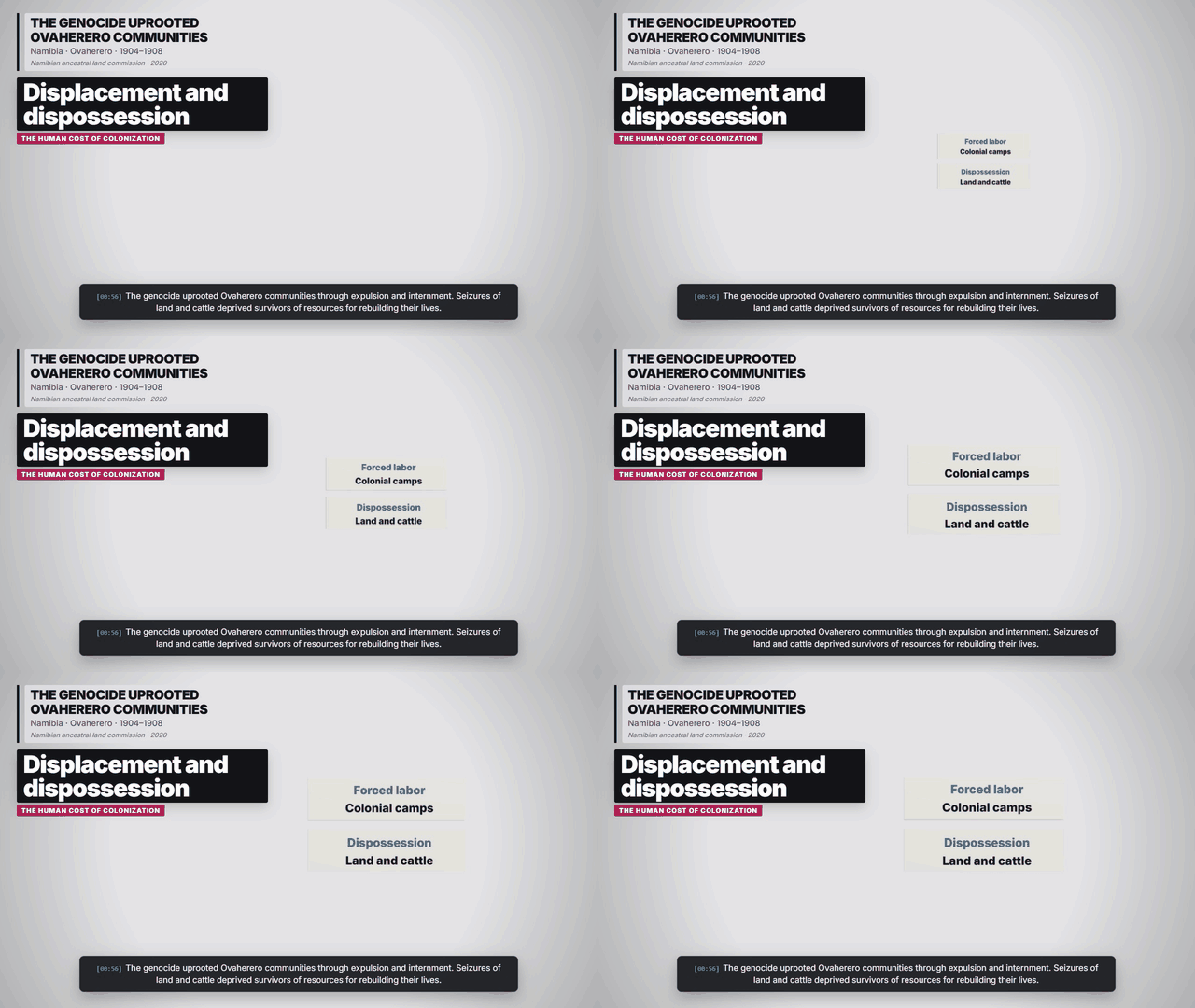
From 1904 to 1908, German colonial forces drove Ovaherero people from their homes in present-day Namibia. Survivors faced internment, forced labor and the seizure of land and cattle.
Explore the six-scene explainerKey takeaways
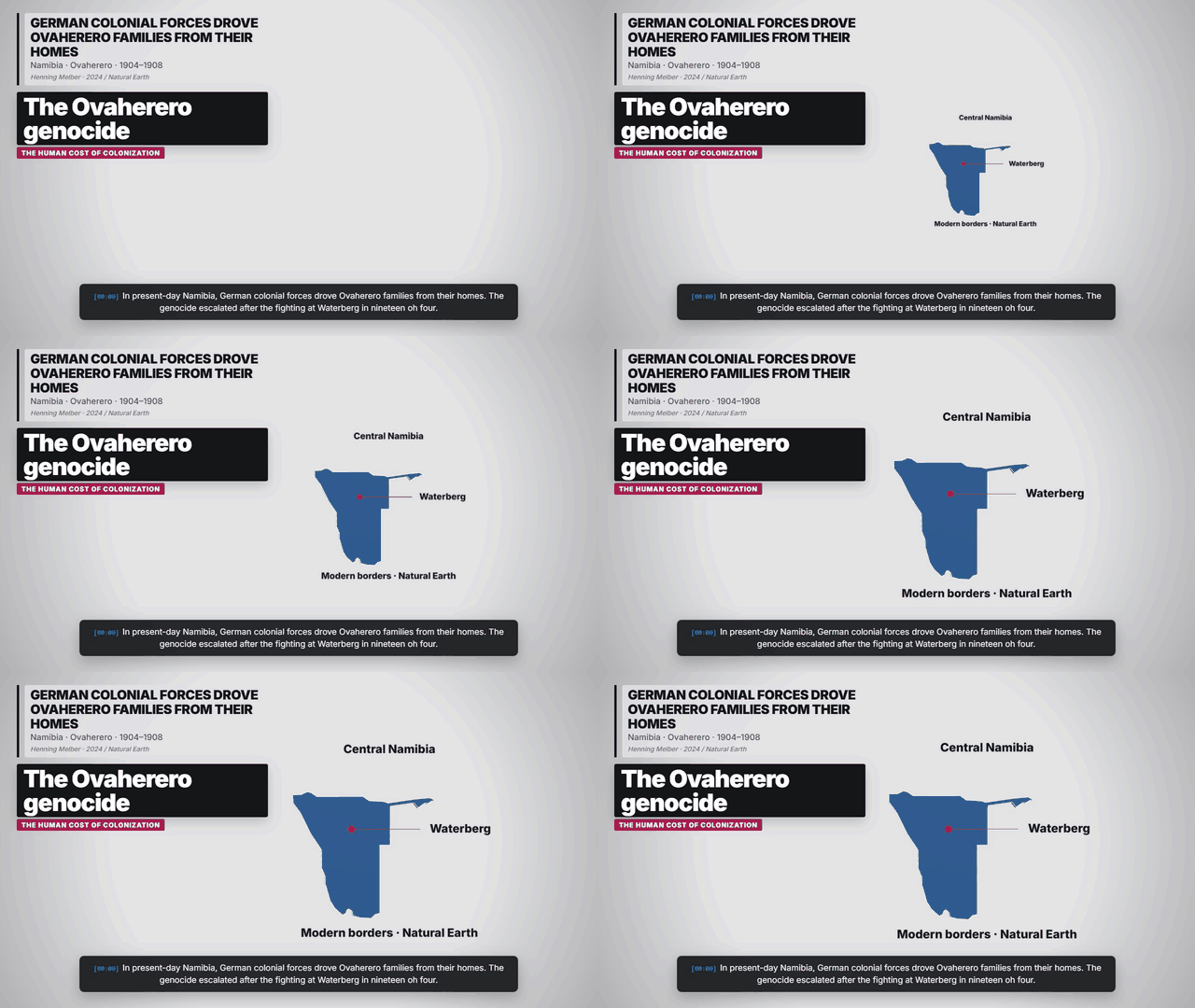
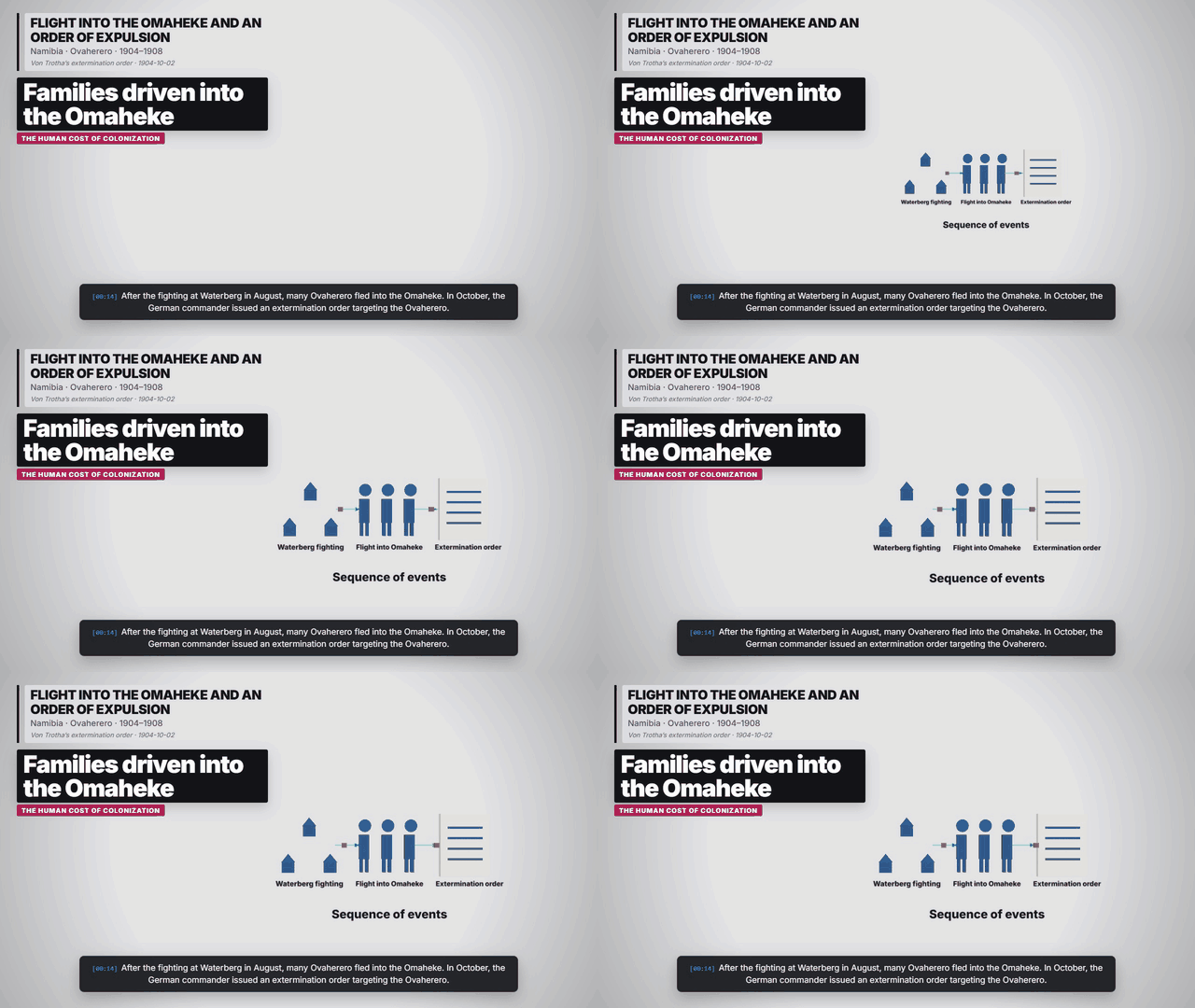
- In present-day Namibia, German colonial forces drove Ovaherero families from their homes. The genocide escalated after the fighting at Waterberg in nineteen oh four.
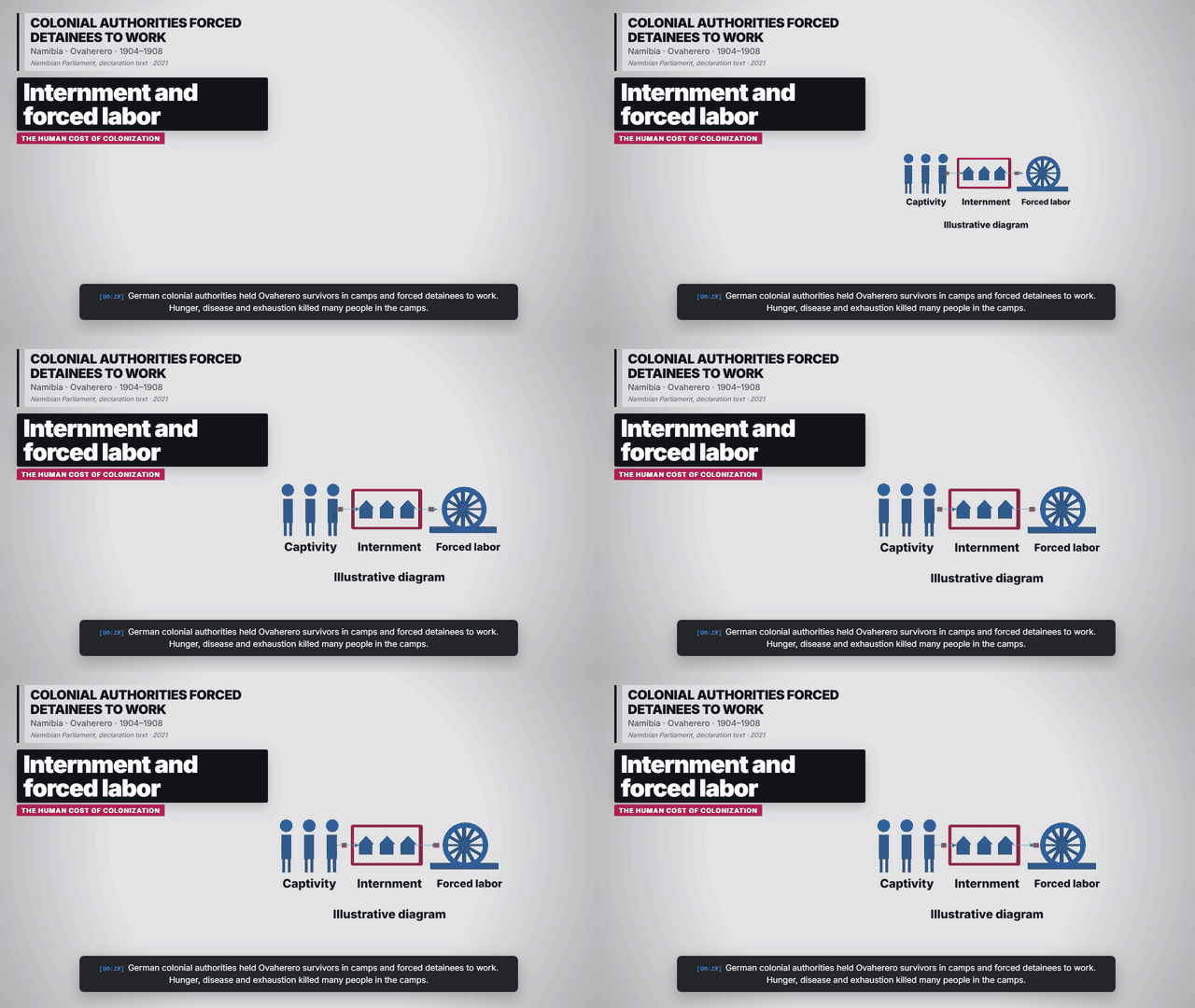
- German colonial authorities held Ovaherero survivors in camps and forced detainees to work. Hunger, disease and exhaustion killed many people in the camps.
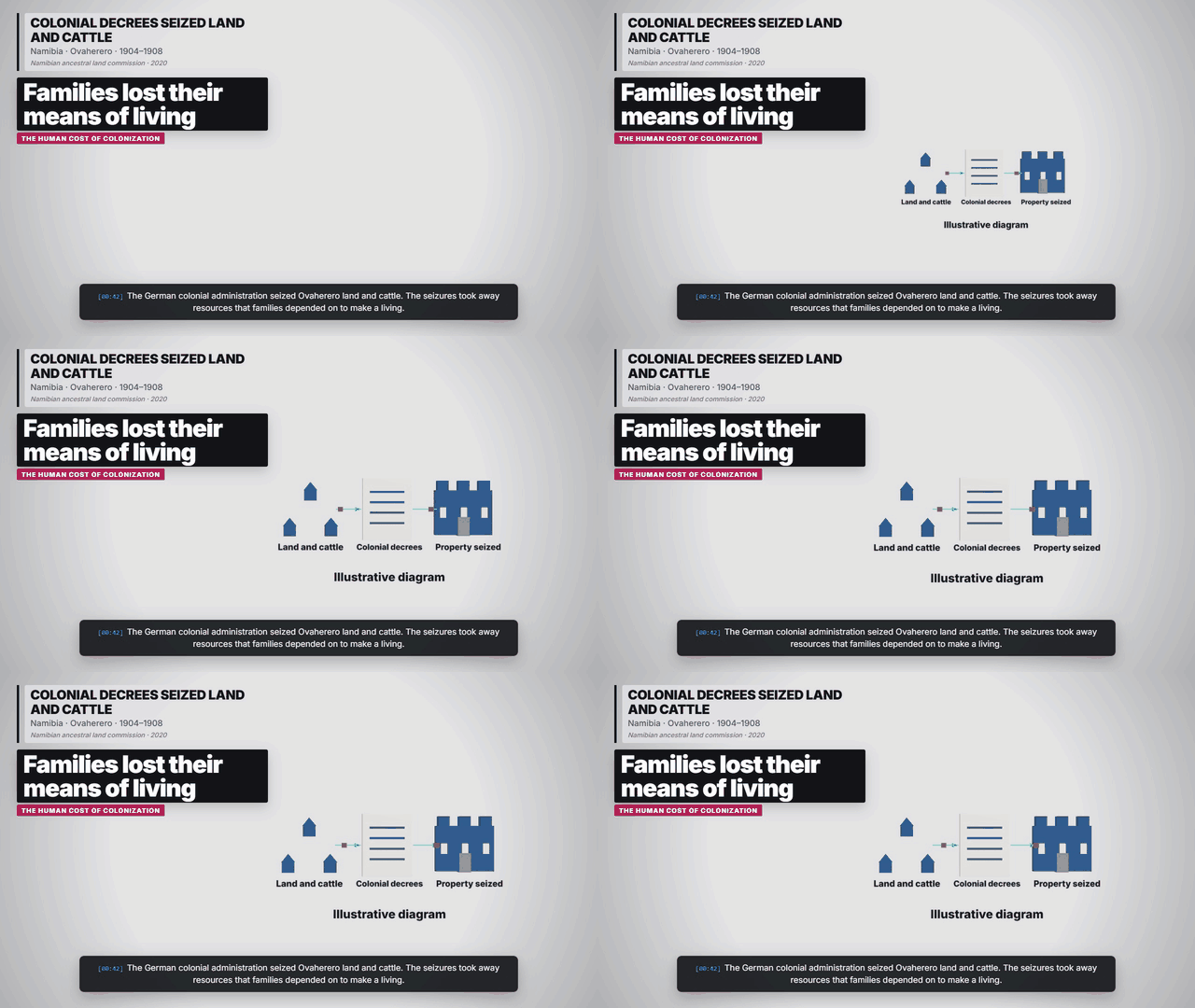
- The German colonial administration seized Ovaherero land and cattle. The seizures took away resources that families depended on to make a living.
Timeline and evidence
| Period | Figure or status | Source |
|---|---|---|
| 6 March 1904 | Ovaherero leader Samuel Maharero wrote to the colonial governor about abuses and cattle seizures that he said had led to the uprising. | Samuel Maharero’s letter · 1904-03-06 |
| August 1904 | After fighting at Ohamakari, in the Waterberg area, many Ovaherero fled into the Omaheke. | Henning Melber · 2024 |
| 2 October 1904 | German commander Lothar von Trotha issued an extermination order targeting the Ovaherero. | Von Trotha’s extermination order · 1904-10-02 |
| 1905–1906 | A German imperial ordinance and a colonial proclamation provided for seizures of Ovaherero property, including land and cattle. | Namibian ancestral land commission · 2020 |
| 1908 | The colonial concentration camps closed. | Namibian Parliament, declaration text · 2021 |
Maharero’s account of the uprising
In his March 1904 letter, Samuel Maharero described killings and forced cattle seizures by traders collecting debts. His letter records how an Ovaherero leader explained the uprising to the colonial governor. Source and context.
Why the loss of land mattered
The land commission documents how the German authorities expropriated land and cattle. These seizures took away resources that pastoral households needed to support themselves. Source and context.
Charts, maps and diagrams from the explainer
Frequently asked questions
Where did the genocide take place?
It took place in German South West Africa, in what is now Namibia. The episode focuses on the Ovaherero from 1904 to 1908.
What did German colonial authorities seize?
Colonial measures expropriated Ovaherero property, including land and cattle that sustained pastoral livelihoods.
Sources and reporting scope
Namibian ancestral land commission. 2020. Chapters 3 and 4 cover colonial dispossession, internment and forced labor. The submissions include testimony from the Maharero Royal House.
Samuel Maharero’s letter. 1904-03-06. In a letter to Governor Theodor Leutwein, Maharero gave his account of abuses and forced cattle seizures that preceded the uprising.
Henning Melber. 2024. Historical study of the genocide and the events around Waterberg.
Von Trotha’s extermination order. 1904-10-02. The German Historical Institute publishes the text and a translation of the order targeting the Ovaherero.
Namibian Parliament, declaration text. 2021. The published text describes the expulsion, lethal conditions in the camps and their closure in 1908.
Natural Earth 1:50m. v5.1.2. Modern country outline, v5.1.2.
Namibia Wildlife Resorts. 2024. The resort fact sheet provides the coordinates for the locator pin.
This episode focuses on the Ovaherero in what was then German South West Africa. The locator shows modern borders and marks the Waterberg area. Diagrams are illustrative.