Full transcript
The narration below matches the explainer. Its original reporting dates and qualifications still apply.
French authorities forced rural families to move
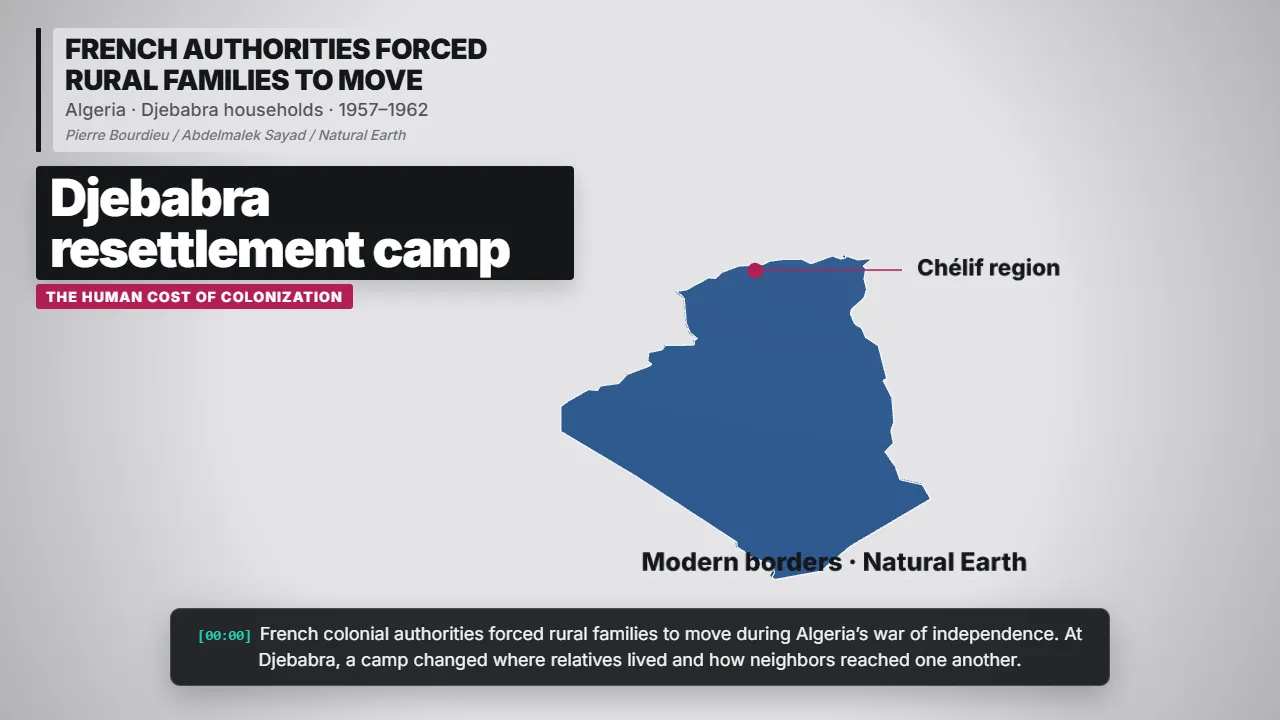
French colonial authorities forced rural families to move during Algeria’s war of independence. At Djebabra, a camp changed where relatives lived and how neighbors reached one another.
Pierre Bourdieu / Abdelmalek Sayad / Natural Earth
The camp brought households together under colonial rule
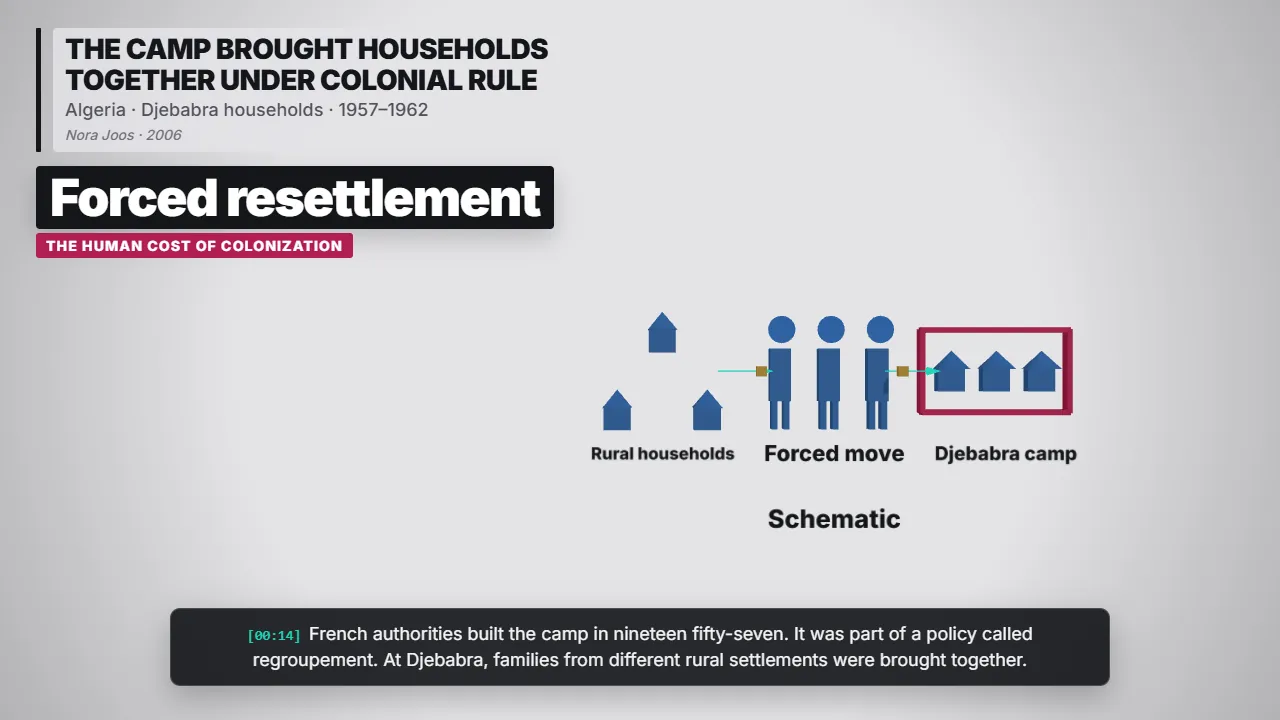
French authorities built the camp in nineteen fifty-seven. It was part of a policy called regroupement. At Djebabra, families from different rural settlements were brought together.
Nora Joos · 2006
Some extended families were scattered
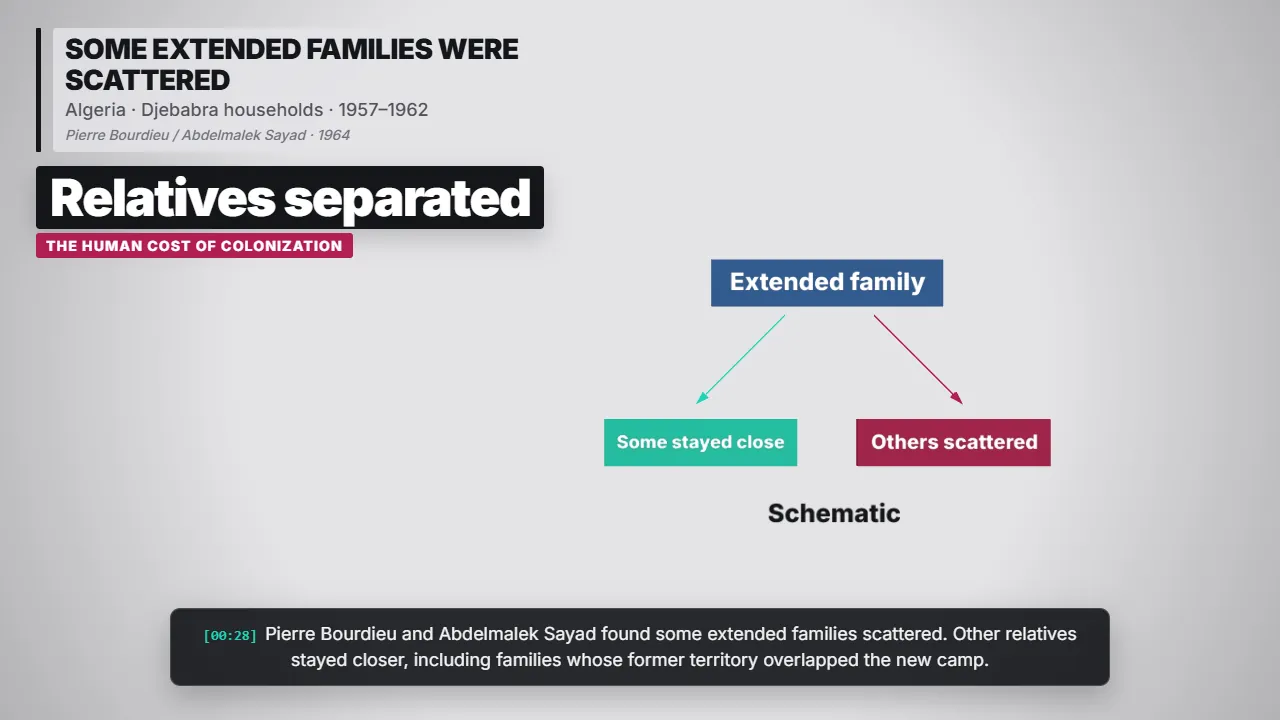
Pierre Bourdieu and Abdelmalek Sayad found some extended families scattered. Other relatives stayed closer, including families whose former territory overlapped the new camp.
Pierre Bourdieu / Abdelmalek Sayad · 1964
Residents found their own routes through the camp
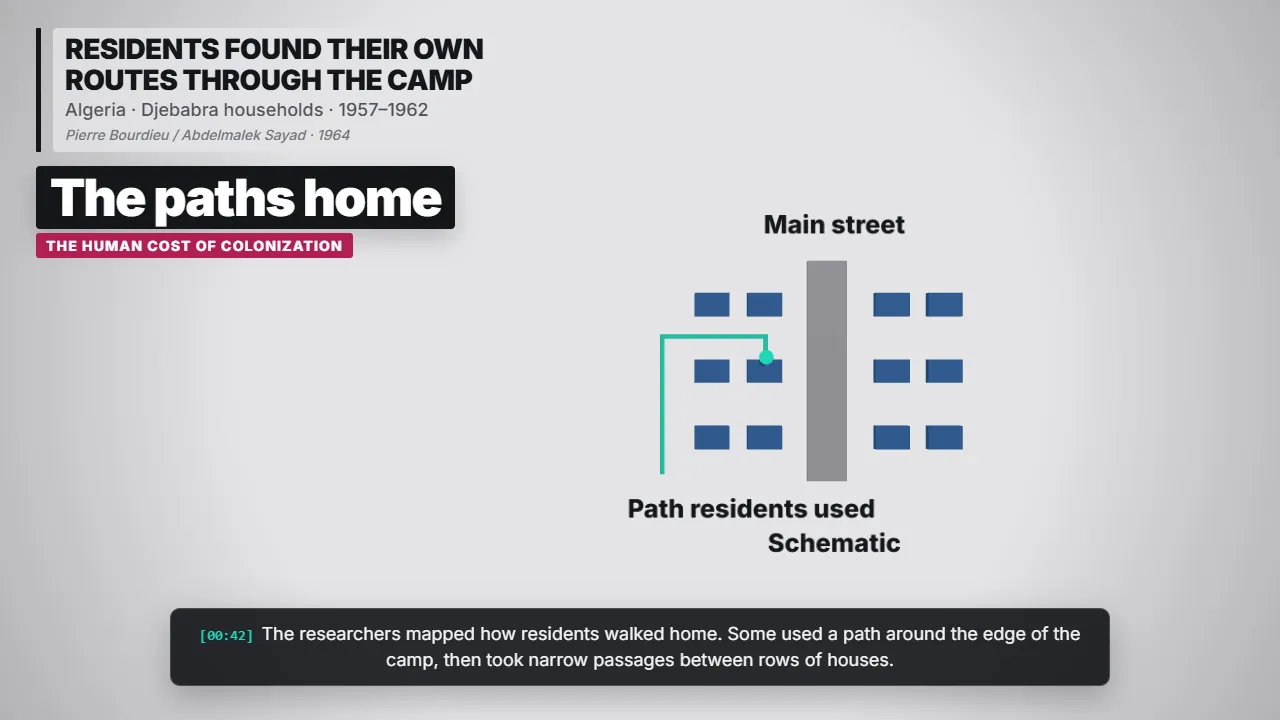
The researchers mapped how residents walked home. Some used a path around the edge of the camp, then took narrow passages between rows of houses.
Pierre Bourdieu / Abdelmalek Sayad · 1964
The imposed layout changed familiar routines
The forced move separated some relatives and changed familiar routes between homes. The paths residents used show how they adapted to the camp’s layout.
Pierre Bourdieu / Abdelmalek Sayad · 1964
Sources and notes
This account draws on Bourdieu and Sayad’s field study, Nora Joos’s later research, and Fabien Sacriste’s archival history of French resettlement policy.
Camera Austria · 1964
Source links
- https://doi.org/10.3406/rural.1964.1132
- https://www.unige.ch/sciences-societe/socio/carnets-de-bord/pdf/11_105.pdf
- https://asjp.cerist.dz/en/downArticle/144/3/1/7435
- https://camera-austria.at/pierre-bourdieu/pierre-bourdieu-in-algerien-zeugnisse-der-entwurzelung-die-ausstellung/
- https://www.naturalearthdata.com/downloads/50m-cultural-vectors/50m-admin-0-countries/