The Human Cost of Colonization
How German colonial forces confined Nama families on Shark Island
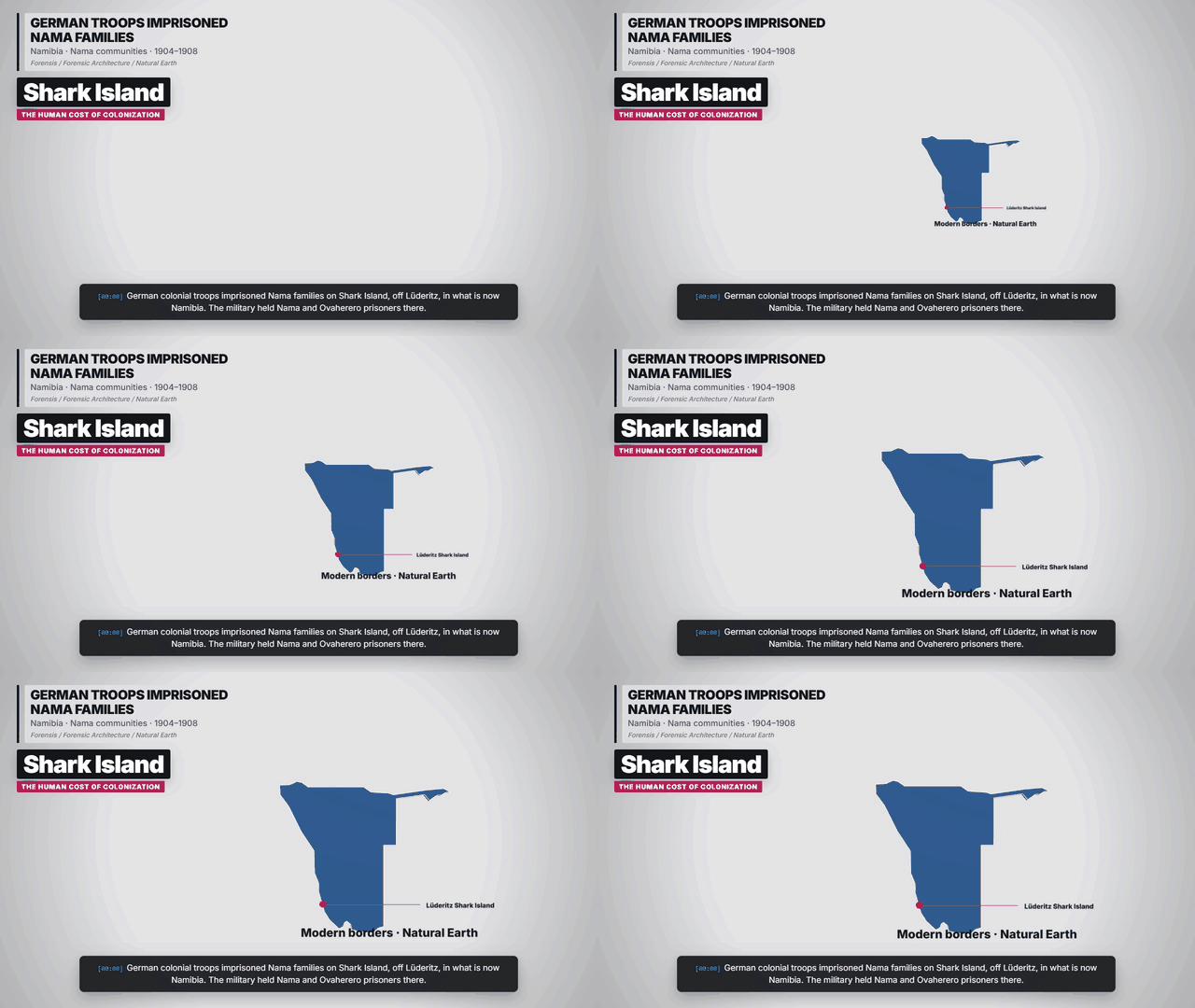
German colonial troops imprisoned Nama families on Shark Island, off Lüderitz, in what is now Namibia. The military held Nama and Ovaherero prisoners there.
Explore the six-scene explainerKey takeaways
- German colonial troops imprisoned Nama families on Shark Island, off Lüderitz, in what is now Namibia. The military held Nama and Ovaherero prisoners there.
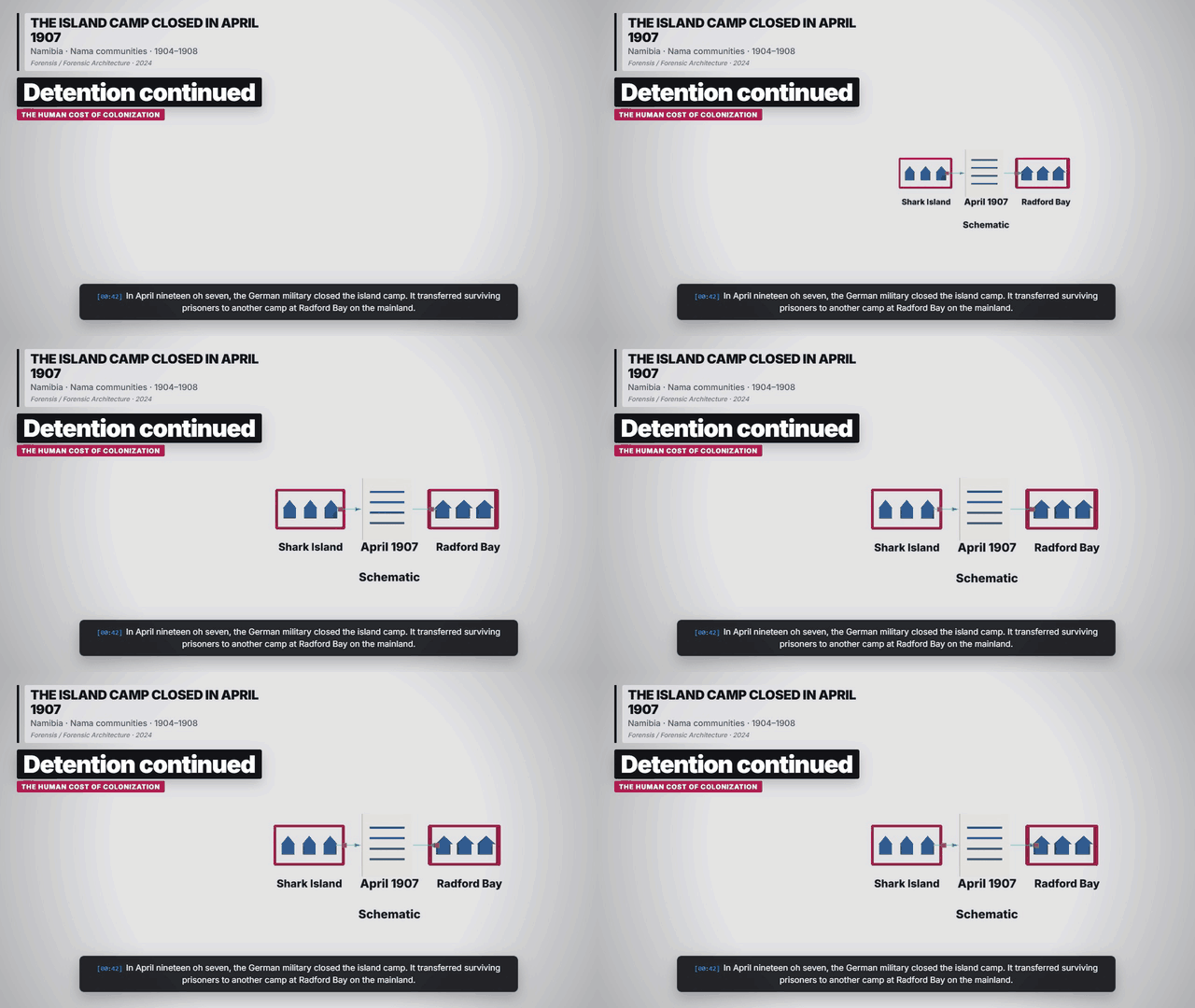
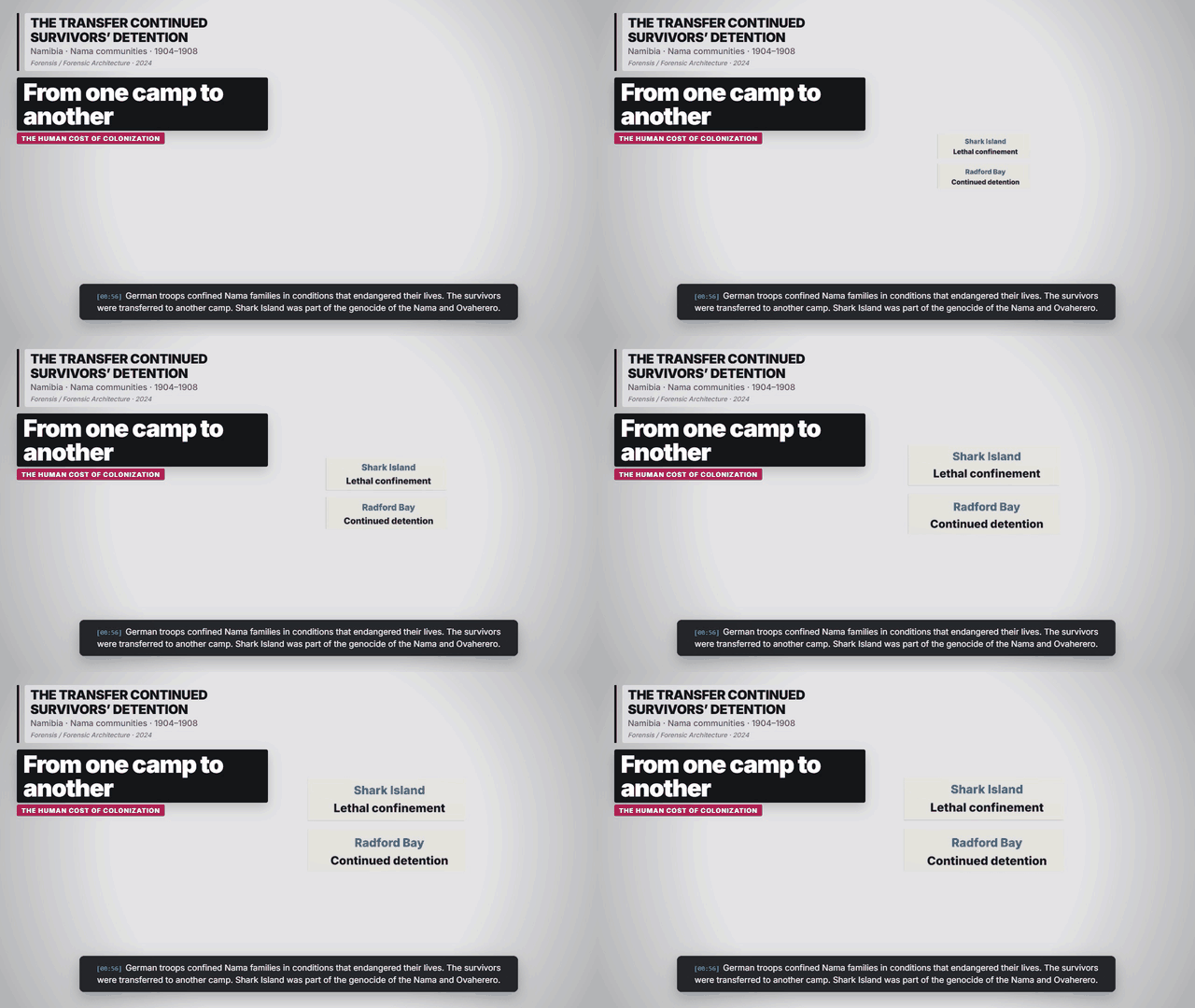
- In April nineteen oh seven, the German military closed the island camp. It transferred surviving prisoners to another camp at Radford Bay on the mainland.
Timeline and evidence
| Period | Documented event | Source |
|---|---|---|
| 1906 | German colonial troops imprisoned Nama families on Shark Island, off Lüderitz, in what is now Namibia. The military held Nama and Ovaherero prisoners there. | Forensis / Forensic Architecture · 2024 |
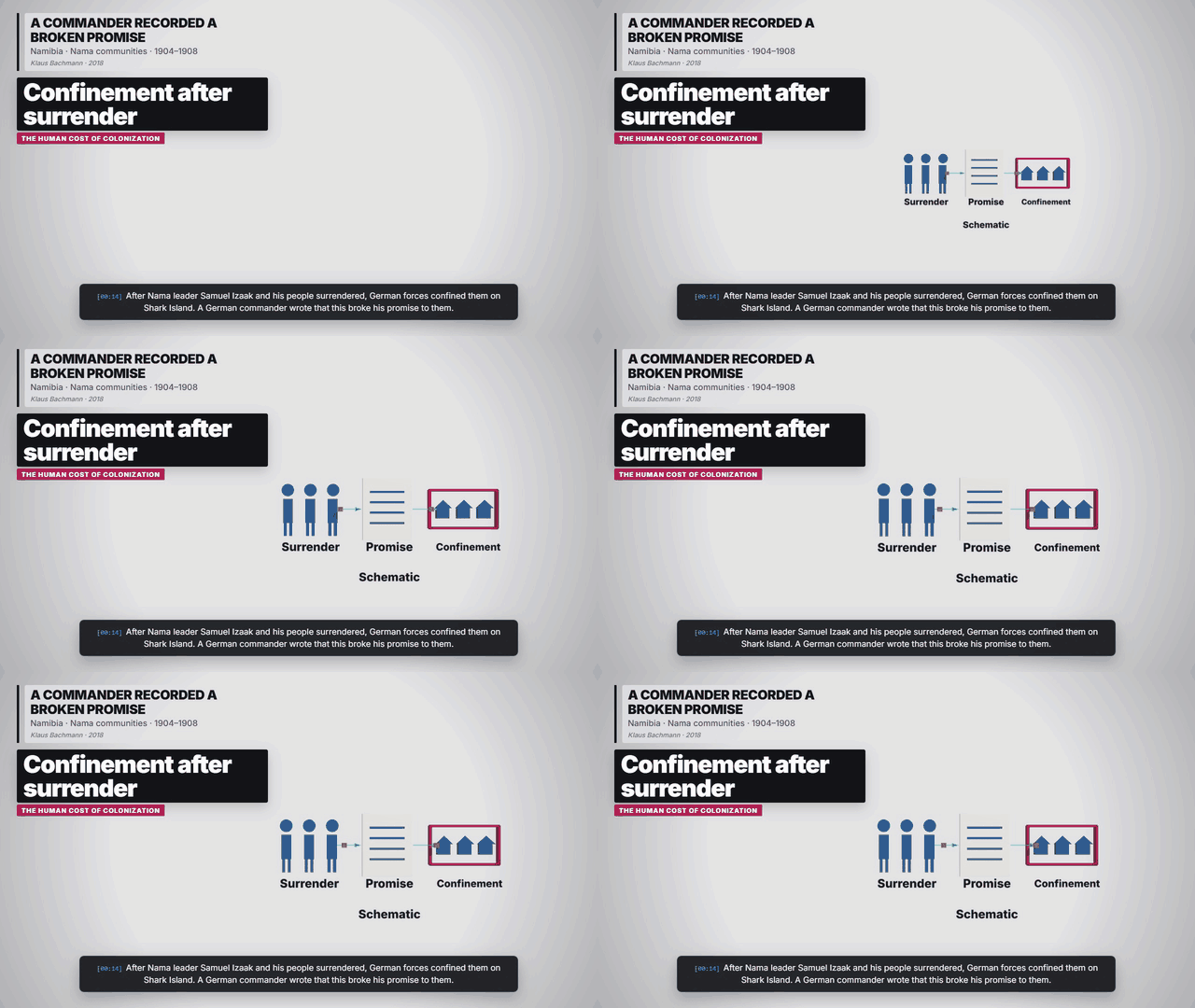
| 1907-04-10 | After Nama leader Samuel Izaak and his people surrendered, German forces confined them on Shark Island. A German commander wrote that this broke his promise to them. | Klaus Bachmann · 2018 |
| 1907-04 | In April nineteen oh seven, the German military closed the island camp. It transferred surviving prisoners to another camp at Radford Bay on the mainland. | Forensis / Forensic Architecture · 2024 |
Confinement after surrender
In a telegram to Berlin dated 10 April 1907, Schutztruppe commander Ludwig von Estorff wrote that holding Samuel Izaak’s people on Shark Island broke a promise he had made at their surrender. Historian Klaus Bachmann cites the telegram from the German Federal Archives, BArch R 1001.2140. Source and context.
Cold, hunger and illness
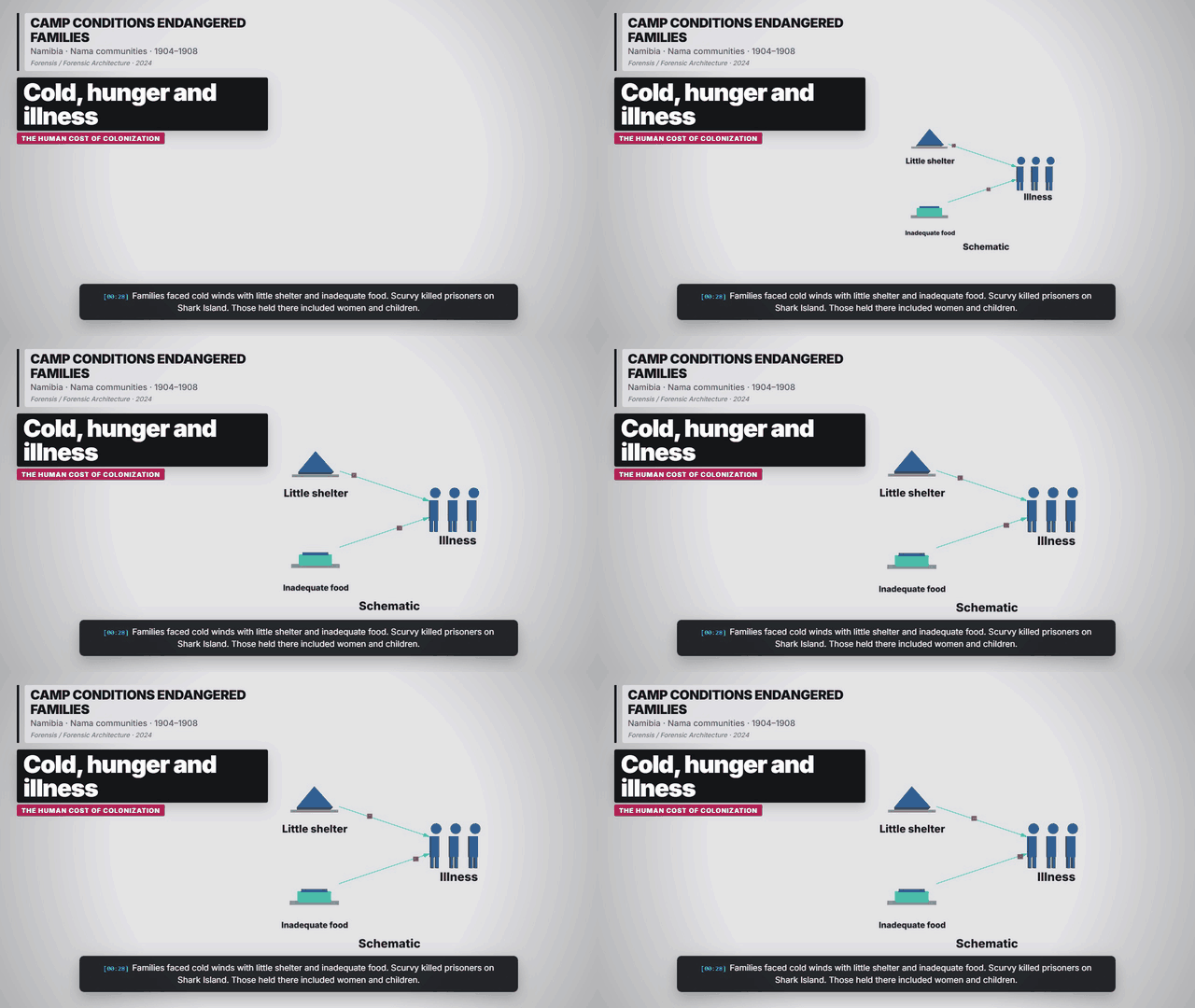
Forensis and Forensic Architecture used archival photographs, maps and field evidence to identify temporary shelters in the Nama section. Bachmann documents rations intended for one person being shared by families, and records deaths from scurvy. Source and context.
Detention continued
Von Estorff ordered the island camp evacuated in April 1907. The investigation by Forensis and Forensic Architecture identifies Radford Bay as the mainland site where prisoners were taken. Detention continued there. Source and context.
Charts, maps and diagrams from the explainer
Frequently asked questions
Who ran the camp?
The German colonial army, the Schutztruppe, established the concentration camp and held Nama and Ovaherero prisoners there.
Where were the survivors taken?
In April 1907, surviving prisoners were transferred to another camp at Radford Bay on the mainland.
Sources and reporting scope
Forensis / Forensic Architecture. 2024. Shark Island report, pp. 8–9, 30–32.
Klaus Bachmann. 2018. Genocidal Empires, pp. 102–103, 108.
Forensis / Forensic Architecture. 2024. Investigation with Nama and Ovaherero authorities.
Natural Earth. v5.1.2. Modern boundaries.
The dates 1904–1908 identify the wider genocide. This episode focuses on Nama confinement in 1906 and April 1907. The locator uses modern borders and the diagrams are schematic.