Full transcript
The narration below matches the explainer. Its original reporting dates and qualifications still apply.
German troops imprisoned Nama families
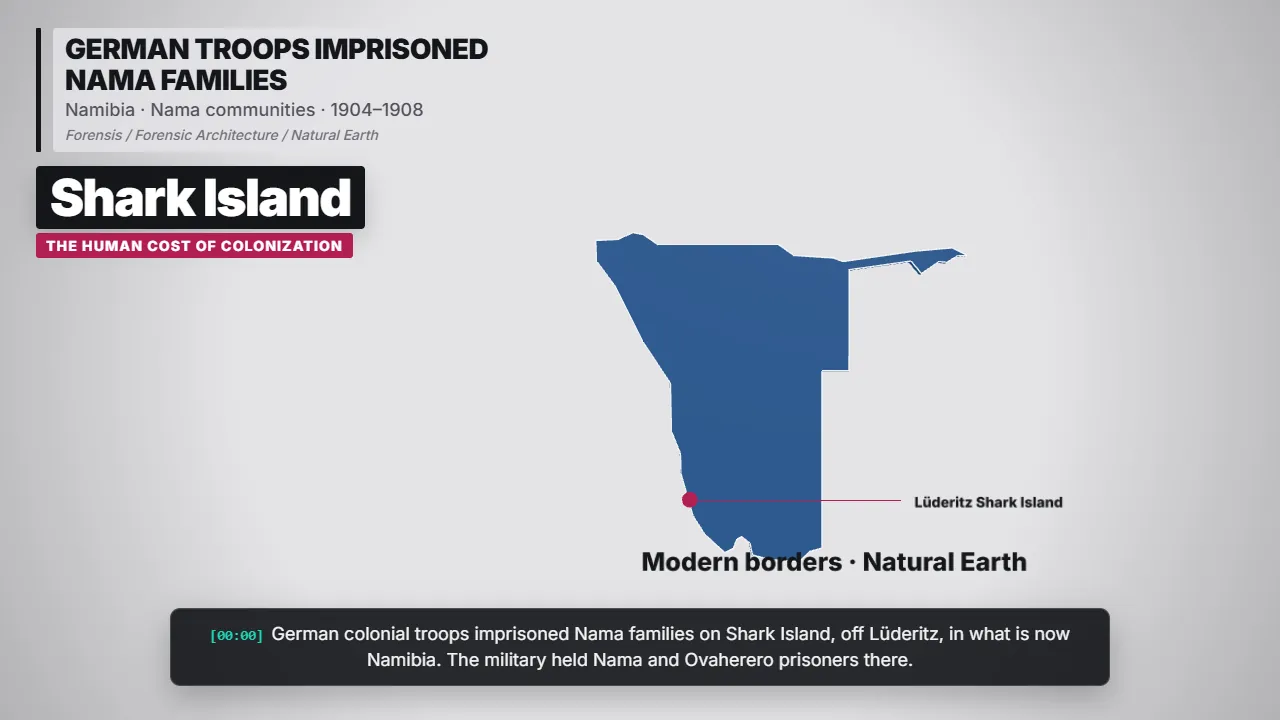
German colonial troops imprisoned Nama families on Shark Island, off Lüderitz, in what is now Namibia. The military held Nama and Ovaherero prisoners there.
Forensis / Forensic Architecture / Natural Earth
A commander recorded a broken promise
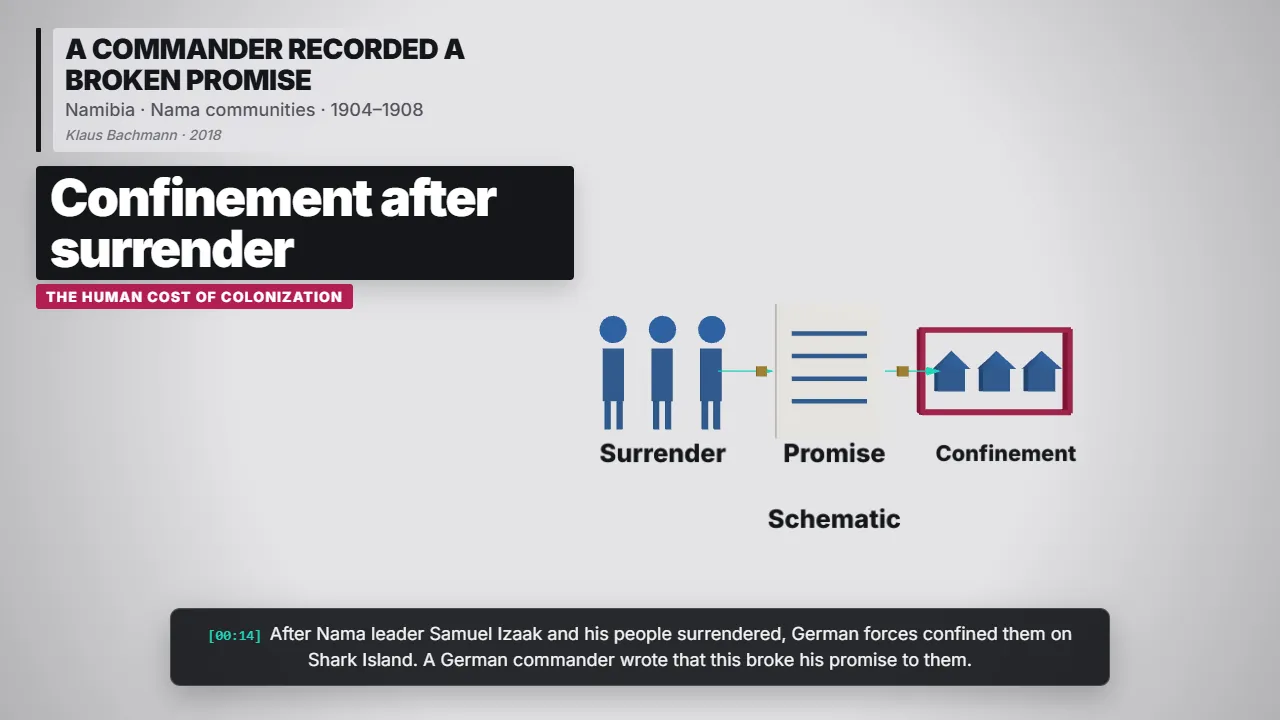
After Nama leader Samuel Izaak and his people surrendered, German forces confined them on Shark Island. A German commander wrote that this broke his promise to them.
Klaus Bachmann · 2018
Camp conditions endangered families
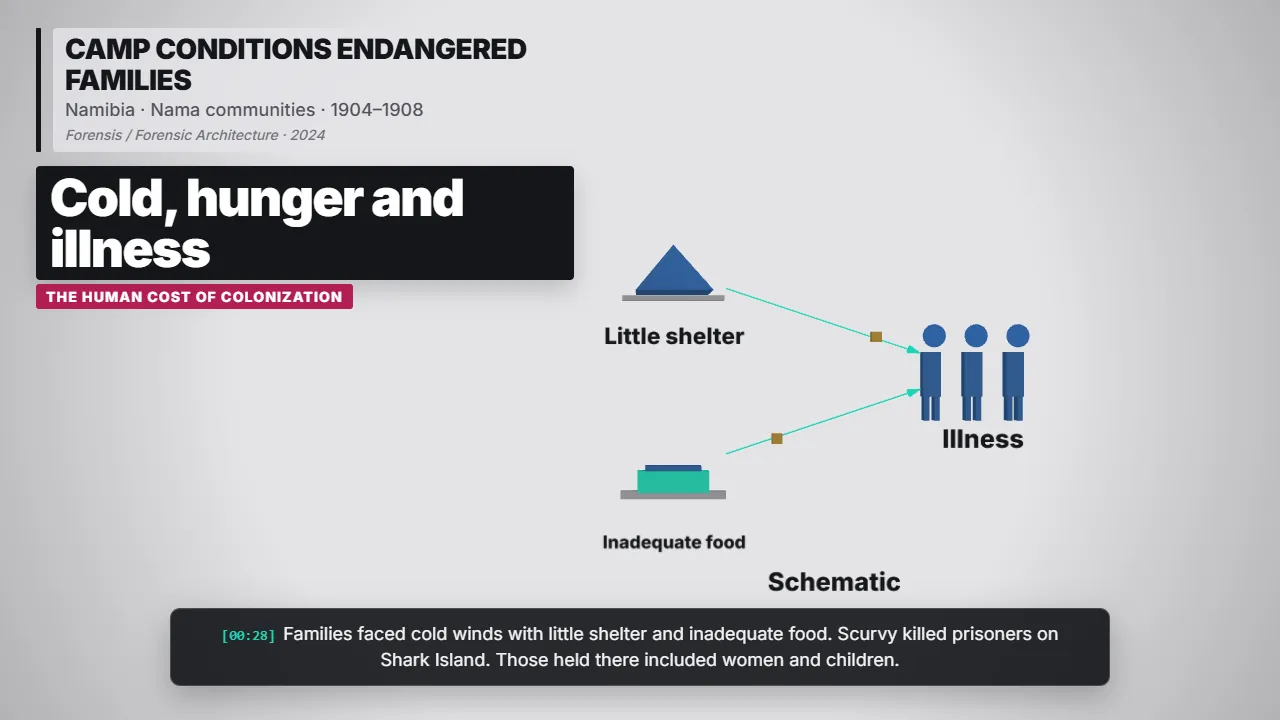
Families faced cold winds with little shelter and inadequate food. Scurvy killed prisoners on Shark Island. Those held there included women and children.
Forensis / Forensic Architecture · 2024
The island camp closed in April 1907
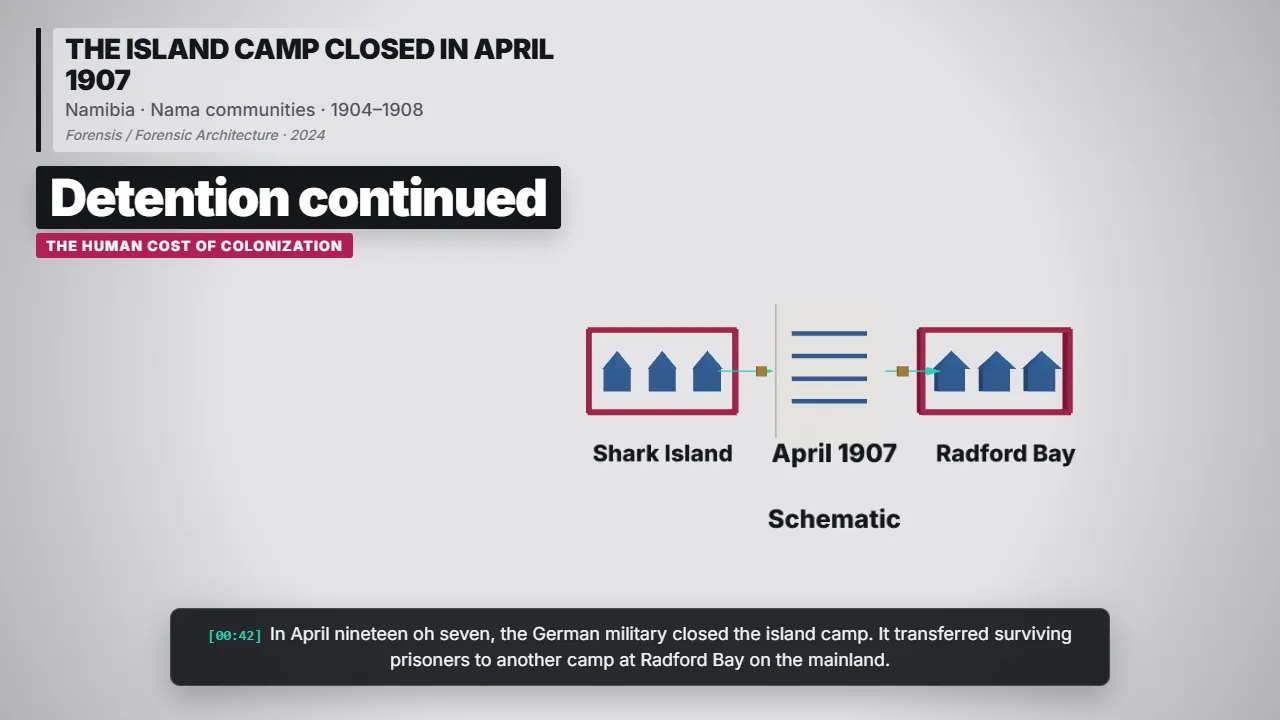
In April nineteen oh seven, the German military closed the island camp. It transferred surviving prisoners to another camp at Radford Bay on the mainland.
Forensis / Forensic Architecture · 2024
The transfer continued survivors’ detention
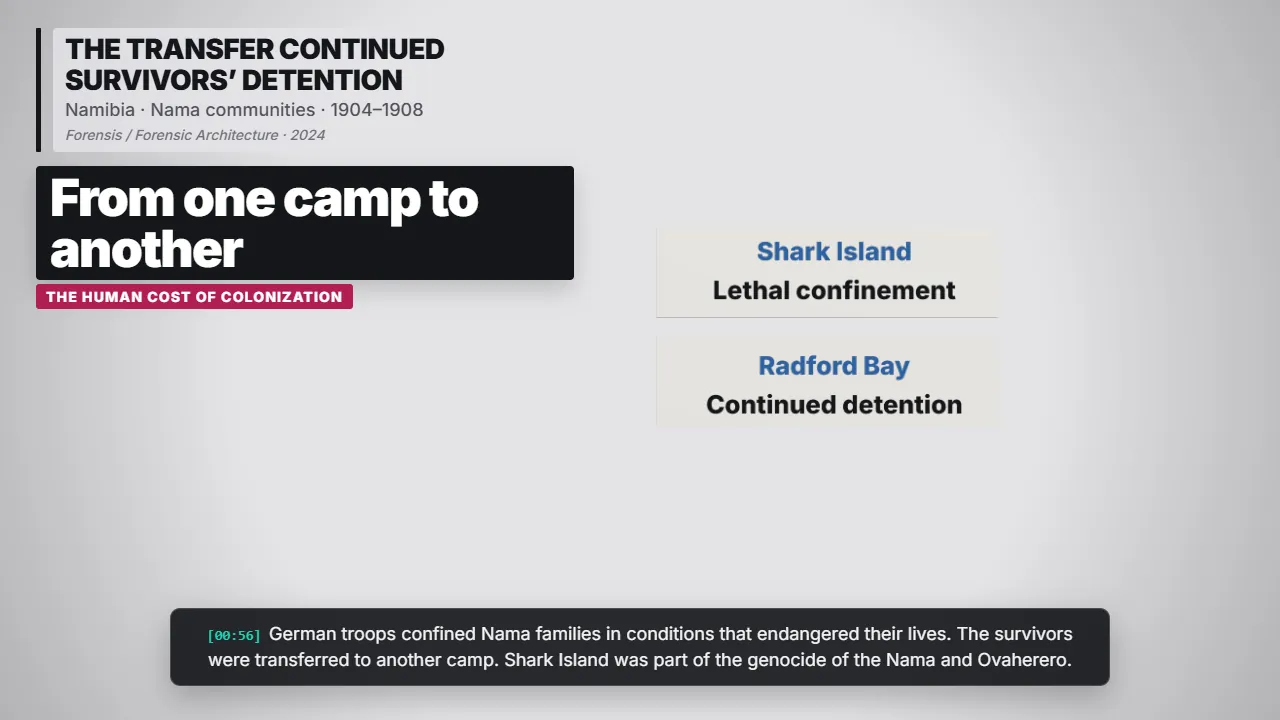
German troops confined Nama families in conditions that endangered their lives. The survivors were transferred to another camp. Shark Island was part of the genocide of the Nama and Ovaherero.
Forensis / Forensic Architecture · 2024
Sources and notes
This account draws on Klaus Bachmann’s archival research and the Shark Island investigation by Forensis and Forensic Architecture with Nama and Ovaherero representatives.
Forensis / Forensic Architecture · 2024
Source links
- https://content.forensic-architecture.org/wp-content/uploads/2024/04/Shark-Island-Report.pdf
- https://digital.unam.edu.na/bitstream/handle/11070.1/21225/Bachmann_2018.pdf?isAllowed=y&sequence=1
- https://forensic-architecture.org/investigation/shark-island
- https://www.naturalearthdata.com/downloads/50m-cultural-vectors/50m-admin-0-countries/